The Los Angeles and San Bernardino county line changes the paperwork around a house, not the house or the market it sells in. The buyers who want a single-story postwar house look on both sides of Mills Avenue; the streets, the freeways and the neighborhoods run straight through the line; and market value means the same thing in Claremont as it does in Upland or Montclair. Whether the line makes any difference to price is a question the closed sales answer, house type by house type, never an assumption.
This is the companion to what changes at the county line. That article covers the assessor, the appeals board, the records and the schools. This one covers what stays put, and why it matters when an appraisal relies on sales from both counties.
Market value is defined the same way on both sides
Market value, the most probable price a property would bring in a competitive, open-market sale between a willing buyer and a willing seller, each informed and acting without undue pressure, as of a stated date, has one meaning. It does not have a Los Angeles County version and a San Bernardino County version. An appraisal is an independent opinion of that value, developed under the Uniform Standards of Professional Appraisal Practice whichever county the house is in.
The state law behind property tax does not change at the line either. Revenue and Taxation Code section 51 sets taxable value the same way in both counties, and section 2192 fixes the same January 1 lien date, the date property taxes attach. Each county applies those rules through its own office, but the rules are California's, not the county's.
The county's assessed value, the taxable value enrolled under those rules, is not an appraisal on either side. Neither is an automated estimate from a website, an agent's comparative market analysis or a cash offer. An automated estimate is especially easy to misread near the line, because it is not built to explain, in writing, which sales it relied on or whether a location difference across the line was tested.
The buyers do not stop at the line
Many buyers looking for a house in this part of the valley search by price, size, era, lot and commute. Those buyers cross the line without a second thought: a family wanting a three-bedroom postwar ranch on a standard lot may tour houses in Claremont, Montclair and Upland in the same afternoon.
Some buyers do search by city name or school district, and for them the line is a filter. Which group sets the price for a given kind of house is exactly what an appraiser has to find out. Nothing in this article says one side is worth more. The sales say what they say, and the report states it either way.
The streets run straight through
The line is a surveyed boundary, not a barrier a buyer can see. The streets show it:
- Sixth Street in Claremont continues east past the Colleges and becomes Arrow Route in San Bernardino County. The name and the width change; the road does not stop.
- Mills Avenue is Montclair's western boundary, with postwar tract houses on both sides of it, Claremont and Pomona to the west and Montclair to the east.
- The Roberts Campus sports bowl at Claremont McKenna College straddles Claremont and Upland, a single campus facility in two counties.
- The 10 and the 210 cross the line without a break.
Farther north, the line splits the village of Mount Baldy, where cabins on either side trade in the same mountain market of access, snow and seasonal use. Where the county line runs maps the boundary in full.
The house does not change
The physical facts an appraisal depends on are the same on either side of the line:
- Gross living area, the finished, above-grade living space, measured on site for the subject.
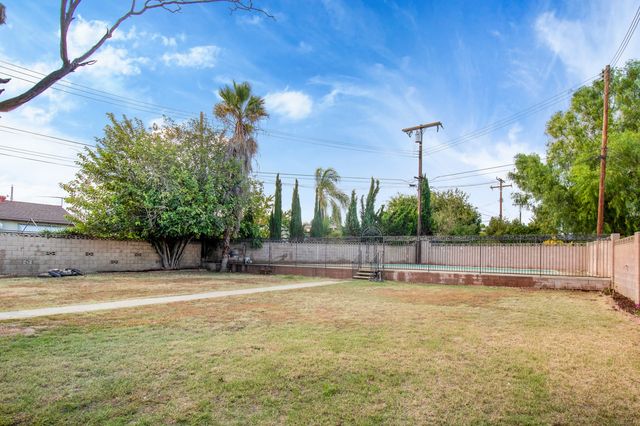
- Lot size, shape, slope and access.
- Age, era of construction, quality and condition.
- Bedrooms, bathrooms, garage and the permit history of any addition or ADU.
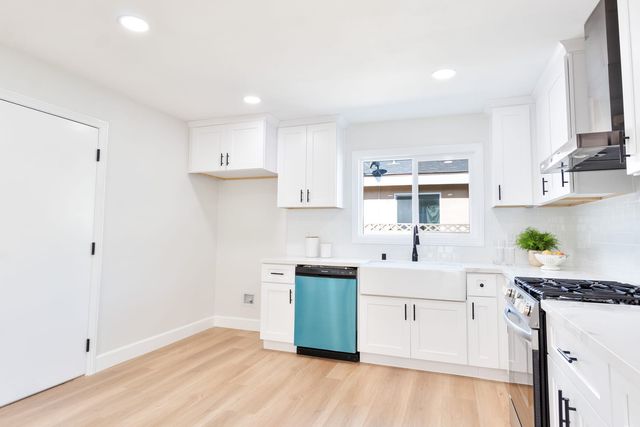
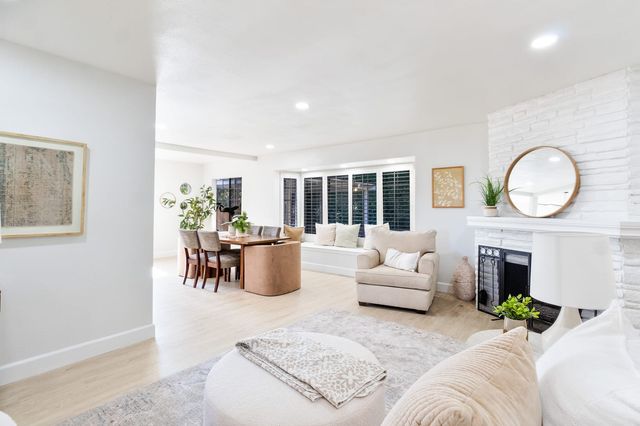
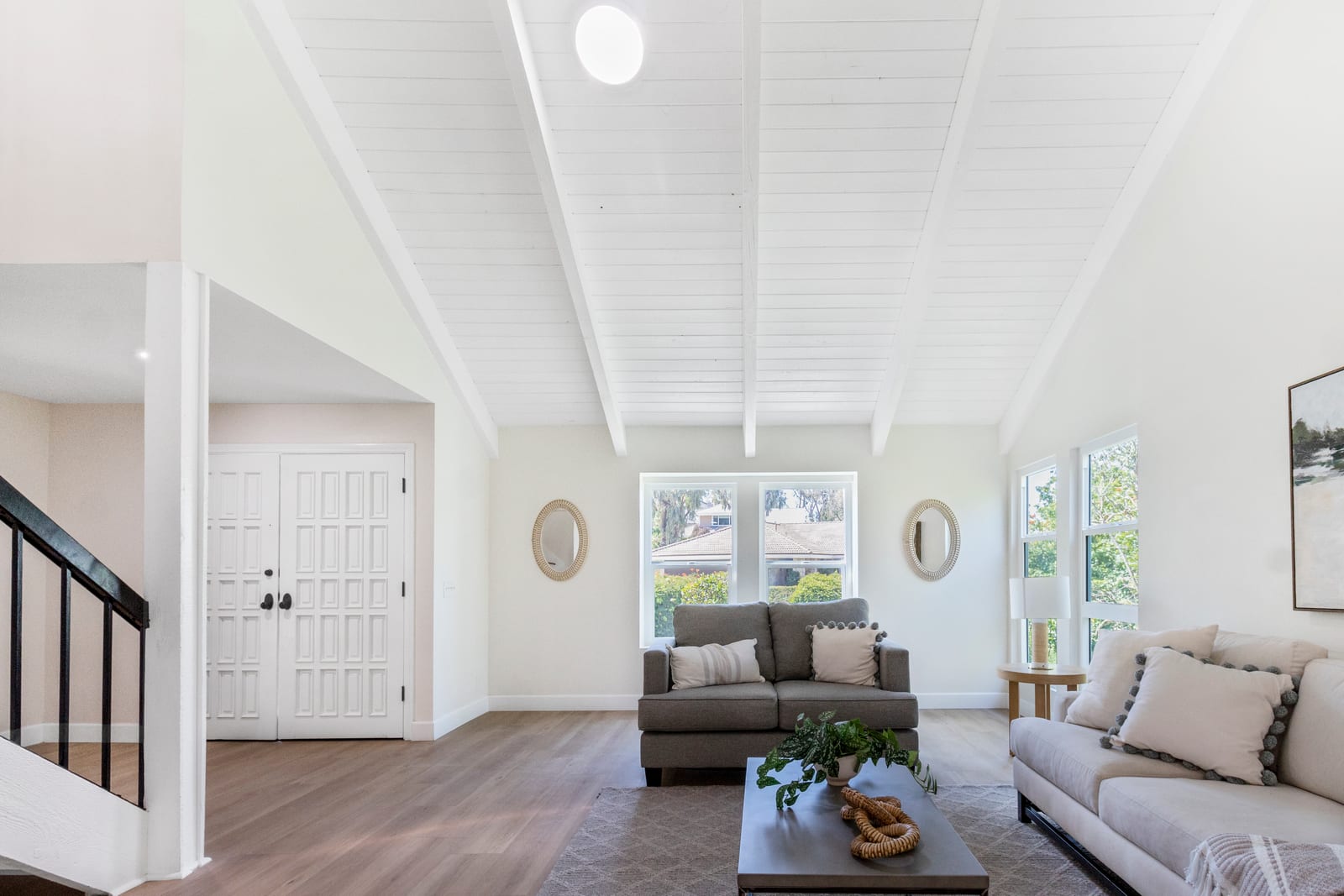
A single-story postwar ranch with a two-car garage is the same structure in Claremont or in Montclair. That is why a sale from across the line is often a legitimate comparable sale, a recent closed sale of a similar property used as evidence of what the subject would sell for, and not a fallback.
The standard of evidence does not change
This is the part of the line an appraiser controls. The same method applies to every file on either side:
- Start with the subject's own city. A Claremont house is appraised from Claremont sales first, an Upland house from Upland sales first.
- Use a cross-line sale when it is better evidence, for example a near-identical house just across the line, closer in time and form than anything on the subject's side.
- Test the location difference with paired sales. Two sales alike in nearly every way except which side of the line they sit on show whether the market priced the difference.
- Adjust only when the market supports it. An adjustment, the amount a comparable's price is raised or lowered for a difference from the subject, is shown on the grid with its reason stated.
- Reconcile the records. A comparable's living area from one county's record is checked against the listing and permits before it sits beside a measured subject.
The pillar article, what the county line does to comparable sales, explains paired sales, location adjustments and bracketing in more detail.
Why it matters for estates, divorces and trusts
These are the kinds of assignments that come in: an estate holding a house in Claremont and another in Upland, a divorce with property on both sides of Mills Avenue, a trust with homes in both counties. Each needs values as of the same effective date, the date the value opinion applies to, and each needs the properties held to the same standard of evidence. One appraiser working both sides means one method, one set of definitions and one way of reconciling two counties' records, so the reports can be read side by side.
The county pages describe each side: Los Angeles County and San Bernardino County. The Claremont and Upland pages cover the pockets on either side of the line, and the full series is on the Two Counties, One Standard of Evidence hub.
Next step
If you need an appraisal of a house near the line, or of properties in both counties, request an appraisal and mention where the nearest similar sales sit, or call (909) 324-6122. The fee is set by the scope of the assignment and quoted before work begins, and the fee does not depend on the value.
Sources
- The Student Life, City Limits: On the Los Angeles County line (April 24, 2026): https://tsl.news/city-limits-on-the-los-angeles-county-line/ (accessed October 30, 2026)
- Montclair, California (Mills Avenue as the western boundary): https://en.wikipedia.org/wiki/Montclair,_California (accessed October 30, 2026)
- California Revenue and Taxation Code section 51 (taxable value): https://leginfo.legislature.ca.gov/faces/codes_displaySection.xhtml?lawCode=RTC§ionNum=51 (accessed October 30, 2026)
- California Revenue and Taxation Code section 2192 (lien date): https://leginfo.legislature.ca.gov/faces/codes_displaySection.xhtml?lawCode=RTC§ionNum=2192 (accessed October 30, 2026)
- The Appraisal Foundation, Uniform Standards of Professional Appraisal Practice (USPAP): https://appraisalfoundation.org/imis/TAF/Standards/Appraisal_Standards/Uniform_Standards_of_Professional_Appraisal_Practice/TAF/USPAP.aspx (accessed October 30, 2026)
- Los Angeles County Office of the Assessor: https://assessor.lacounty.gov/ (accessed October 30, 2026)
- San Bernardino County Assessor-Recorder-County Clerk: https://arc.sbcounty.gov/ (accessed October 30, 2026)
Gordon Hall, California Certified Residential Real Estate Appraiser, BREA No. AR003877 (lookup: https://www2.brea.ca.gov/breasearch/faces/party/view.xhtml?id=23601). Reports are prepared in conformity with the Uniform Standards of Professional Appraisal Practice (USPAP). Nothing here is legal or tax advice; admissibility is always the court's decision.
Frequently asked questions
Does the county line change property value?
Not by itself. The line changes the assessor, the records and the school district, not the house. Whether buyers pay differently on either side for a given kind of house is a question closed sales answer, and an appraisal states what the sales showed either way.
Is market value defined differently in Los Angeles and San Bernardino counties?
No. Market value, the most probable price a property would bring in a competitive, open-market sale between informed parties as of a stated date, has one meaning on both sides of the line, and an appraisal is developed under the same USPAP standards in either county.
Can a sale across the county line be used as a comparable?
Yes, when it is genuinely similar and is better evidence than what is available on the subject's own side. The report explains why it was used and whether the market supports a location adjustment, tested with paired sales.
Is an online estimate that uses sales from both counties an appraisal?
No. An automated estimate is not an appraisal, and neither is the county's assessed value, an agent's comparative market analysis or a cash offer. An appraisal is an independent opinion of market value as of a stated date, prepared by a licensed appraiser.