The same state law sets assessed value on both sides of the Los Angeles and San Bernardino county line. Under Revenue and Taxation Code section 51, a house in Claremont or Pomona and a house in Montclair or Upland are each enrolled at the lesser of their factored base year value and their full cash value on January 1. What changes at Mills Avenue is who applies the rule: the Los Angeles County Office of the Assessor on one side, the San Bernardino County Assessor-Recorder-County Clerk on the other, each with its own records, review process and appeals board. Neither county's assessed value is an appraisal.
Where exactly is the line?
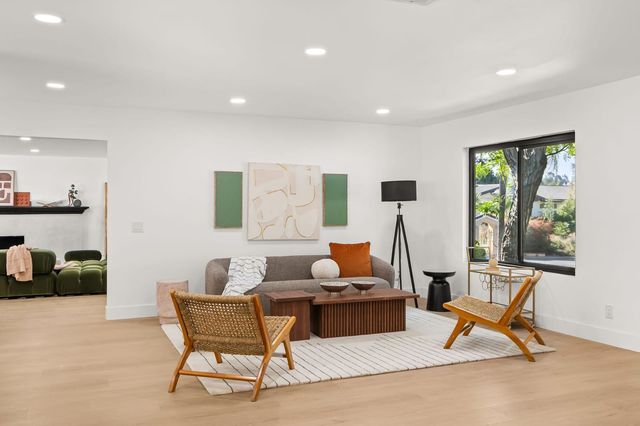
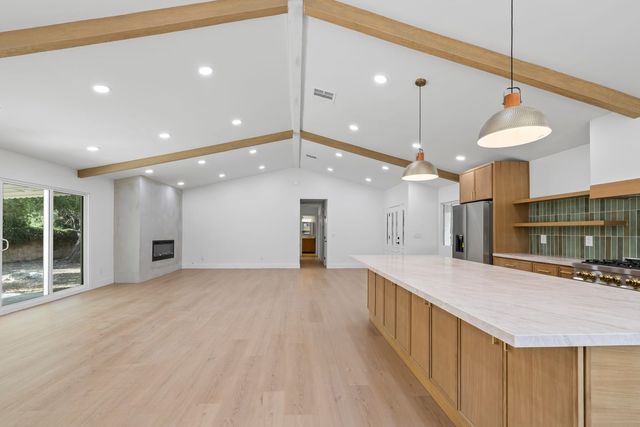
Mills Avenue is the western boundary of Montclair, where Claremont and Pomona in Los Angeles County end and San Bernardino County begins. Just east of the Claremont Colleges, crossing Claremont Boulevard or Mills Avenue puts you in Upland or Montclair. Sixth Street becomes the wider Arrow Route as it crosses into San Bernardino County, and Claremont McKenna's Roberts Campus sports bowl straddles the Claremont and Upland line. Postwar single-story houses sit on both sides, often built in the same years to similar plans.
What is the same on both sides?
Everything in the formula. Both counties apply:
- Base year value, the value fixed at the 1975 lien date or at a later purchase, change in ownership or completed new construction, under section 110.1 and Article XIII A, section 2 of the California Constitution.
- The annual inflation factor in section 51, with the same ceiling written into the statute.
- Full cash value, the amount of cash or its equivalent the property would bring on the open market when neither buyer nor seller can take advantage of the other, defined in section 110.
- The January 1 lien date set by section 2192, the date every assessment and every appeal is measured against.
So the county line does not make a house's assessed value higher or lower by itself. A house's assessed value follows its own base year, which usually means the year it last sold, not the county it sits in.
What is different on each side?
The administration. These are the parts that change when you cross Mills Avenue:
- The assessor. Claremont, La Verne and Pomona are assessed by the Los Angeles County Office of the Assessor. Montclair, Upland, Rancho Cucamonga and Chino are assessed by the San Bernardino County Assessor-Recorder-County Clerk.
- The informal step. The Los Angeles County Assessor publishes a decline-in-value review page. The San Bernardino County Assessor's appeals page encourages owners to contact the office for an informal review first.
- The appeals board. Los Angeles County appeals go to the Los Angeles County Assessment Appeals Board. San Bernardino County appeals go to the San Bernardino County Assessment Appeals Board, administered by the Clerk of the Board of Supervisors.
- Filing periods and forms. Each county sets and publishes its own. They are not stated here; confirm the current period on the county's page before relying on any date.
- The records. Each county's data reports living area, year built, additions and lot size in its own way, so the same kind of house can look different on paper depending on which side of the line it sits.
Why might two similar houses across the line carry different assessed values?
Almost always because of their base years, not their counties. A postwar ranch house just west of Mills Avenue that has not sold in a long time and a near-twin in Montclair that sold recently can carry very different assessed values, and the same would be true if both sat on the same block. Additions matter too: completed new construction carries its own base year value from its completion date, while unpermitted work may not appear in either county's record.
That is why comparing your assessed value with a neighbor's, on either side, says little about market value. The State Board of Equalization's guide to residential appeals says that in most residential appeals, sales of similar properties are the most reliable evidence of market value. A neighbor's assessment is not a sale.
How does an appraiser handle a house on the line?
An appraisal, an independent opinion of market value as of a stated effective date, the date the opinion applies to, developed under the Uniform Standards of Professional Appraisal Practice (USPAP), does not use either county's assessed value as evidence. It uses closed sales.
- A Claremont house is appraised from Claremont sales first. A Montclair or Upland sale is used only when it is genuinely the better evidence, and the report explains the location adjustment.
- School districts, assessor records and buyer pools change across the line even where the houses look alike, so the report says why a cross-line sale reflects the same market.
- The appraiser measures gross living area, the finished space above grade, and reconciles each comparable's reported details against listing and permit history rather than copying one county's field into the other's grid.
What the county line does to comparable sales goes deeper on that testing, and property tax appeals on the county line covers both counties' appeal routes. The city pages for Claremont, Montclair and Upland describe each side.
Which other numbers are not appraisals?
An automated estimate from a portal is not an appraisal; it is a statistical estimate from records and nearby sales. An agent's comparative market analysis, or CMA, a licensed agent's opinion of a likely list or sale price, is not an appraisal. A cash offer is not an appraisal; it is one buyer's price on stated terms. Mr. Cali Offers, a separate cash-offer brand that shares the Mr. Cali name, explains its offers at mrcalioffers.com/home-value.
For how the two assessors' work differs from an appraiser's, see appraiser vs. assessor in Los Angeles and San Bernardino counties. Base year value explained walks through the formula, the four different numbers guide compares everything side by side, and the full cluster is in the value types knowledge center.
If you own on either side of Mills Avenue and need market value documented, start with appraisal vs. estimate or call (909) 324-6122. Fees are set by the scope of the assignment, quoted before work begins, and do not depend on the value. The county and its appeals board, not the appraiser, decide what goes on the roll.
Sources
- California Revenue and Taxation Code section 51 (accessed October 30, 2026)
- California Revenue and Taxation Code section 110.1 (base year value) (accessed October 30, 2026)
- California Revenue and Taxation Code section 110 (full cash value) (accessed October 30, 2026)
- California Constitution, Article XIII A, section 2 (accessed October 30, 2026)
- California Revenue and Taxation Code section 2192 (lien date) (accessed October 30, 2026)
- Los Angeles County Office of the Assessor, decline in value (accessed October 30, 2026)
- Los Angeles County Assessment Appeals Board (accessed October 30, 2026)
- San Bernardino County Assessor-Recorder-County Clerk, assessment appeals and informal review (accessed October 30, 2026)
- San Bernardino County Clerk of the Board, Assessment Appeals (accessed October 30, 2026)
- California State Board of Equalization, Publication 30, Residential Property Assessment Appeals (accessed October 30, 2026)
- Montclair, California (Mills Avenue as the western boundary) (accessed October 30, 2026)
Gordon Hall, California Certified Residential Real Estate Appraiser, BREA No. AR003877 (lookup: https://www2.brea.ca.gov/breasearch/faces/party/view.xhtml?id=23601). Reports are prepared in conformity with the Uniform Standards of Professional Appraisal Practice (USPAP). Nothing here is legal or tax advice; admissibility is always the court's decision.
Frequently asked questions
Is property assessed differently in San Bernardino County than in Los Angeles County?
The rule is the same. Revenue and Taxation Code section 51 sets taxable value in both counties as the lesser of the factored base year value and full cash value on the January 1 lien date. What differs is administration: the Los Angeles County Office of the Assessor and the San Bernardino County Assessor-Recorder-County Clerk keep separate records, review processes and appeals boards.
Who assesses a house on the Claremont and Montclair line?
Mills Avenue is the western boundary of Montclair. Houses in Claremont and Pomona, on the Los Angeles County side, are assessed by the Los Angeles County Office of the Assessor. Houses in Montclair and Upland, on the San Bernardino County side, are assessed by the San Bernardino County Assessor-Recorder-County Clerk.
Why is my assessed value different from a similar house across the county line?
Usually because the two houses have different base years. Assessed value follows the date a house last sold, changed ownership or had new construction completed, stepped up by a capped annual factor, so two near-identical houses can carry very different assessed values on either side of the line or on the same block.
Can a sale across the county line be used in an appraisal?
Yes, when it is genuinely the better evidence. A Claremont house is appraised from Claremont sales first, and a Montclair or Upland sale used for it needs a stated reason and an explained location adjustment, because school districts, records and buyer pools change at the line.
Are the appeal filing periods the same in both counties?
Each county sets and publishes its own periods and forms. Confirm the current period on the Los Angeles County Assessment Appeals Board page or the San Bernardino County Clerk of the Board page before relying on any date. Nothing here is legal or tax advice.