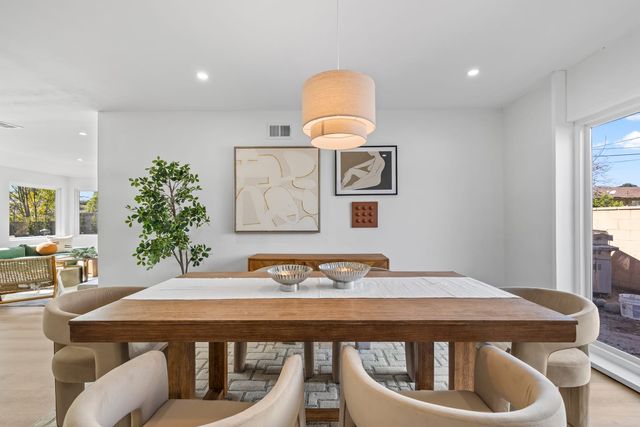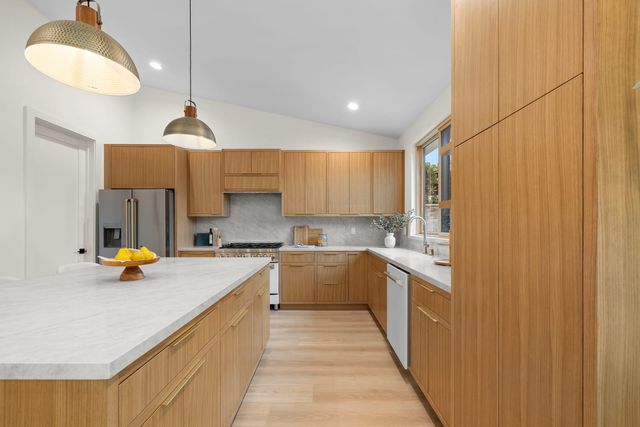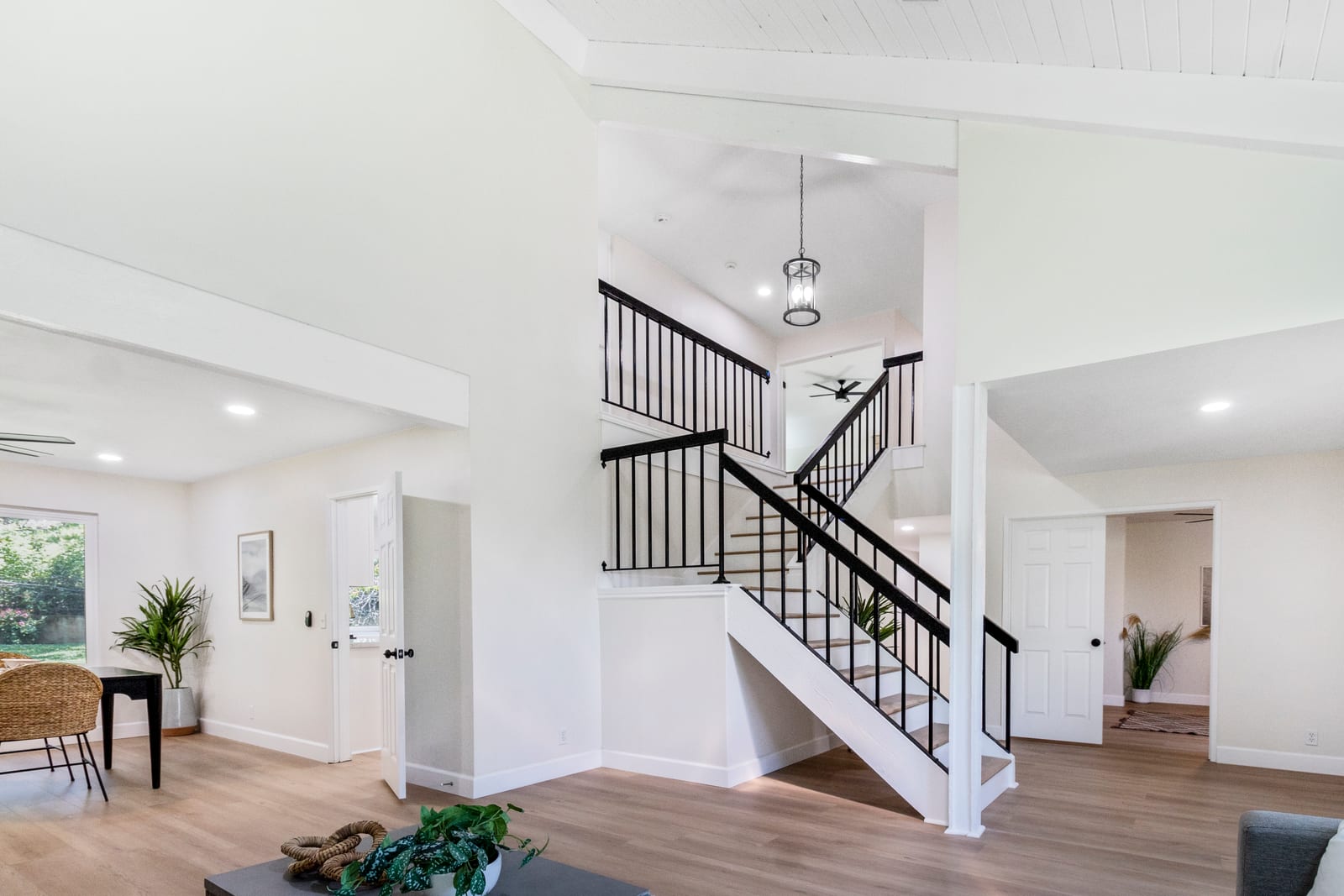
A home appraisal in Claremont runs in four steps: a scope call that sets the question, an inspection of the house, research into comparable sales, and a delivered report that writes out the reasoning. The inspection is 30 to 60 minutes for a standard single-family home, longer for hillside, custom, multi-family or homes with additions. The report is typically three to five business days from the inspection. Nothing about value is discussed until the analysis is done.
An appraisal is an independent opinion of market value as of a stated date, developed under USPAP, the Uniform Standards of Professional Appraisal Practice. Each step exists so a reader who never saw the house can follow the reasoning.
Step 1: the scope call
Every assignment starts with questions, not a visit. Three answers shape everything after them.
- Intended use, what the report will be used for: a refinance, a trust administration, a divorce, a property tax appeal, a pre-listing decision.
- Intended users, the people entitled to rely on the report: a lender, an attorney and the court, a trustee and the beneficiaries, a CPA.
- Effective date, the date the opinion of value applies to. For most files it is the inspection date. For an estate it may be the date of death; for a separation, a date set by the case. An appraisal whose effective date is in the past is a retrospective appraisal.
Those three set the scope of work, the type and extent of research and analysis the assignment needs. A standard house north of Foothill Boulevard and a Claraboya hillside home with an ADU are different amounts of work, and the fee reflects that. The fee is set by the scope of the assignment and quoted before work begins; it does not depend on the value. Access, gate codes, pets and tenant notice are confirmed on the same call.
Who orders the appraisal matters too. On a purchase or refinance, the lender orders it and the lender is the client, even though the borrower receives a copy. For an estate, a divorce, a tax appeal or a pre-listing decision, the homeowner, trustee, attorney or CPA engages the appraiser directly. The services overview lists the purposes this practice takes on.
Step 2: the inspection
The visit is the shortest step. The appraiser measures the exterior and sketches the floor plan to calculate gross living area, the finished, heated space above grade. Every room is photographed. Finishes, updating, visible systems and the lot are noted.
The appraiser observes; testing is a home inspector's work, compared in appraisal vs. home inspection. The visit itself, step by step and pocket by pocket, is the subject of what happens on appraisal inspection day in Claremont, and what the appraiser records in each room is in what home appraisers look for in a Claremont house.
Some assignments have no interior visit, for example when the home has sold or a tenant will not allow entry. An exterior-only or desktop assignment is a narrower scope of work, and the report says so on its face.
Step 3: research and analysis
In Claremont the research starts with the right pocket. One ZIP code, 91711, holds several markets: pre-1940 Craftsman and Spanish Colonial Revival houses near the Village and the Colleges, postwar ranch tracts north of Foothill, hillside and custom homes in Claraboya and Padua Hills, and townhomes and condominiums south of the 10. A Village bungalow is compared with older houses near the Colleges, not with ranch houses on bedroom count alone. A Claraboya view home may need comparables from a wider foothill band, with the radius explained. The Claremont area page describes each pocket.
The county line adds a second test. Claremont is assessed by Los Angeles County; cross Claremont Boulevard or Mills Avenue and you are in Montclair or Upland, in San Bernardino County. A Claremont house is appraised from Claremont sales first, and a sale from across the line is used only when it is genuinely better evidence, with the location adjustment explained. What the county line does to comparable sales sets out why.
With the comparables chosen, the appraiser adjusts each one for the differences buyers pay for: gross living area, lot size, condition, bedroom and bathroom count, view, garage, pool, and location. Each adjustment is stated so a reader can test it, and the adjusted sales are reconciled into one opinion of value.
An automated estimate such as a Zestimate is not an appraisal, and the research does not use one as evidence. The same goes for an agent's comparative market analysis (CMA), the county's assessed value and a cash offer: none of those is an appraisal either. Appraisal vs. estimate lays out how the five differ.
Step 4: the delivered report
The report is typically three to five business days from the inspection. Retrospective, litigation and complex hillside assignments are scheduled when the engagement is confirmed. A delivered report contains:
- The intended use, intended users, effective date and scope of work, stated on its face.
- The property description, sketch and photographs.
- The comparable sales, every adjustment, and the reasoning that connects them to the opinion of value.
- A signed certification, the appraiser's statement that the work was done impartially and in conformity with USPAP, with a fee that did not depend on the result.
On a direct assignment, the report goes to the client and, at the client's direction, to the attorney or CPA. On a lender assignment, it goes to the lender, which provides the borrower a copy.
What happens after delivery
Questions about the reasoning are welcome. If a fact is wrong, such as a missed bathroom or the wrong lot size, or a better sale existed, send the specifics and they are considered on their merits.
On a loan, the route runs through the lender as a reconsideration of value, a request from the lender to the appraiser to reassess the report based on information that may affect the conclusion. How to challenge a low appraisal explains that route and when a separate appraisal review fits instead.
The readers decide what the report does: the lender decides the loan, the court decides admissibility, the appeals board decides the assessment, and your CPA or attorney decides how a value is used.
How the steps change by purpose
These are the kinds of assignments that come in.
- An estate or trust after a long hold on a Village or north-of-Foothill house often needs a retrospective effective date: the date of death. The inspection is current, so the report states what is assumed about condition on the earlier date. See estate and date-of-death appraisal.
- A divorce is read by two sides, so the scope call settles the effective date and who the intended users are before anyone visits. See divorce appraisal.
- A property tax appeal values the home as of the date the appeal concerns, often the January 1 lien date fixed by Revenue and Taxation Code section 2192. Confirm the current filing period on the Los Angeles County Assessment Appeals Board page. See property tax appeal appraisal.
Next step
The how it works page shows the same four steps in brief. To start with a scope call, request an appraisal or call (909) 324-6122; the fee and timeline are quoted before anything is scheduled. More on the process is collected in the How a Home Appraisal Works hub.
Sources
- The Appraisal Foundation, Uniform Standards of Professional Appraisal Practice (USPAP): appraisalfoundation.org (accessed October 30, 2026)
- Zillow, inspection vs. appraisal: zillow.com (accessed October 30, 2026)
- Opendoor, appraisal vs. home inspection: opendoor.com (accessed October 30, 2026)
- Zillow, what a Zestimate is (not an appraisal): zillow.com (accessed October 30, 2026)
- California Revenue and Taxation Code section 2192, the January 1 lien date: leginfo.legislature.ca.gov (accessed October 30, 2026)
- Los Angeles County Assessor: assessor.lacounty.gov (accessed October 30, 2026)
- Los Angeles County Assessment Appeals Board: bos.lacounty.gov (accessed October 30, 2026)
- Claremont, California (ZIP 91711, the Village, Padua Hills): wikipedia.org (accessed October 30, 2026)
- California Bureau of Real Estate Appraisers, license lookup for BREA No. AR003877: brea.ca.gov (accessed October 30, 2026)
Gordon Hall, California Certified Residential Real Estate Appraiser, BREA No. AR003877 (lookup: https://www2.brea.ca.gov/breasearch/faces/party/view.xhtml?id=23601). Reports are prepared in conformity with the Uniform Standards of Professional Appraisal Practice (USPAP). Nothing here is legal or tax advice; admissibility is always the court's decision.
Frequently asked questions
What are the steps of a home appraisal?
Four: a scope call that sets the intended use, intended users and effective date; an inspection of the house; research into comparable sales with stated adjustments; and a delivered report that writes out the reasoning and carries a signed certification.
How long does a home appraisal take in Claremont?
The inspection is 30 to 60 minutes for a standard single-family home, longer for hillside, custom, multi-family or homes with additions. The report is typically three to five business days from the inspection.
Who orders the appraisal?
On a purchase or refinance, the lender orders it and is the client, and the borrower receives a copy. For an estate, divorce, tax appeal or pre-listing decision, the homeowner, trustee, attorney or CPA engages the appraiser directly.
Does the appraiser use sales from Upland or Montclair for a Claremont house?
Only when a sale across the county line is genuinely better evidence, and then the report explains the location adjustment. A Claremont house is appraised from Claremont sales first, chosen from the same pocket where possible.
What does an appraisal cost?
The fee is set by the scope of the assignment and quoted before work begins. It does not depend on the value, and it is the same whatever the report concludes.