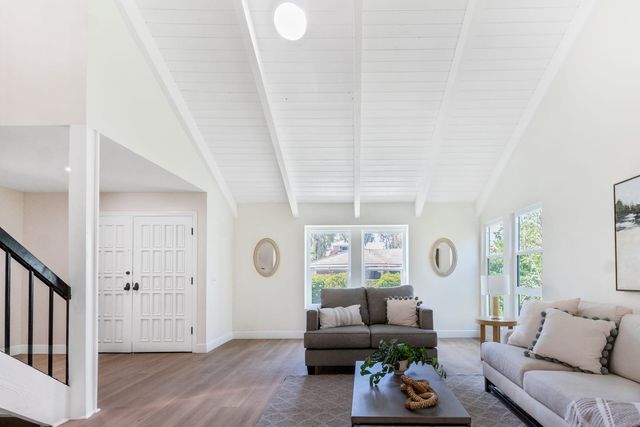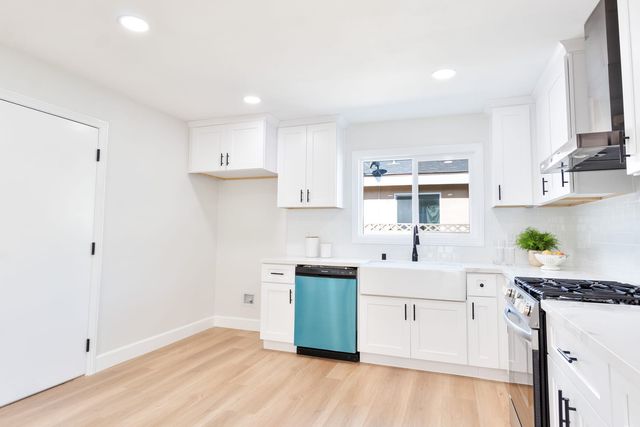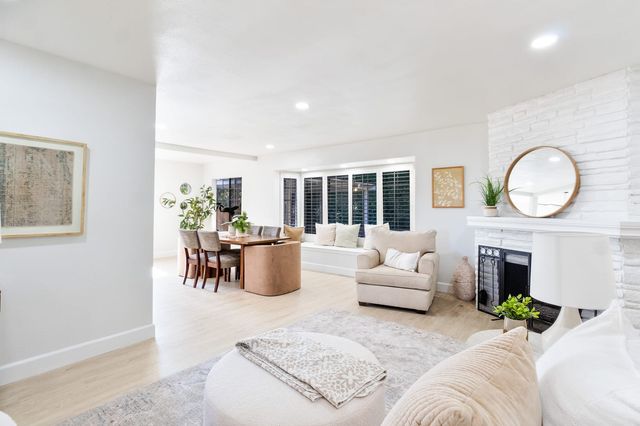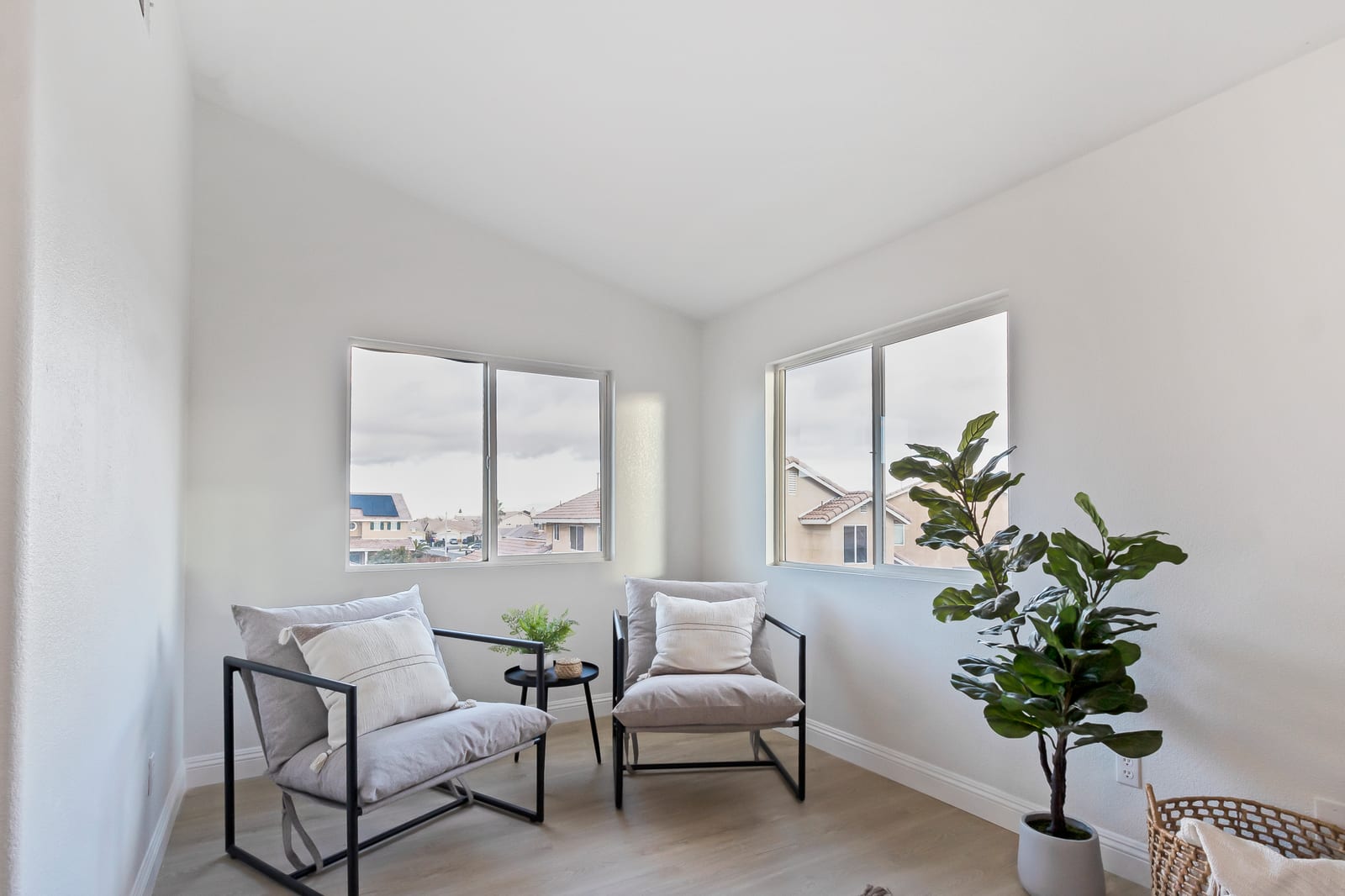
Mills Avenue is Montclair's western boundary, and along it the Los Angeles and San Bernardino county line separates Montclair, in San Bernardino County, from Claremont and Pomona, in Los Angeles County. The postwar tract houses on either side often look alike, but they answer to different assessors, appeals boards, recorders and school districts. For an appraisal, a sale across Mills Avenue can be valid evidence of value, provided the report tests the location difference and explains why the sale was used.
This article covers how the street became the line, what sits on each side, and how an appraiser handles a file that touches it. It is written for Montclair, Claremont and Pomona owners, for attorneys and fiduciaries with property near the line, and for anyone reviewing a report that crossed it.
How did Mills Avenue become the line?
Mills Avenue runs along what was once the route of San Antonio Creek, known earlier as the Arroyo de los Alisos. The county line has roots near the same creek: The Student Life, the Claremont Colleges newspaper, traced it to a black willow tree near the creek's western bank, from which the boundary was drawn as straight lines between landmarks and Mount Baldy.
Montclair grew up on the east side. By 1900 a tract here had been surveyed and named Monte Vista, and the area was largely citrus orchards through the first half of the twentieth century. After the Second World War it filled with houses, and the city was incorporated as Monte Vista in 1956 before voters renamed it Montclair. The San Bernardino Freeway, Interstate 10, crosses the north of the city.
What sits on each side?
The Montclair side. Most Montclair homes are single-story postwar and later tract houses on regular lots, built as the former Monte Vista orchard tracts filled in. They differ from one another mainly in additions, garage conversions, lot size and condition. Around the Montclair Transit Center, the Metrolink commuter hub, and Montclair Place, the regional shopping center, the stock mixes in older duplexes, small apartment buildings and houses divided into units.
The Los Angeles County side. West of Mills Avenue are Claremont and Pomona. East Pomona tracts and west Montclair tracts can look alike from the sidewalk and still sit under different assessors, boards and school districts. North of the 10, Montclair's tracts meet the Claremont and Upland lines; south of it, they continue toward Pomona and Chino.
The Montclair area page, the Pomona area page and the Claremont area page describe each city's pockets in more depth.
What changes when you cross Mills Avenue?
- Assessor. Montclair is assessed by the San Bernardino County Assessor-Recorder-County Clerk; Claremont and Pomona by the Los Angeles County Office of the Assessor. The assessed value, the taxable value each county enrolls, is not an appraisal on either side.
- Appeals board. Montclair disputes go to the San Bernardino County Assessment Appeals Board through the Clerk of the Board of Supervisors; Claremont and Pomona disputes go to the Los Angeles County Assessment Appeals Board.
- Records. Each county records deeds and publishes property characteristics in its own way, so living area, bathroom count and additions can read differently for similar houses.
- Schools. Montclair's elementary and middle grades are served by the Ontario-Montclair School District; the Los Angeles County side is served by other districts.
The full list is in what changes at the county line, and where the county line runs follows the boundary north past the Roberts Campus sports bowl and on to Mount Baldy.
How does an appraiser handle a sale across Mills Avenue?
A comparable sale, a recent closed sale of a similar property used as evidence of what the subject would sell for, can come from the other side of the street. The method is the same whichever side the subject is on.
- Start on the subject's side. A Montclair house is appraised from Montclair sales first; a Pomona or Claremont house from its own city's sales first.
- Cross when the evidence is better. A near-identical tract house just across Mills Avenue, closer in time, size and condition than anything on the subject's side, can be the strongest sale available.
- Test the location. Paired sales, two sales alike in nearly every way except the feature being tested, show whether buyers priced the two sides differently for that kind of house. Sometimes they do; sometimes they do not.
- Adjust only on evidence. An adjustment, the amount a comparable's price is raised or lowered for a difference from the subject, appears on the grid with its reason stated. No adjustment is assumed because the county changed.
- Reconcile the records. The subject is measured on site. A comparable's living area from the other county's record is checked against its listing and permits before it is used.
The pillar article, what the county line does to comparable sales, explains paired sales and bracketing in detail.
What does a reviewer throw out?
The recurring rejection on this stretch is a Claremont or Pomona sale across Mills Avenue used for a Montclair house with no location adjustment and no explanation, or the reverse. The houses may match; the county, the schools and the buyer pool may not, and the report has to say what the sales showed. Two related problems are worth naming:
- Sales from across the 10 used without comment. The freeway runs through the north of Montclair, and a sale on the other side of it can sit in a different pocket of the market.
- Additions taken from the record. On postwar tracts, the permit history of each addition or garage conversion is often the most important fact on inspection day, and a record that lags a permit can misstate living area on either side.
If a report already in hand relies on sales like these, an appraisal review or second opinion examines whether the comparables and adjustments are supported. A review is not a request for a different number.
The kinds of assignments that come in
- A Montclair tax appeal where the owner compares the San Bernardino County assessment with similar houses across Mills Avenue. The appraisal is valued as of the lien date, January 1, the date property taxes attach under Revenue and Taxation Code section 2192, and the board decides the value. See property tax appeals on the county line; filing periods are set by each county, so confirm the current period on the county's own page.
- A duplex near the Transit Center, where the legal unit count matters as much as the line. See multi-family 2-4 unit appraisal.
- A review of a report that mixed sales from both sides without saying why.
The county pages summarize each side, San Bernardino County and Los Angeles County, and the whole series is on the Two Counties, One Standard of Evidence hub.
Next step
If your house is on or near Mills Avenue, request an appraisal with the parcel number in hand and mention any nearby sales you know of, or call (909) 324-6122. The fee is set by the scope of the assignment and quoted before work begins, and the fee does not depend on the value.
Sources
- Montclair, California (Mills Avenue as the western border; San Antonio Creek; Interstate 10; Montclair Transit Center): https://en.wikipedia.org/wiki/Montclair,_California (accessed October 30, 2026)
- San Bernardino County history: Montclair (Monte Vista, citrus, incorporation and renaming): https://main.sbcounty.gov/2025/07/30/san-bernardino-county-history-montclair/ (accessed October 30, 2026)
- The Student Life, City Limits: On the Los Angeles County line (April 24, 2026): https://tsl.news/city-limits-on-the-los-angeles-county-line/ (accessed October 30, 2026)
- San Bernardino County Assessor-Recorder-County Clerk, assessment appeals and informal review: https://arc.sbcounty.gov/assessment-appeals/ (accessed October 30, 2026)
- San Bernardino County Clerk of the Board, Assessment Appeals: https://cob.sbcounty.gov/assessment-appeals/ (accessed October 30, 2026)
- Los Angeles County Office of the Assessor, decline in value: https://assessor.lacounty.gov/tax-relief/decline-in-value (accessed October 30, 2026)
- Los Angeles County Assessment Appeals Board: https://bos.lacounty.gov/services/assessment-appeals/ (accessed October 30, 2026)
- California Revenue and Taxation Code section 2192 (lien date): https://leginfo.legislature.ca.gov/faces/codes_displaySection.xhtml?lawCode=RTC§ionNum=2192 (accessed October 30, 2026)
- Ontario-Montclair School District: https://www.omsd.net/ (accessed October 30, 2026)
Gordon Hall, California Certified Residential Real Estate Appraiser, BREA No. AR003877 (lookup: https://www2.brea.ca.gov/breasearch/faces/party/view.xhtml?id=23601). Reports are prepared in conformity with the Uniform Standards of Professional Appraisal Practice (USPAP). Nothing here is legal or tax advice; admissibility is always the court's decision.
Frequently asked questions
Is Mills Avenue the county line?
Yes, along Montclair. Mills Avenue is Montclair's western boundary, and it is where Montclair in San Bernardino County meets Claremont and Pomona in Los Angeles County. The street runs along what was once the route of San Antonio Creek.
Is Montclair in Los Angeles County or San Bernardino County?
San Bernardino County. Montclair property is assessed by the San Bernardino County Assessor-Recorder-County Clerk, and formal assessment appeals go to the San Bernardino County Assessment Appeals Board through the Clerk of the Board of Supervisors.
Can a Pomona or Claremont sale be used to appraise a Montclair house?
Yes, when it is genuinely similar and better evidence than the Montclair sales available. The report explains why it was used and tests the location difference with paired sales, adjusting only when the market supports it.
Why do similar houses on either side of Mills Avenue have different records?
Each county publishes property characteristics such as living area, bathroom count and additions in its own way, and a record can lag a permit. An appraiser measures the subject on site and checks each comparable against its listing and permit history.