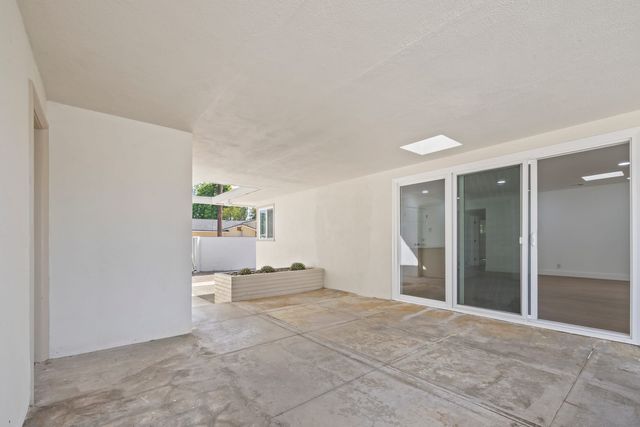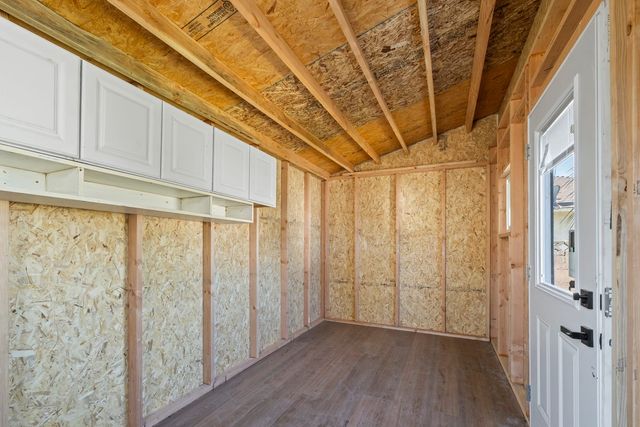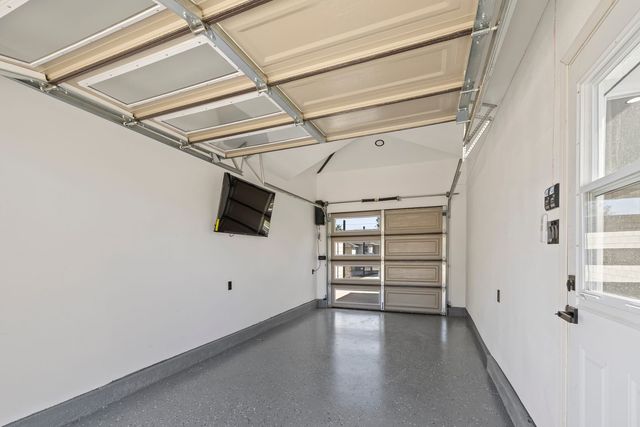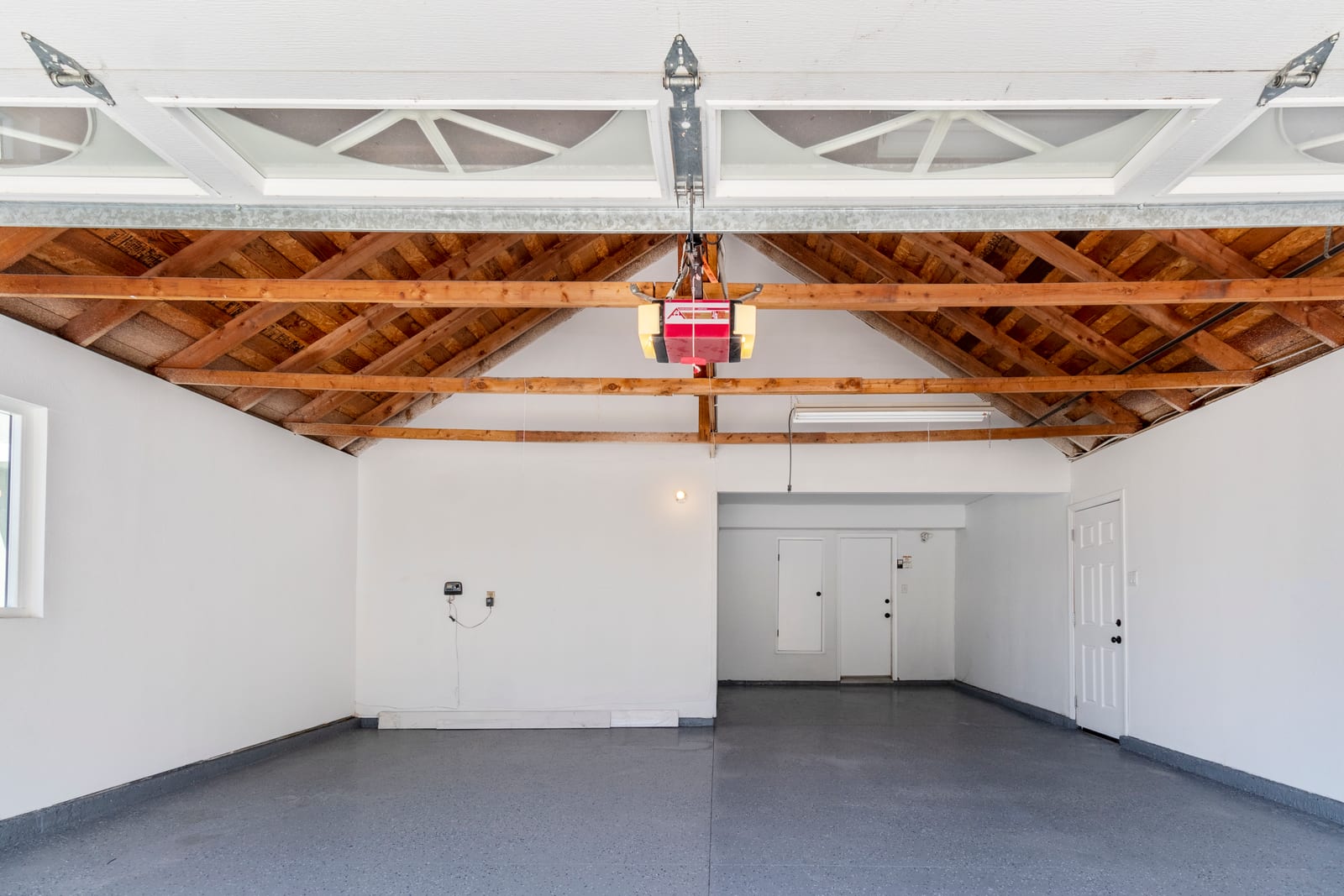
An ADU is appraised as part of one property, not as a second property with its own price. The appraiser first confirms what the unit is and whether it was permitted and finalled, then reports it on its own line beside the main house, and then measures its contributory value, what an improvement adds to the whole property in the market, from closed sales of similar local properties with and without a second unit. Build cost, rent and rules of thumb do not set the answer; the local sales evidence does, and the report shows that evidence.
This is the pillar of the ADUs, additions and new construction series, set out in the order the work is done.
What counts as an ADU in California?
State law defines the unit. Under Government Code section 66313(a), an accessory dwelling unit is "an attached or a detached residential dwelling unit" that "provides complete independent living facilities for one or more persons" and "is located on a lot with a proposed or existing primary residence." A junior accessory dwelling unit, or JADU, is defined in section 66313(d) as "a unit that is no more than 500 square feet of interior livable space in size and contained entirely within a single-family residence."
These sections are new numbers for old rules. The State Board of Equalization told county assessors in Letter To Assessors No. 2024/014 that Senate Bill 477 (Stats. 2024, ch. 7), effective March 25, 2024, "makes nonsubstantive changes and reorganizes" the ADU provisions, and that it "repeals former Government Code (GC) section 65852.2." An older ordinance citing 65852.2 points at the same rules under their former number.
One more line shapes the appraisal. Section 66314(d)(1) says the unit "may be rented separate from the primary residence, but shall not be sold or otherwise conveyed separate from the primary residence," with an exception for the separate-conveyance rules in Article 4. So there is usually no market for an ADU on its own: buyers pay for a lot with a house and a second unit, and that is what the appraiser values.
Step one: permit status, before anything else
The first question is what the unit legally is, and each city keeps its own process. The City of Claremont's ADU page describes an ADU as "commonly referred to as a granny flat, back house, or garage conversion" and sends applications to the Planning Division. The City of Upland's ADU page says its Planning Division "Determines if your property allows JADUs, attached and/or detached ADUs"; units follow chapter 17.37 of its municipal code.
A permitted, finalled unit is described as legal accessory living area. Space built without permits is described as it exists, with its status stated, and the report explains how it was treated; that is a separate subject with its own rules and is not covered here. When a fact cannot be confirmed before the report is signed, the appraiser may rely on an extraordinary assumption, an assumption about uncertain facts that, if false, could change the result, and the report says so in plain words.
Step two: where the unit goes in the report
Gross living area is the finished, above-grade living space of the main house, measured to a standard. A detached or separate ADU is not added to it. For loans sold to Fannie Mae, Selling Guide section B4-1.3-05 says the ADU's area "should not be included with the finished above-grade square footage calculation of the primary dwelling" and "should be reported and adjusted for on a separate line in the grid," unless the ADU is "contained within or part of the primary dwelling with interior access and above grade." The same section adds that "Lenders using UAD 3.6 must follow the requirements in the UAD 3.6 Policy Supplement." Whether an ADU is part of gross living area works through that measurement case by case.
The report form changed this month. Freddie Mac's UAD 3.6 FAQ says "UAD 3.6 will be mandatory for all new appraisal reports submitted to UCDP on or after November 2, 2026," with the redesigned Uniform Residential Appraisal Report replacing forms such as the 1004, 1073 and 1025. On ADUs it says "The URAR includes more detailed information about ADUs, such as size, condition, rooms, and location."
Step three: contributory value from local sales
Fannie Mae's guide states the core requirement: "When there is an ADU, the appraisal report must include a description of the ADU and analysis of any effect it has on the value or marketability of the subject property." It adds that "An aged settled sale will qualify as a comparable," while a listing or pending sale is only "a supplemental exhibit to show marketability."
- Find sales with a similar unit. The best comparable is a closed sale with a permitted second unit of similar size and quality in the same pocket. Where there are few, the search widens, and the report says how far and why.
- Read the difference. Sales with and without a unit, on otherwise similar lots, show the market's response. No fixed share of value is applied, because none holds from one block to the next.
- Keep cost apart from value. What the unit cost to build is a fact about the project. What buyers here paid for a property with such a unit is the evidence.
Rent is the lender's question. Fannie Mae's section B2-3-04 permits "Only one ADU" on a one-unit parcel and refers to section B3-3.8-01 for "the requirements that need to be satisfied in order to include rental income in qualifying." Whether rent is used is the lender's decision. Where an assignment calls for it, a market rent analysis documents local rents from leases.
The local evidence, pocket by pocket
The method is the same everywhere; the evidence is not.
- La Verne. Old Town's early bungalows on narrow lots often carry rear additions or units added over decades, and permit history decides how each is treated. The La Verne area page describes those blocks.
- Upland. Units behind older houses downtown and in the postwar and later tracts south of the 210 are compared tract to tract, with additions and garage conversions as the recurring adjustments.
- Pomona. Garage conversions and back units in the postwar tracts are the recurring lender questions. What the Pomona market has actually paid for a granny flat covers how that evidence is read.
- Claremont. Detached units behind ranch houses in the postwar tracts, and newer infill in the Village expansion west of Indian Hill, each compare with their own kind. The Claremont area page sets out the pockets.
- Montclair, Rancho Cucamonga and Chino. Montclair sits across Mills Avenue in San Bernardino County, so a sale from the Pomona or Claremont side needs its location explained. New construction in Etiwanda and in The Preserve in Chino, which the City of Chino describes as planned for "equestrian estates, contemporary apartments and condominiums, and entry-level housing," is compared within similar planned neighborhoods.
When the ADU is not built yet
A construction or renovation lender may ask for a value before the unit exists. A subject-to-completion appraisal values the property as if the plans and specifications were built as described, under a hypothetical condition, a condition assumed for the analysis that is known to be contrary to fact. A lender may also want the as-is value, the value in its present state. Fannie Mae's section B4-1.2-05 says such an appraisal "must be based on either plans and specifications, an existing model home" or another basis the section lists. After the work, a completion report, the appraiser's later statement on whether the work was finished as planned, closes the loop; under UAD 3.6, Freddie Mac says the update report and the completion report "are no longer one report." New construction appraisal in Upland covers new houses and builder sales.
The ADU lines of a comparable grid, left blank
Every figure is a dash on purpose; the grid shows which facts the report carries.
LineSubjectComparable 1Comparable 2Comparable 3
Main house gross living area
-
-
-
-
ADU type (detached, attached, JADU)
-
-
-
-
ADU living area, on its own line
-
-
-
-
ADU permit and final sign-off
-
-
-
-
ADU condition and quality
-
-
-
-
Adjustment and the reason for it
-
-
-
-
What to have ready
- The building permit and final sign-off for the unit, and the approved plans.
- For planned work, the plans, specifications and construction budget.
- Notes on utilities, entrance and parking, and access to the unit on inspection day.
The inspection runs 30 to 60 minutes for a standard single-family home, longer for hillside, custom, multi-family or homes with additions.
Numbers that are not appraisals
An automated estimate is not an appraisal, and it often misreads a lot with a second unit; what an AVM misses on a permitted ADU explains why. An agent's CMA, a county assessment and a cash offer are not appraisals either; the appraisal vs. estimate page sets all of them side by side.
Next step
When a lender or a family needs a documented value for a lot with an ADU, built or planned, new construction and ADU appraisal describes the assignment. You can request an appraisal or call (909) 324-6122. Reports are typically delivered three to five business days from the inspection. The fee is set by the scope of the assignment and quoted before work begins, and it does not depend on the value.
Sources
- California Government Code section 66313, definitions of accessory dwelling unit and junior accessory dwelling unit (copy at california.public.law) (accessed November 6, 2026)
- California Government Code section 66314(d)(1), rental and conveyance of an ADU (copy at california.public.law) (accessed November 6, 2026)
- California State Board of Equalization, Letter To Assessors No. 2024/014, Accessory Dwelling Units (May 2, 2024; SB 477 reorganization) (accessed November 6, 2026)
- City of Claremont, Accessory Dwelling Units (accessed November 6, 2026)
- City of Upland, Accessory Dwelling Units (accessed November 6, 2026)
- City of Chino, The Preserve (accessed November 6, 2026)
- Fannie Mae Selling Guide B4-1.3-05, Improvements Section of the Appraisal Report (06/04/2025) (accessed November 6, 2026)
- Fannie Mae Selling Guide B2-3-04, Special Property Eligibility Considerations (11/04/2026) (accessed November 6, 2026)
- Fannie Mae Selling Guide B4-1.2-05, Requirements for Verifying Completion and Postponed Improvements (12/10/2025) (accessed November 6, 2026)
- Freddie Mac, Uniform Appraisal Dataset (UAD) 3.6 and forms redesign FAQ (accessed November 6, 2026)
- California Bureau of Real Estate Appraisers, license lookup for Gordon Hall (accessed November 6, 2026)
Gordon Hall, California Certified Residential Real Estate Appraiser, BREA No. AR003877 (lookup: https://www2.brea.ca.gov/breasearch/faces/party/view.xhtml?id=23601). Reports are prepared in conformity with the Uniform Standards of Professional Appraisal Practice (USPAP). Nothing here is legal or tax advice; admissibility is always the court's decision.
Frequently asked questions
Can an ADU be appraised and sold on its own?
Usually not. California Government Code section 66314(d)(1) says an ADU may be rented separately from the primary residence but shall not be sold or otherwise conveyed separately, apart from the separate-conveyance rules in Article 4. So the appraisal values the whole property: the lot, the main house and the second unit together.
Does an ADU add a set percentage to a home's value?
No fixed share applies. The appraisal measures contributory value, what an improvement adds to the whole property in the market, from closed sales of similar local properties with and without a second unit. The answer depends on permits, size, quality, layout and the pocket the house sits in.
Is the ADU added to the main house's square footage?
Generally not. For loans sold to Fannie Mae, Selling Guide section B4-1.3-05 says ADU area should not be included in the primary dwelling's finished above-grade square footage and should be reported and adjusted for on a separate line, unless the ADU is within or part of the primary dwelling with interior access and above grade.
Will the lender count rent from my ADU?
That is the lender's decision under its own program rules. Fannie Mae's Selling Guide, for example, points to section B3-3.8-01 for the requirements to include rental income in qualifying. Where an assignment calls for it, the appraiser documents local market rent from leases, but the lender decides how it is used.
Can an ADU be appraised before it is built?
Yes. A subject-to-completion appraisal values the property as if the plans and specifications were built as described, under a hypothetical condition, a condition assumed for the analysis that is known to be contrary to fact. After construction, a completion report states whether the work was finished as planned.