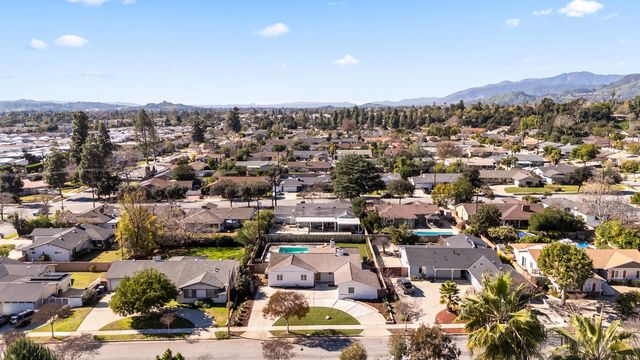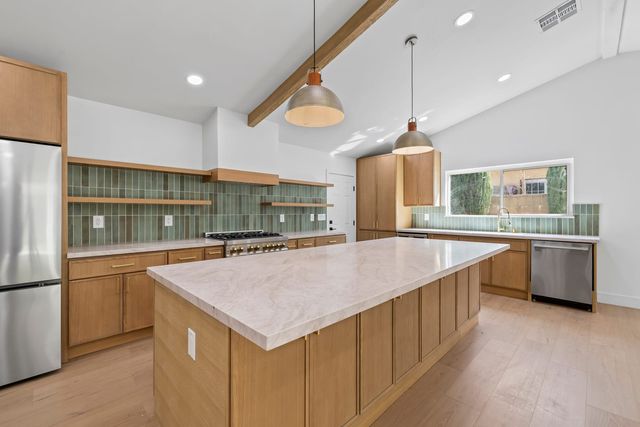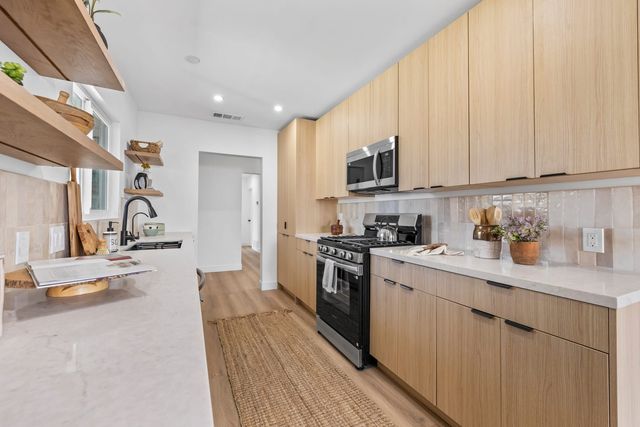
A Spanish Colonial Revival house in Claremont compares first with other period revival houses of similar era, size, condition and setting near the Village and the Colleges, then with other early houses in those blocks, and only then with anything farther away, each step written out. A later stucco house with a tile roof is not the same evidence, however alike the two look in a listing photo. Style is one line on the comparison, not the whole of it.
This article, part of Claremont home values, measured, applies the method in what is my Claremont house worth, and how an appraiser answers it to the revival houses near the Colleges.
What counts as Spanish Colonial Revival in Claremont?
Claremont Heritage calls the Spanish Colonial Revival of the 1920s and 1930s the town's most prominent revival style: stucco walls, red tile roofs, arched openings, and windows often covered with wood or wrought iron grilles. Its public examples include the Santa Fe Depot on First Street, the Garner House in Memorial Park and the whole Scripps College campus. The houses in the style sit mainly in the older blocks around the Village and the Colleges, beside Craftsman bungalows and Colonial Revival houses of the same decades.
Why does style alone not make a comparable?
Because the look outlived the era. Stucco walls and tile roofs turn up on later houses too, including newer construction such as the infill in the Village expansion west of Indian Hill, which is compared with its own kind, as newer infill and its comparables explains. A buyer choosing a 1920s revival house near the Colleges is weighing plaster walls, original openings, an older floor plan and a walk to the Village, not a roof color.
Fannie Mae's Selling Guide lists the characteristics a comparable sale should share with the subject: site, room count, finished area, style and condition. A comparable sale, a recent closed sale of a similar property that a buyer of this house would have weighed, has to match on most of those, not one, and each remaining difference gets an adjustment, the amount added to or subtracted from a comparable's price for that difference.
Which sales actually compare?
These are the kinds of assignments that come in, and the comparable search runs in this order:
- Period revival houses near the Village and the Colleges of similar size and condition, sold close to the effective date, the date the opinion of value applies to.
- Other pre-1940 houses in the same blocks, such as Craftsman bungalows of similar size and condition. The style difference is adjusted only if sales show buyers react to it; what a pre-1940 Craftsman near the Colleges is worth covers those houses.
- Period houses elsewhere in Claremont, with a location adjustment where the sales support one.
- Older houses across the county line, such as those in Upland's downtown historic districts, only when they are genuinely better evidence. School districts, assessor records and buyer pools change at the line; what the county line does to comparable sales explains why.
What does not compare without heavy explanation: a postwar ranch north of Foothill, a townhome south of the 10, or new infill with a tile roof. If one of them appears in a report, the reasoning must say why it was the better evidence.
What gets recorded on a revival house?
Gross living area, the finished, heated living space above grade, is measured at the house; on loans sold to Fannie Mae the appraiser follows the ANSI Z765-2021 standard. Beyond size, the appraiser records what separates one revival house from another:
- Original features: tile roof covering, plaster walls, arched openings, window grilles, tile work and built-ins, and which have been replaced.
- Visible condition: stucco cracking, water staining, the roof covering, windows and doors, and the age of heating, electrical and plumbing equipment as far as it can be seen.
- Later work: rear additions, a converted garage, a second story, with permit status for each.
- Outbuildings: a detached studio or rear unit, measured separately. Its contributory value, what it adds to the whole property in the market, depends partly on whether it was permitted.
What if few revival houses have sold?
Few may sell in any given stretch, so the search can reach further back in time or further out in distance. Each extension has a cost. An older sale needs a market conditions adjustment, a change to its price for movement in the market between its sale date and the effective date, supported by data rather than assumed. A more distant sale needs a location adjustment. Fannie Mae's guide requires commentary explaining the rationale whenever comparables come from outside the subject's market area, the area most of its demand and competition come from, and the same discipline makes any report easier to review.
Each adjustment must reflect the market's reaction to the difference, not a rule of thumb. When the adjustments pile up, the report gives that sale less weight and says why.
What does the comparable grid look like?
Here is the shape of the analysis, left blank: examples never carry a real address, sale or value.
Line itemSubjectComparable 1Comparable 2Comparable 3
Era and style
-
-
-
-
Gross living area, measured
-
-
-
-
Original features retained
-
-
-
-
Additions and permit status
-
-
-
-
Condition
-
-
-
-
Sale date and market conditions
-
-
-
-
Location relative to the Village
-
-
-
-
Net adjustment
-
-
-
-
What will an online number or an agent's opinion miss?
An automated estimate, such as a Zestimate or a Redfin Estimate, is not an appraisal; Redfin's own page calls its estimate a starting point. It sees a recorded bedroom count and square footage, not plaster, original openings or a converted garage. An agent's comparative market analysis, or CMA, is not an appraisal either; it is an opinion of a likely list or sale price. The county's assessed value is not an appraisal: it is the taxable value under California's assessment rules, not an opinion of market value, the most probable price a property should bring in a competitive and open market under the conditions of a fair sale. Appraisal vs. estimate sets the differences side by side.
Who is the report for?
Every report names its intended use, what it will be used for, and its intended users, the people entitled to rely on it. A seller can order a pre-listing appraisal before choosing a list price, which the seller and their agent still decide; heirs, trustees and attorneys often need a value as of a past date. The historic pre-1940 home appraisal page covers how early houses are scoped, reading sales within walking distance of the Village covers the blocks around them, and the Claremont area page places this pocket among the others in 91711. The appraiser is independent of every party, including the one who pays.
Next step
If you own a revival house near the Village or the Colleges, request an appraisal or call (909) 324-6122. The fee is set by the scope of the assignment and quoted before work begins, it does not depend on the value, and the report is typically three to five business days from the inspection.
Sources
- Claremont Heritage, Architecture, accessed October 30, 2026
- Fannie Mae Selling Guide B4-1.3-08, Comparable Sales, accessed October 30, 2026
- Fannie Mae Selling Guide B4-1.3-09, Adjustments to Comparable Sales, accessed October 30, 2026
- Fannie Mae Selling Guide B4-1.3-05, Improvements Section of the Appraisal Report, accessed October 30, 2026
- Redfin, the Redfin Estimate, accessed October 30, 2026
- Los Angeles County Office of the Assessor, accessed October 30, 2026
- The Appraisal Foundation, Uniform Standards of Professional Appraisal Practice (USPAP), accessed October 30, 2026
- California Bureau of Real Estate Appraisers, license lookup, accessed October 30, 2026
Gordon Hall, California Certified Residential Real Estate Appraiser, BREA No. AR003877 (lookup: https://www2.brea.ca.gov/breasearch/faces/party/view.xhtml?id=23601). Reports are prepared in conformity with the Uniform Standards of Professional Appraisal Practice (USPAP). Nothing here is legal or tax advice; admissibility is always the court's decision.
Frequently asked questions
Can a newer stucco house with a tile roof be a comparable for a 1920s Spanish Colonial Revival house?
Rarely, and only with explanation. Comparables should share site, room count, finished area, style and condition with the subject. A newer stucco house shares a look but not the era, construction or floor plan, so period houses near the Village and the Colleges come first.
What if no Spanish Colonial Revival house has sold near mine recently?
The appraiser widens the search in steps: other early houses in the same blocks, period houses elsewhere in Claremont, then older sales or more distant ones. Each step needs a supported adjustment for time or location and a written reason, and sales needing heavy adjustment get less weight.
Does an original tile roof or plaster interior change the value of a Claremont revival house?
Only as far as sales show buyers react to it. The appraiser records which original features remain and their condition, then looks for comparable sales that show whether those features made a difference. No premium is assumed without evidence.
Are sales from Upland used for a Claremont Spanish Colonial Revival house?
Only when they are genuinely better evidence than Claremont sales. Upland is across the county line in San Bernardino County, where school districts, assessor records and buyer pools differ, so any such sale carries a location adjustment and a written reason.