A home in the Claremont Village is worth what closed sales of comparable houses support as of a stated date, and in the Village finding nearby sales is the easy part. The harder part is that houses within a short walk of each other differ in era, style, measured size, lot and decades of later changes, so the closest sale is not automatically the best one. An appraiser reads those sales one at a time, measures what differs and writes out every adjustment, the amount added to or subtracted from a sale's price for a difference buyers pay for.
This article is for owners, heirs and trustees of older houses around the Village and the Colleges who want to know how a value there is built, and why it rarely matches a number pulled from a map.
What counts as the Village for a home value?
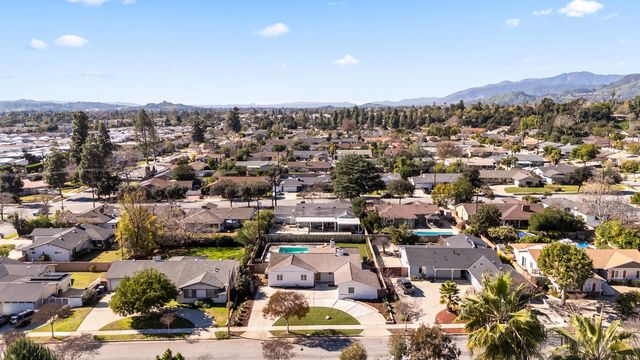
For an appraiser, the Village means the oldest blocks of Claremont, around Claremont Village and the Claremont Colleges along Indian Hill Boulevard and College Avenue. The housing there is Victorian, Colonial Revival, Spanish Colonial Revival and Craftsman bungalow, with a scattering of 1930s and 1940s modernist homes.
Two neighbors are kept separate. West of Indian Hill, the Village expansion on the former citrus packing plant site added newer infill, which is compared with newer construction of its own kind, as covered in the Village expansion article. North of Foothill Boulevard, the postwar ranch tracts form a different market again. A Village house is valued from Village-era evidence first.
Why is the closest sale not always the best comparable?
A comparable sale is a closed sale of a property that a buyer for this house would have weighed as a real alternative. Distance is one test of that. Era, style, gross living area (the finished, heated living space above grade), lot, condition and the history of the house are others, and in the Village they vary block by block.
Consider the kinds of pairings that come up. A Craftsman bungalow with its original woodwork and a later house of the same bedroom count may sit a short walk apart, yet appeal to different buyers. A Spanish Colonial Revival house with its garage converted to a room is not the same as one with the garage intact. A reviewer rejects a Village Craftsman compared on bedroom count alone, and the same reasoning applies inside the Village as it does across town.
So the search starts with sales of the same era and style nearby, then widens in steps: the same style a little farther out, then a similar era in another style, each step explained. A sale from north of Foothill or from across the county line is used only when it is genuinely the better evidence, and the report says why.
Does walking distance to the Village change value?
Proximity to the Village and the Colleges is a location characteristic, and it is treated like any other: as something the sales either show or do not show. An appraiser does not assume buyers pay more or less for it. Where the evidence allows, otherwise similar houses at different distances are compared, and any location adjustment is drawn from that comparison.
Where the sales are too few or too different to isolate location, the report says so plainly rather than inventing a figure. The overview of how a Claremont value is built describes how adjustments of every kind are reconciled.
What inside a Village house matters most?
Older houses carry history, and much of it is not in the public record.
- Gross living area is measured on site. Porches and back rooms enclosed decades ago often make the measured area differ from the assessor's record, and a value built on copied square footage starts from the wrong number.
- Permit status decides how added space is treated. A permitted rear addition and an unpermitted enclosed porch are recorded differently, and the report explains how each was handled.
- Original detail versus later change. Era and original detail are compared with houses of the same kind, as the article on pre-1940 Craftsman houses near the Colleges sets out.
- Raised foundations and older systems are noted as part of condition, along with how recently the house was updated.
- Rear units and ADUs. Their contributory value, what they add to the whole property in the market, is read from sales and depends on permit status.
How does the grid look for a Village house?
The sales comparison grid for a Village house carries the usual lines plus a few that matter more here. A blank version shows the shape; figures in a real report come only from the analysis.
LineSubjectSale 1Sale 2Sale 3
Distance and location
-
-
-
-
Era and style
-
-
-
-
Measured gross living area
-
-
-
-
Enclosed porch or addition, permit status
-
-
-
-
Condition and updating
-
-
-
-
Lot size
-
-
-
-
Rear unit or ADU
-
-
-
-
Adjusted sale price
-
-
-
-
Why do automated numbers struggle here?
The blocks around the Colleges hold the pre-1940 stock that automated estimates handle worst. An automated estimate, such as a Zestimate, is not an appraisal: it is an algorithm's statistical estimate from records and nearby sales, made without seeing inside the house. When the record carries square footage from before a porch was enclosed, or cannot tell an original bungalow from a heavily rebuilt one, the estimate inherits that gap. An agent's comparative market analysis (CMA), also not an appraisal, may see the house but is built to price a listing rather than to support an opinion of value someone else will review.
Who is a Village appraisal for?
The report states its intended use, what it will be used for, and its intended users, the people entitled to rely on it. Long-held Village houses often reach estates and trusts, where heirs and CPAs need a value as of a date of death, and sellers of unusual houses often want a value built from their own pocket before setting a list price. The appraiser is independent of every party, including the one who pays, and no value is discussed before the work is done. For houses where era and original detail drive the analysis, see historic pre-1940 home appraisal.
Next step
If you are weighing a sale, a pre-listing appraisal builds the value from Village evidence before you choose a price. For any other purpose, request an appraisal or call (909) 324-6122. The fee is set by the scope of the assignment and quoted before work begins; it does not depend on the value. The Claremont area page describes every pocket, and this series continues under Claremont Home Values, Measured.
Sources
- The Appraisal Foundation, Uniform Standards of Professional Appraisal Practice (USPAP): appraisalfoundation.org (accessed October 30, 2026)
- Claremont Heritage, Architecture (styles and eras): claremontheritage.org (accessed October 30, 2026)
- Claremont, California (the Village, the Village expansion, ZIP 91711): en.wikipedia.org (accessed October 30, 2026)
- Zillow, What is a Zestimate: zillow.com/zestimate (accessed October 30, 2026)
- LA County Library, Claremont local history: library.lacounty.gov (accessed October 30, 2026)
Gordon Hall, California Certified Residential Real Estate Appraiser, BREA No. AR003877 (lookup: https://www2.brea.ca.gov/breasearch/faces/party/view.xhtml?id=23601). Reports are prepared in conformity with the Uniform Standards of Professional Appraisal Practice (USPAP). Nothing here is legal or tax advice; admissibility is always the court's decision.
Frequently asked questions
Is the closest sale the best comparable for a Claremont Village house?
Not automatically. Houses near the Village and the Colleges differ in era, style, measured living area, lot and later changes such as enclosed porches or converted garages. An appraiser starts with sales of the same era and style nearby and widens the search in explained steps.
Does being within walking distance of the Claremont Village add value?
An appraiser does not assume it does or does not. Proximity is a location characteristic, and any adjustment for it is drawn from comparing otherwise similar sales at different distances. If the sales are too few to show it, the report says so.
Why does my Village house measure differently from the county record?
On older Claremont houses, porches and back rooms were often enclosed long after the house was built. An appraiser measures gross living area, the finished, heated living space above grade, on site and records permit status for each addition, so the measured figure can differ from the record.
Is a Village appraisal different from one in the Village expansion?
Yes. The Village expansion west of Indian Hill is newer infill on the former citrus packing plant site and is compared with newer construction of its own kind. Older Village houses are compared with sales of their own era and style first.