Your Claremont house is worth what closed sales of houses like it, in its own pocket of town, support as of a stated date, after each difference has been measured and adjusted for. No ZIP code figure answers that for one house. A median is the midpoint of whatever happened to sell in 91711 during a period, and that list mixes pre-1940 Village houses, postwar ranch houses north of Foothill, hillside customs and condominiums south of the 10. It describes the mix, not your house.
This article is for owners and advisers who have seen a city figure on a portal and wondered how far to trust it.
What is a ZIP code median, exactly?
A median sale price is the middle sale in a list: half the sales in the period closed above it and half below. It summarizes a list. It does not measure any house on that list, let alone one that did not sell.
The figure carries no information about size, lot, era, condition or location within the ZIP code. A small bungalow near the Colleges and a large hillside home in Claraboya count as one sale each. Nothing in the median says which kinds of houses made up the list, so nothing in it says where your house sits relative to the middle.
Why does the 91711 median move when no house has changed?
Because the list changes. Suppose that in one period more of the sales happen to be custom homes in Claraboya and Padua Hills, and in the next more of them are townhomes and condominiums south of the 10. The midpoint of the first list will sit in a different place from the midpoint of the second, even if not one house in Claremont changed in what a buyer would pay for it.
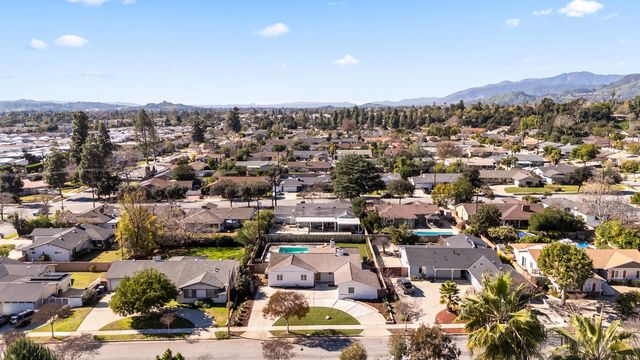
That is a mix effect, and Claremont is unusually exposed to it. One ZIP code holds the oldest blocks around the Village and the Colleges along Indian Hill Boulevard and College Avenue, the newer infill of the Village expansion, postwar single-story tracts reaching toward Base Line Road, hillside homes sold on view, grade and access, Northeast Claremont beside the Wilderness Park, and attached homes south of the 10. When a few more sales come from one pocket than another, the midpoint shifts. That tells you about the list, not the house on your street.
What does a median leave out about your house?
Everything an appraiser measures. In particular:
- Gross living area, the finished, heated living space above grade, measured on site. On older Claremont houses whose porches and back rooms were enclosed decades ago, the public record and the measured area can differ.
- Permit history. A permitted ADU and an unpermitted garage conversion are treated differently, and a median cannot tell one from the other.
- Condition and updating. A house with original systems and a house rebuilt inside its old walls can share an era and a street.
- Lot, view and grade. On the hillside these can outweigh size. North of Foothill, an oversized lot may or may not matter, depending on what the sales show.
- Location within the city. Closeness to the Village, to the 10 or the 210, or to the Mills Avenue county line with Montclair and Upland in San Bernardino County.
- A date. A median spans a period of sales. A value for an estate, a divorce or a tax appeal needs an effective date, the single date the opinion of value applies to.
Where do portal numbers fit?
The pages that rank for Claremont home value queries usually put an address box above a city median, a price chart and a list of recent sales. The address box returns an automated estimate, such as a Zestimate, which is not an appraisal: an algorithm's statistical estimate from records and nearby sales, made without seeing inside the house. Each portal says on its own page that its estimate is not an appraisal.
An average price per square foot has the same weakness as the median. A square foot in a Village bungalow and a square foot in a ranch house north of Foothill are not the same thing to a buyer, so an average across the ZIP code blends unlike houses.
Two other figures often sit beside these. An agent's comparative market analysis (CMA) is not an appraisal; it is an opinion of a likely list or sale price. The county's assessed value is not an appraisal either; it is the taxable value under Revenue and Taxation Code section 51, and on a long-held house it can sit far from market value.
What does answer the question for one house?
An appraisal answers it: an independent opinion of market value, the most probable price the house should bring in a competitive, open market between an informed buyer and seller under no unusual pressure, as of a stated date, developed under the Uniform Standards of Professional Appraisal Practice (USPAP). The difference from a median is easiest to see side by side.
QuestionZIP code medianAppraisal
Applies to your house
No
Yes
Has an effective date
No, a period
Yes
Living area measured on site
No
Yes
Sales chosen from your pocket
No
Yes, or the reason is stated
Each difference priced and explained
No
Yes
Says what it is for and who relies on it
No
Yes
The work behind the right-hand column starts with a comparable sale, a closed sale of a property a buyer for your house would have weighed as a real alternative, chosen from the same pocket first. Each one then receives an adjustment, the amount added to or subtracted from its price for a difference buyers pay for, such as living area, lot, condition or view. The full method for a Claremont house walks through each step, and the report names its intended use, what it will be used for, and its intended users, the people entitled to rely on it.
How does the pocket change the comparable search?
The pocket decides where the search begins. A house near the Village is compared with houses of its era and style nearby, as explained in reading Village sales within walking distance. A ranch house north of Foothill is compared with the ranch-house comparables of the postwar tracts, covered in the postwar tract article. A hillside home widens the radius with its reasoning written out. A sale from across the county line is used only when it is genuinely the better evidence, with the location adjustment explained. The Claremont area page describes each pocket in turn.
When does the difference matter?
When someone else will rely on the number. These are the kinds of assignments that come in: a seller of an unusual house choosing a list price, an heir or trustee who needs a value as of a date of death, two spouses who need one independent figure. The lender, court, board or CPA decides what to do with the report. The appraiser is independent of every party, including the one who pays, and no value is discussed before the work is done.
Next step
If you are deciding whether and at what price to list, a pre-listing appraisal builds the value from your own pocket rather than the ZIP code. You can also request an appraisal for another purpose or call (909) 324-6122. The fee is set by the scope of the assignment and quoted before work begins, and it does not depend on the value. More articles in this series are under Claremont Home Values, Measured.
Sources
- The Appraisal Foundation, Uniform Standards of Professional Appraisal Practice (USPAP): appraisalfoundation.org (accessed October 30, 2026)
- Zillow, What is a Zestimate: zillow.com/zestimate (accessed October 30, 2026)
- Redfin, Redfin Estimate: redfin.com/redfin-estimate (accessed October 30, 2026)
- California Revenue and Taxation Code section 51: leginfo.legislature.ca.gov (accessed October 30, 2026)
- Claremont Heritage, Architecture: claremontheritage.org (accessed October 30, 2026)
- Claremont, California (pockets, Northeast Claremont, the Wilderness Park, ZIP 91711): en.wikipedia.org (accessed October 30, 2026)
Gordon Hall, California Certified Residential Real Estate Appraiser, BREA No. AR003877 (lookup: https://www2.brea.ca.gov/breasearch/faces/party/view.xhtml?id=23601). Reports are prepared in conformity with the Uniform Standards of Professional Appraisal Practice (USPAP). Nothing here is legal or tax advice; admissibility is always the court's decision.
Frequently asked questions
Why is the Claremont median different from what my house would sell for?
A median is the middle sale in a list of everything that sold in ZIP code 91711 during a period. That list mixes pre-1940 Village houses, postwar ranch houses, hillside customs and condominiums. It reflects the mix of what sold, not the size, condition, lot or location of any one house.
Can the Claremont median change even if no house changed in value?
Yes. If one period has more hillside custom sales and the next has more townhome and condominium sales, the midpoint moves even though no individual house changed in what a buyer would pay for it. That is a change in the mix of sales, not in any one property.
Is price per square foot a better way to value a Claremont house?
Not on its own. An average price per square foot across the ZIP code blends unlike houses, such as a Village bungalow and a ranch house north of Foothill. An appraiser adjusts for living area within a set of comparable sales from the same pocket instead of applying one city-wide rate.
What does an appraisal give me that a median does not?
An appraisal is an independent opinion of market value for one house as of a stated effective date. It measures gross living area on site, selects comparable sales from the same pocket first, writes out each adjustment and names its intended use and intended users. A median does none of those things.