A Claremont house on acreage is appraised as one property, the whole parcel, but the report takes it apart to explain the value: the site value of the land, the contribution of the home and any outbuildings, and whether part of the land is excess land that could be used or sold on its own or surplus land that only adds to the whole. Highest and best use is stated first. Comparables are houses on similar land, not the nearest tract, and every step is explained so a lender, a trustee or a court can follow it.
One property, explained in parts
Lenders and reviewers want the whole parcel valued as it is. Fannie Mae's Selling Guide says the appraisal must reflect the entire parcel, not a hypothetical portion of it. If a reader needs the value of only part of the land, that is a different question, answered only under a hypothetical condition, a condition assumed for the analysis that is known to be contrary to fact, and stated as such. For an ordinary purchase or refinance, the report values the house and all of its land together.
Inside that single opinion, the analysis still separates the pieces, because each one is supported by different evidence and a reviewer will ask about each.
Where Claremont's acreage homes sit
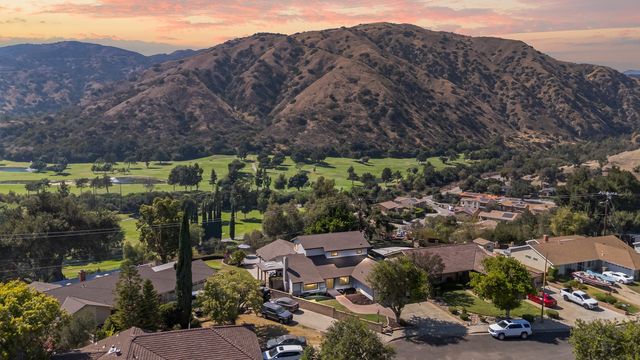
North of Foothill Boulevard, the postwar ranch tracts sit on wider lots reaching toward Base Line Road. Above them the foothills hold Claraboya and Padua Hills, near the Padua Hills Theatre, where custom and hillside homes sell on view, grade and access, and Northeast Claremont, where the Stone Canyon Preserve homes sit beside the Wilderness Park. A house on a large foothill parcel has few true twins, so the search is wider than for a tract home and the report says how far it went and why.
Highest and best use and site value
Highest and best use is the reasonably probable use that is legally permitted, physically possible, financially feasible and the most productive. For a house on acreage the question is whether the existing home is that use. Fannie Mae's guide says existing improvements can be the highest and best use when they are typical for the neighborhood and add value above the vacant site value.
Site value is the value of the land as if vacant and ready for its use. On a foothill parcel it reflects the same things that decide any Claremont land value: legal access, slope, sewer or septic, and what the city's zoning and hillside rules allow. Land sales are thin in Claremont, so site value may be supported from foothill land sales across a wider area, with the reasoning stated, and checked against what improved sales imply.
Excess land or surplus land
This is the distinction that matters most on acreage. Excess land is land beyond what the home needs that could be used or sold separately, and so has its own highest and best use. Surplus land is extra land that cannot be split off or developed on its own; it may make the home more private or more useful, but it adds less, and only as part of the whole.
Which one a parcel has depends on the city, not on its size. Claremont's Zoning Code and Maps page says the Zoning Code outlines the uses permitted on each parcel and the size and placement of structures, and it publishes Title 17, the subdivision ordinance. On hillside land, Claremont's General Plan glossary describes Hillside Ordinance cluster sites that allow the transfer of development credits from another hillside parcel, so development potential can sit somewhere other than the acreage itself. The report never treats land as excess, or assumes a lot split, without the city's documents. If a split is uncertain, that is an extraordinary assumption, an assumption about uncertain facts that, if false, could change the result, and it is stated plainly.
The home and what else is on the land
The home is measured and described like any other: gross living area, condition, quality, and permit history on additions and ADUs. Outbuildings are valued for their contributory value, what each adds to the whole property in the market, not their cost. A barn, a guest structure, a pool or an arena on a Claremont acreage property is looked at on its own line, for condition, permits and fit with the lot. How barns, arenas and stalls are valued item by item shows the same method on Chino horse lots.
Comparables, the county line and what is not an appraisal
A Claremont house is appraised from Claremont sales first. When the search widens, toward the La Verne foothills, north Upland or San Antonio Heights above Upland, the report explains each sale. Claremont is assessed by the Los Angeles County Office of the Assessor, and Upland and San Antonio Heights by the San Bernardino County Assessor-Recorder-County Clerk, so a sale across the line is used only when it is the better evidence, with the location adjustment explained.
The land and improvement figures on a tax bill are a county assessment, not an appraisal. A portal's automated estimate is not an appraisal either; it reads acreage as a number and cannot tell excess land from surplus land.
What a lender checks
Lenders question acreage because of the rules for the loans they sell. Fannie Mae lists agricultural properties such as farms or ranches as ineligible and requires a property to be residential in nature. A house on acreage used as a residence fits; land that is farmed as a business raises a different question. The report gives the facts the lender weighs, and whether the loan proceeds is the lender's decision.
Who orders these reports, and where the scope ends
These are the kinds of assignments that come in: a refinance or purchase on a foothill property, an estate or trust holding a large Claremont parcel, and a divorce in which both sides read the same report. Each report states its intended use, what the report will be used for, its intended users, the people entitled to rely on it, and its effective date, the date the opinion of value applies to.
The Appraisal Foundation describes the Certified Residential scope as one-to-four residential units without regard to value or complexity, and a Certified General appraiser as able to appraise all types of real property; BREA sets the residential scope by reference to federal rule and the Appraiser Qualifications Board Criteria. A house on acreage fits. If the land's highest and best use is a multi-lot subdivision or a commercial project, that analysis belongs with a Certified General appraiser, a point to settle before any engagement.
What to send, and next step
- A survey or plot plan, and a preliminary title report with recorded easements.
- Permits and final sign-offs for the house, additions, ADUs and outbuildings.
- Any city correspondence about lot splits, hillside status or development credits.
- Sewer or septic records.
The inspection runs 30 to 60 minutes for a standard single-family home, longer for hillside, custom, multi-family or homes with additions. Reports are typically delivered three to five business days from the inspection. Fees are set by the scope of the assignment, quoted before work begins and do not depend on the value.
The guide to appraising land and horse property covers access, slope and lot use, and the Claremont land appraisal guide covers parcels with no house. The land, acreage and equestrian knowledge center collects the rest, and the Claremont area page describes the city's pockets. To scope a Claremont acreage property, use equestrian and large-lot appraisal or call (909) 324-6122.
Sources
- Fannie Mae Selling Guide B4-1.3-04, Site Section of the Appraisal Report, accessed November 6, 2026
- Fannie Mae Selling Guide B2-3-01, General Property Eligibility, accessed November 6, 2026
- City of Claremont, Zoning Code and Maps, accessed November 6, 2026
- City of Claremont General Plan, Appendix B Glossary, accessed November 6, 2026
- The Appraisal Foundation, Real Property Appraisal (classifications and scope), accessed November 6, 2026
- Bureau of Real Estate Appraisers, Real Estate Appraiser License Levels, accessed November 6, 2026
Gordon Hall, California Certified Residential Real Estate Appraiser, BREA No. AR003877 (lookup: https://www2.brea.ca.gov/breasearch/faces/party/view.xhtml?id=23601). Reports are prepared in conformity with the Uniform Standards of Professional Appraisal Practice (USPAP). Nothing here is legal or tax advice; admissibility is always the court's decision.
Frequently asked questions
How is a house with acreage appraised?
As one property, the whole parcel, with the analysis separated into site value, the contribution of the home and outbuildings, and any excess or surplus land. Highest and best use is stated first, and comparables are houses on similar land rather than the nearest tract, with any wider search explained.
What is the difference between excess land and surplus land?
Excess land is land beyond what the home needs that could be used or sold separately, so it has its own highest and best use. Surplus land is extra land that cannot be split off or developed on its own; it adds to the property only as part of the whole and usually adds less.
Can the appraisal assume I could split off part of my Claremont lot?
Not without support. Whether land can be divided depends on the city's zoning, subdivision and hillside rules. If a split is uncertain, the report states it as an extraordinary assumption, an assumption about uncertain facts that could change the result if false, or leaves it out.
Why do lenders ask more questions about acreage?
The loans they sell must meet investor rules. Fannie Mae requires a property that is residential in nature, lists farms and ranches as ineligible, and requires the appraisal to reflect the entire parcel. The report gives the lender the facts, and the lender decides whether the loan proceeds.