Land and horse property are appraised from what the land can legally and physically be used for, not from finished square footage. Four things carry most of the analysis: legal access, slope, utilities and the use the zoning allows, followed by what each barn, arena or set of stalls adds in the market. The appraiser states the highest and best use first, then chooses comparable sales with the same kind of lot use, even when a tract house is closer. The report is an independent opinion of market value as of a stated date, and a lender, court, trustee or CPA decides what to do with it.
Why land and horse property need a different method
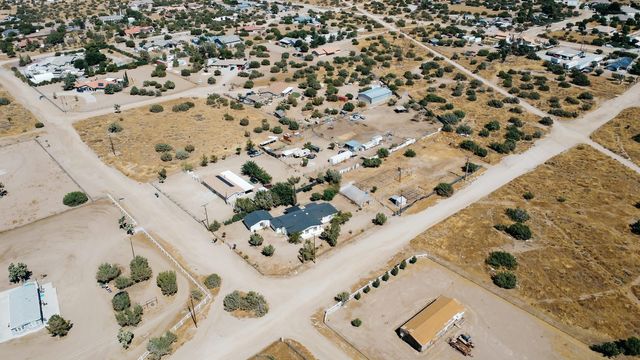
A tract house has neighbors that sold with similar floor plans. A vacant foothill lot or a horse property usually has no such twin. Two adjacent parcels toward Padua Hills or Mt. Baldy can support very different projects because one has a recorded road and sewer and the other has neither. A horse lot in Chino or near Marshall Canyon in La Verne sells to a buyer who wants corrals and trail access, not to the buyer shopping the tract three streets away. So the scope of work, the type and extent of research and analysis, starts with maps, recorded documents, utility letters and the zoning.
Highest and best use comes first
Highest and best use is the reasonably probable use of the land that is legally permitted, physically possible, financially feasible and the most productive of those. On a vacant parcel it answers what the land could become; on an improved parcel it asks whether the house and outbuildings there now are that use. Fannie Mae's Selling Guide says it will only purchase a loan that represents the highest and best use of the site as improved, one reason lenders read acreage files closely.
The four questions that decide a land value
Legal access
Legal access is a recorded right to reach the parcel from a public road, either by frontage on that road or by an easement across someone else's land. Claremont's General Plan glossary defines an easement as a recorded right or interest in land that belongs to someone else. A dirt track neighbors have always used is physical access, not legal access, until a document says so. Where access is unclear, the report says what was assumed.
Slope and buildable area
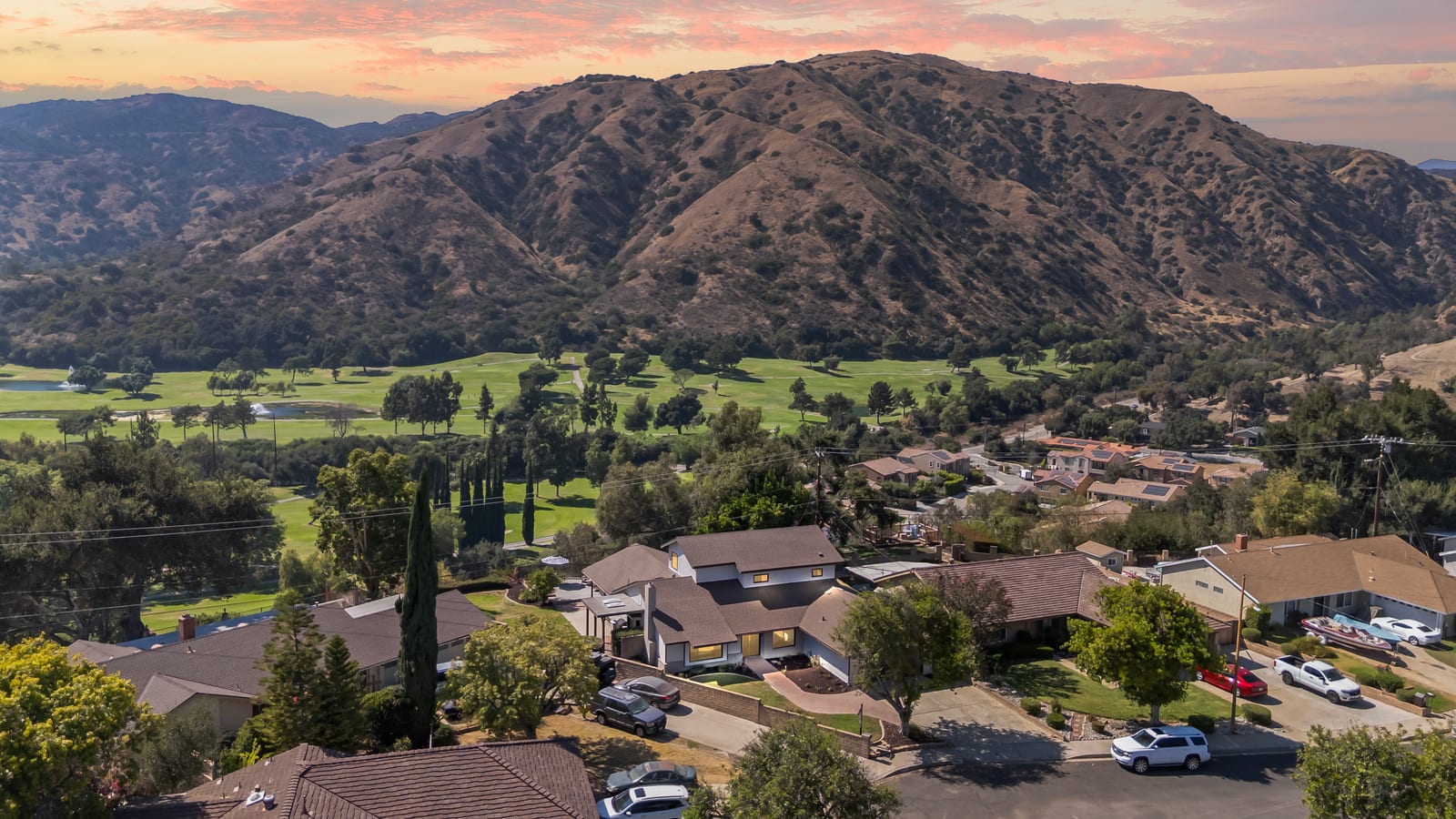
Slope is commonly expressed as a ratio of horizontal distance to vertical distance, and on a foothill parcel it decides how much of the land can carry a pad, a driveway and a septic field. Claremont's glossary also describes its Hillside Ordinance cluster sites, areas that allow some or all of the development credits from another hillside parcel to be transferred. Hillside development potential in Claremont is set by the city's code, not by acreage alone, and the report never assumes a lot is buildable without saying so.
Utilities
Claremont's glossary contrasts a sanitary sewer, which carries waste to a treatment plant, with septic tanks or leach fields that hold it on site. A parcel that needs a new septic system, or a water line run up a canyon road, competes with lots that already have service, and the comparables must reflect that.
Zoning and lot use
Zoning is read from the city or county map, never from memory or from the assessor's records. In Chino, the city's zoning code describes the Residential/Agricultural RD 1 district as very large lot residential use in a rural setting where horse-keeping and small-scale agriculture are allowed, and RD 2 as large lot development that includes horse-keeping. Above Upland, San Bernardino County's plan page for San Antonio Heights describes a community that has worked to maintain large lots by restricting lot splits. Unincorporated Los Angeles County land, including its side of Mt. Baldy, takes its zoning from the county's Department of Regional Planning, whose Z-NET tool serves the areas outside a city.
Site value, excess land and surplus land
Site value is the value of the land as if vacant and ready for its use. On a house with acreage, the appraiser also asks whether part of the parcel is more than the house needs. Excess land is land beyond what the improvements need that could be used or sold separately and so has its own highest and best use. Surplus land is extra land that cannot be split off or developed on its own, so it adds less, and only as part of the whole.
Fannie Mae's guide says an appraisal must reflect the entire parcel, not a hypothetical portion of it. How site value, excess land and the home are separated on a Claremont acreage property walks through that analysis.
Barns, arenas and stalls: contributory value, not build cost
Contributory value is what an improvement adds to the whole property in the market. It is not what the barn cost to build. A covered stall row, a riding arena, corrals and a barn are each looked at separately for condition, permits and fit with the lot, and against whether the comparable sales show buyers paying for them. One lump adjustment for every outbuilding is the error a reviewer catches first. How barns, arenas and stalls are valued item by item in Chino shows the comparable grid.
Comparables are chosen for lot use. Near Marshall Canyon Regional Park, which Los Angeles County places in the foothills of La Verne with the Fred M. Palmer Equestrian Center, and in Alta Loma near the Heritage Park Equestrian Center, a horse lot is compared with other horse-keeping properties.
Agricultural preserve status
Some parcels in and around the Chino Valley carry agricultural preserve status or history. The Williamson Act, formally the California Land Conservation Act of 1965 (Government Code section 51200), lets a city or county limit the use of agricultural land by contract (section 51240), and section 51201 defines an agricultural preserve as an area devoted to agricultural, recreational or open-space use. Where one applies, the appraisal notes it as a condition affecting use and names the documents relied on, without a legal opinion.
The City of Chino describes The Preserve, south of Kimball Avenue, as former and existing farm and dairy property annexed in July 2003 and planned with equestrian estates among other housing, so newer homes there sit beside land that is still farmed.
Where a Certified Residential assignment ends
The Bureau of Real Estate Appraisers sets the Certified Residential scope by reference to federal rule 12 CFR 323.3 and the Appraiser Qualifications Board (AQB) Criteria, and it describes the Certified General scope as all types of real estate. The Appraisal Foundation says a Certified Residential appraiser may appraise one-to-four residential units without regard to value or complexity, and a Certified General appraiser may appraise all types of real property. The Oklahoma Real Estate Appraiser Board's chart of the AQB Criteria effective January 1, 2022, a state copy rather than the AQB's own text, adds that this scope includes vacant or unimproved land that is utilized for one-to-four residential units.
In practice, a homesite, a horse property whose highest and best use is a residence, or a house on acreage fits a residential assignment. A working ranch, a commercial boarding stable, a dairy operation or land whose highest and best use is a subdivision or commercial project belongs with a Certified General appraiser, a point to settle before any engagement. Fannie Mae separately lists farms and ranches as ineligible for the loans it buys. What a Certified Residential appraiser can appraise, and what needs a Certified General covers the license levels in full.
Thin sales, the county line and what is not an appraisal
Land sales are few, foothill land sales fewer. When the search widens, the report says how far and why. At Mt. Baldy the county line runs through the village, so a search there can draw from both counties, with different assessors and records; a sale from across the line is used only when it is the better evidence. The assessor's land and improvement split on a tax bill is a county assessment, not an appraisal, and a portal's automated estimate is not an appraisal either: neither sees a missing easement or a slope that eats the pad.
What to send before the inspection
- A survey or plot plan, and a preliminary title report showing recorded easements.
- Water, sewer or septic records.
- Permits and final sign-offs for the house, barns, covered stalls and arenas.
- Any Williamson Act contract or city correspondence about the parcel.
Each report states its effective date, the date the opinion of value applies to, and its intended use, what the report will be used for.
Fees, time and the next step
Fees are set by the scope of the assignment and quoted before work begins, and they do not depend on the value. The inspection runs 30 to 60 minutes for a standard single-family home, and a large parcel with several outbuildings takes longer on site. Reports are typically delivered three to five business days from the inspection. For a vacant or foothill parcel, start with vacant and hillside land appraisal; for a horse property or a house on a large lot, equestrian and large-lot appraisal; or call (909) 324-6122. The land, acreage and equestrian knowledge center collects the related guides, the La Verne area page describes the foothill horse-keeping neighborhoods toward Marshall Canyon, and what decides land value in Claremont covers a parcel with no house.
Sources
- Bureau of Real Estate Appraisers, Real Estate Appraiser License Levels, accessed November 6, 2026
- The Appraisal Foundation, Real Property Appraisal (classifications and scope), accessed November 6, 2026
- Oklahoma Real Estate Appraiser Board, Appraiser Qualification Criteria chart, effective January 1, 2022 (Form REA-9), accessed November 6, 2026
- Fannie Mae Selling Guide B4-1.3-04, Site Section of the Appraisal Report, accessed November 6, 2026
- Fannie Mae Selling Guide B2-3-01, General Property Eligibility, accessed November 6, 2026
- California Government Code sections 51200, 51201 and 51240 (Williamson Act), accessed November 6, 2026
- City of Claremont General Plan, Appendix B Glossary, accessed November 6, 2026
- City of Chino Zoning Ordinance, Series 200 Base Districts, accessed November 6, 2026
- City of Chino, The Preserve, accessed November 6, 2026
- San Bernardino County Countywide Plan, San Antonio Heights, accessed November 6, 2026
- Los Angeles County Department of Regional Planning, Find My Zoning, accessed November 6, 2026
- Los Angeles County Parks and Recreation, Marshall Canyon Regional Park, accessed November 6, 2026
Gordon Hall, California Certified Residential Real Estate Appraiser, BREA No. AR003877 (lookup: https://www2.brea.ca.gov/breasearch/faces/party/view.xhtml?id=23601). Reports are prepared in conformity with the Uniform Standards of Professional Appraisal Practice (USPAP). Nothing here is legal or tax advice; admissibility is always the court's decision.
Frequently asked questions
How is vacant land appraised without square footage?
The appraiser first states the highest and best use, the reasonably probable use that is legally permitted, physically possible, financially feasible and most productive. Then land sales with similar legal access, slope, utilities and zoning are compared, and each difference is adjusted and explained in the report.
Do barns, arenas and stalls add value to a horse property?
They can, but the measure is contributory value, what each improvement adds to the whole property in the market, not what it cost to build. Each outbuilding is looked at separately for condition, permits and fit with the lot, and the comparable sales show whether buyers paid for it.
Can a Certified Residential appraiser appraise land?
Yes, when the land's use is residential. The Appraisal Foundation describes the Certified Residential scope as one-to-four residential units, and the Oklahoma appraiser board's copy of the AQB Criteria includes vacant land utilized for one-to-four units. A working ranch, a commercial operation or land whose highest and best use is a subdivision belongs with a Certified General appraiser.
What does agricultural preserve status mean for an appraisal?
Under the Williamson Act a city or county can limit the use of agricultural land by contract. Where a contract or preserve applies, the appraisal notes it as a condition affecting use and names the documents relied on. It is not a legal opinion on the contract; nothing here is legal or tax advice.
What should a land owner send the appraiser?
A survey or plot plan, a preliminary title report with recorded easements, utility letters or septic records, permits for the house and outbuildings, and any Williamson Act contract or city correspondence about the parcel. These let the report state access, utilities and lot use from documents instead of assumptions.