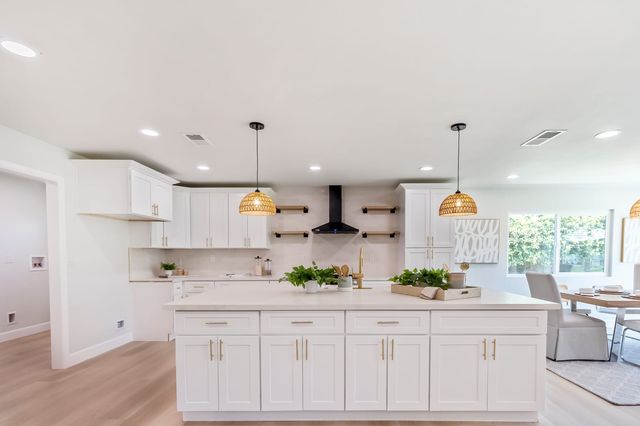
Yes. A Claremont homeowner can give the appraiser a written list of upgrades, and it is one of the most useful documents on inspection day. The list helps the appraiser describe the house accurately: what was replaced, when, and whether it was permitted. It is information, not an argument. The appraiser checks it against what can be seen and against the permit record, and measures any effect on value from what buyers have actually paid, not from what the work cost.
This article sits in the How a Home Appraisal Works series, alongside what happens on appraisal inspection day in Claremont. It covers what belongs on the list, what does not, and why the list matters more on some Claremont houses than others.
Why the list helps the appraiser
An appraiser sees a house for one visit. Some work is obvious, such as a new kitchen. Much of it is not: a sewer line replaced last year, a foundation repair under the floor, a roof replaced in a material that looks like the old one, a panel upgrade behind a closet door. Without dates, the report has to describe those items from what is visible, and the description is less precise.
The list feeds two things the report records. A condition rating is the appraiser's standardized description of the home's physical state, from wear and maintenance to needed repairs. A quality rating describes the materials, workmanship and design of the construction itself. Fannie Mae's Selling Guide topic on condition and quality describes an "updated" area as one "modified to meet current market expectations," and adds that a "Not Updated" area "does not necessarily imply deferred maintenance or physical/functional deterioration." Dates and scope help the appraiser tell those apart.
For a loan on a principal dwelling, Regulation Z at 12 CFR 1026.42 names "asking a person that prepares a valuation to consider additional, appropriate property information" as an action that does not violate the federal valuation-independence rule. A factual list is exactly that.
What belongs on the list
Keep it to one page if possible. For each item, give what was done, the month and year, and whether a permit was pulled.
- Roof: replacement or repair, and the material.
- Windows and doors: which rooms, and roughly when.
- Systems: HVAC, water heater, electrical panel, rewiring, re-piping, sewer line.
- Structure: foundation work, retaining walls, drainage.
- Kitchen and baths: the scope, such as a full remodel, new counters only, or new fixtures.
- Additions and conversions: a family-room extension, an enclosed patio, a converted garage, an ADU, with the permit status of each.
- Solar: owned or leased, and when installed.
- Pool and outbuildings: a pool resurfaced or new equipment, a permitted shed or guest house.
Attach what supports the list where it exists: permits, final sign-offs, plans, a survey or plot plan, and contractor invoices that show the date and scope. A permit is often the only way an appraiser can confirm that finished space was built as living area. Gross living area, the finished, heated space above grade, is measured from the outside of the house, and permit history is what separates space that counts from space that may not.
What does not need to be on it
- The amount spent. An invoice is useful for its date and scope. Its total is not the measure. Contributory value, what an improvement adds to the whole property in the market, comes from comparable sales, and it is often different from cost in either direction.
- Furniture, decor and staging. Clutter is not a value factor; condition is.
- Ordinary upkeep without a date. "Painted inside" means more with a year beside it.
- A number. A list that ends with a hoped-for value is not useful to anyone. The appraiser does not discuss value at the house, and the opinion comes from the analysis. What an appraiser can and cannot weigh is drawn out in what not to tell an appraiser.
Why the list matters more on some Claremont houses
Claremont is several markets inside one ZIP code, 91711, and the list carries different weight in each. These are the kinds of houses that come in.
A pre-1940 house near the Village and the Colleges
Craftsman and Spanish Colonial Revival houses here often carry decades of changes: an enclosed porch, a converted garage, a rear addition, original wiring replaced in stages. The appraiser has to separate original construction from later work. A list that says which work was done when, and with which permit, is the clearest record the appraiser will get.
A postwar ranch house
Tract layouts repeat, so the useful facts are what has changed from the original plan: added baths, a family-room extension, updated systems. A list that names those changes lets the appraiser compare the house fairly with others from the same tract.
A hillside home in Claraboya or Padua Hills
Retaining walls, decks, drainage and driveway work are expensive and often invisible from the inside. Their dates and permits belong on the list, along with any engineering or geotechnical reports.
A house with an ADU or rear unit
Say whether the unit was permitted, when it was finished, and what it contains. A permitted ADU and an unpermitted conversion are treated differently in the report.
The Claremont area page describes how these pockets behave as separate markets, and Claremont home value after a remodel explains how the analysis treats renovation once the comparable sales are in.
How to hand it over
Bring the list and the documents to the inspection in one folder, or send them ahead when the inspection is scheduled. Whoever lets the appraiser in can hand them over; the owner does not have to attend, as should the homeowner be present at the appraisal inspection explains. On a lender appraisal, information that surfaces after delivery goes to the lender, which may ask for a reconsideration of value, the lender's request that the appraiser review new information; that route is covered in reconsideration of value.
The list does not change who the report is for. On a lender assignment the lender is the client; on a direct assignment the owner, trustee or attorney who engaged the appraiser is. Either way, the appraiser is independent of every party, including the one who pays.
Next step
The how it works page sets out the scope call, the inspection, the research and the delivered report. To schedule an inspection, use the order form or call (909) 324-6122, and mention any additions or ADU so the visit is scoped for them. The fee is set by the scope of the assignment and quoted before work begins, and it does not depend on the value.
Sources
- Fannie Mae Selling Guide, B4-1.3-06, Property Condition and Quality of Construction of the Improvements: https://selling-guide.fanniemae.com/sel/b4-1.3-06/property-condition-and-quality-construction-improvements (accessed November 6, 2026)
- Fannie Mae Selling Guide, B4-1.3-05, Improvements Section of the Appraisal Report: https://selling-guide.fanniemae.com/sel/b4-1.3-05/improvements-section-appraisal-report (accessed November 6, 2026)
- Regulation Z, 12 CFR 1026.42, Valuation independence, via Cornell Legal Information Institute: https://www.law.cornell.edu/cfr/text/12/1026.42 (accessed November 6, 2026)
- California Bureau of Real Estate Appraisers, license lookup for Gordon Hall, BREA No. AR003877: https://www2.brea.ca.gov/breasearch/faces/party/view.xhtml?id=23601 (accessed November 6, 2026)
Gordon Hall, California Certified Residential Real Estate Appraiser, BREA No. AR003877 (lookup: https://www2.brea.ca.gov/breasearch/faces/party/view.xhtml?id=23601). Reports are prepared in conformity with the Uniform Standards of Professional Appraisal Practice (USPAP). Nothing here is legal or tax advice; admissibility is always the court's decision.
Frequently asked questions
Is it appropriate to give the appraiser a list of upgrades?
Yes. A factual list of what was done, when, and whether it was permitted helps the appraiser describe the house accurately. For a loan on a principal dwelling, Regulation Z at 12 CFR 1026.42 names asking the appraiser to consider additional, appropriate property information as an action that does not violate the valuation-independence rule.
Should I include what each upgrade cost?
The amount is not needed. Invoices help because they show the date and scope of the work, but contributory value, what an improvement adds to the whole property in the market, is measured from comparable sales, and it often differs from cost.
What documents should go with the upgrade list?
Permits and final sign-offs, plans, a survey or plot plan, and contractor invoices showing dates and scope. Permits matter most for additions, conversions and ADUs, because permit history is how an appraiser tells finished living area that counts from space that may not.
Does the owner need to be home to hand over the list?
No. Whoever lets the appraiser in can hand over the folder, or the list can be sent ahead when the inspection is scheduled. The appraiser checks every item against what can be seen and against the permit record.