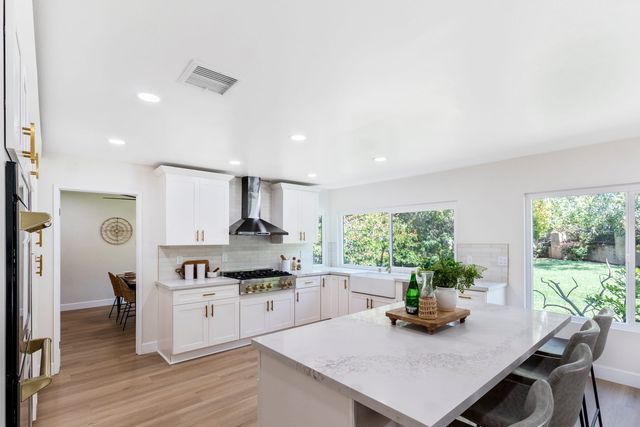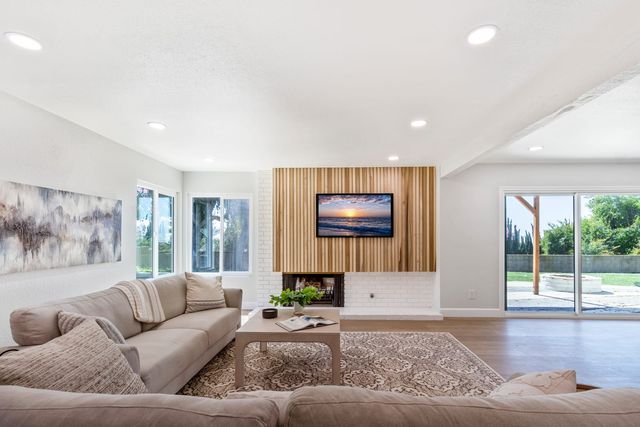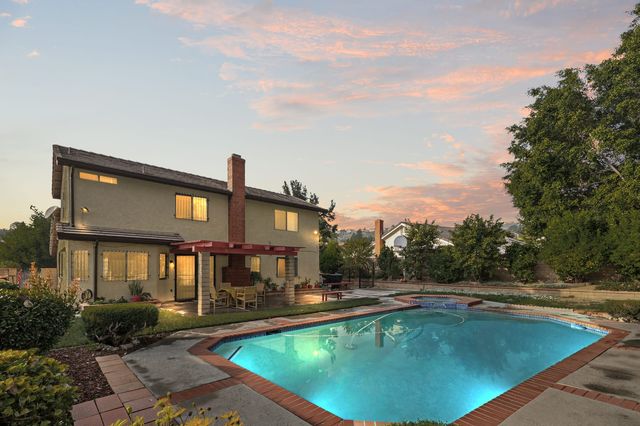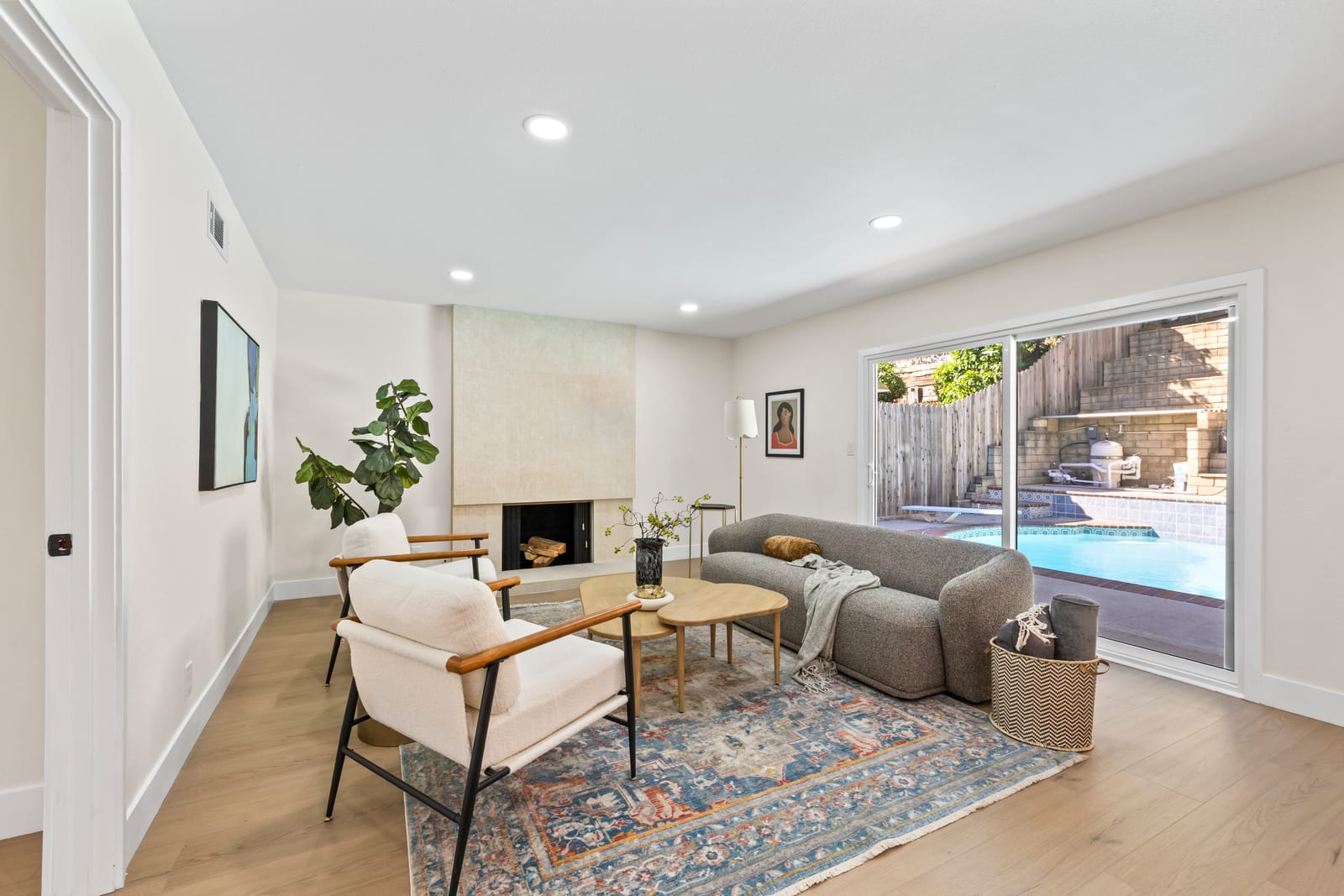
A one-off house, meaning a hillside, custom or view home with no near-identical sale nearby, is appraised with the same method as any other house: closed comparable sales, adjusted for the differences buyers pay for. What changes is how far the search for sales goes and how much of the reasoning has to be written out. The report says why each comparable was chosen, how view, grade, access and construction quality were adjusted, and how the final opinion was reached, so a lender's reviewer or a court can follow it.
This article opens the Hillside, Custom and Luxury Homes series, for owners of foothill and custom houses and the lenders, attorneys and trustees who read their appraisals. The hillside and custom home appraisal page describes the assignment.
Where one-off houses sit in this coverage area
In Claremont, the foothills above the postwar ranch tracts hold Claraboya and Padua Hills, near the Padua Hills Theatre, where custom and hillside homes sell on view, grade and access. In Northeast Claremont, the Stone Canyon Preserve homes sit beside the Wilderness Park. Closer to the Village and the Colleges, a scattering of 1930s and 1940s modernist houses stands among the Craftsman and Spanish Colonial Revival blocks; Claremont Heritage notes that "Claremont has two of Neutra's works," a reference to the architect Richard Neutra. The Claremont area page describes how these pockets behave as separate markets.
The same problem appears in every direction. In La Verne, the foothill homes toward Marshall Canyon sell on lot size, view and horse-keeping use. In Upland, the land rises north of the 210 to larger lots and view homes, and above the city limits sits San Antonio Heights, which San Bernardino County describes as a community of "large lots, unique homes, and quiet streets." In Rancho Cucamonga, Alta Loma and Etiwanda hold custom homes with views across the valley. In Pomona, Phillips Ranch is a later hillside planned community with its own slope, view and HOA character.
Why an automated estimate struggles with these houses
An automated estimate, a statistical figure produced by an algorithm from public records and nearby sales, is not an appraisal, and the portals that publish them say so. On a hillside lot the nearest sale may share the street and nothing else: a different view, a steeper driveway, a different builder and decade. The estimate cannot see any of that. The appraisal vs. estimate page sets out the difference, and why a home value calculator misreads Claraboya and Padua Hills hillside homes goes further on the local cases.
How far the comparable search goes, and why it is written down
The comparable radius, the distance from the subject within which comparable sales are searched for, starts close and widens only when it has to. Fannie Mae's Selling Guide, which sets the appraisal rules for loans sold to Fannie Mae and states plainly what a reviewer looks for, acknowledges that "there may be a shortage (or absence) of recent truly comparable sales in the immediate vicinity of a subject property." In that case "the appraiser needs to decide whether an expansion of the market area search is appropriate," and sales from farther away "can be used if it produces credible assignment results."
The wider search comes with conditions. The report must "provide commentary to explain the rationale for selecting comparable sales outside the subject's market area." Distance is measured "using a straight line between the properties." And "the appraiser must not expand the neighborhood boundaries just to encompass the comparables selected." So a Claraboya house may be compared with Padua Hills sales or with foothill sales in La Verne or north Upland, but the report names those as competing areas and addresses the differences. A sale from across the Los Angeles and San Bernardino county line is used only with the location difference explained.
Fannie Mae also allows an appraiser to "use properties that are not truly comparable to the subject property" when "the appraiser adequately documents the analysis and explains why they were used," and it requires "an explanation of why the particular comparables were selected."
View, grade and access
A view adjustment, the amount added to or subtracted from a comparable's price to account for a better or worse view than the subject's, is one of the hardest figures in a hillside report to support. Fannie Mae's rule is that "the appraiser's adjustments must reflect the market's reaction," so the adjustment comes from closed sales where buyers paid for a similar view, or did not, and never from a rule of thumb. The report describes what is seen, from which rooms, and whether something could block it later.
Grade and access sit beside the view. A steep driveway, a lot whose usable area is a small pad above a long slope, retaining walls holding back a cut: each changes how the lot can be used. Site improvements, the work done to the land itself such as grading, retaining walls, terracing, driveways and pools, are described and, where sales show buyers respond to them, adjusted. A Claraboya view home compared with flat lots below, with no view or grade adjustment, is one of the first comparables a reviewer throws out. See which hillside features show up in sales evidence.
Construction quality and architect design
A quality rating, the standardized grade from Q1 to Q6 that describes how well a house was designed and built, is assigned to the subject and to every comparable. Fannie Mae's Selling Guide describes a Q1 dwelling as "individually designed by an architect for a specified user" and a Q2 dwelling as "often custom designed for construction on an individual property owner's site," and it requires that "the selected rating must reflect a holistic view of the quality of construction." Freddie Mac's UAD 3.6 FAQ says the rating scale "has not changed, but definitions were rewritten to provide clarity" for the redesigned report.
Two points follow. Architect design is a fact the report records; whether it adds value in this market is measured from sales, not assumed. The rating on each comparable has to be just as honest, or the comparison is weak however close the sale sits. The article on custom home appraisal in the Inland Empire goes through how quality is read when there is no tract twin.
When cost is not contribution
Superadequacy, also called over-improvement, is a feature whose cost exceeds what it adds to the property in its market: a finish, a wing or a system more elaborate than buyers of that location pay for. The measure is contributory value, what an improvement adds to the whole property in the market. Fannie Mae does not require the cost approach "except for the valuation of manufactured homes," notes that it may suit a "unique property," and states that "appraisals that rely solely on the cost approach as an indicator of market value are not acceptable." Budgets and receipts describe the house; the value comes from what buyers in this market have paid.
Older sales and time adjustments
Hillside sales are sparse, so the best comparable may not be recent. Fannie Mae notes that "the best and most appropriate comparable sales may not always be the most recent sales," provided the market conditions behind an older sale are explained. A time adjustment, the change applied to an older sale's price to bring it to the effective date, the date the opinion of value applies to, "must be supported by evidence," and the report "must, at a minimum, summarize the supporting evidence."
Reconciliation: how the opinion is concluded
Reconciliation, the step where the appraiser weighs the adjusted comparables and the approaches used and arrives at one opinion of value, carries more weight on a one-off house because the adjusted sales tend to spread wider. Fannie Mae says reconciliation "must never be an averaging technique," except a weighted average that is properly explained, and that the indicated value "must be within the range of the adjusted sales price of the comparables." The report says which sales were given the most weight and why.
Inspection day and what to have ready
The inspection runs 30 to 60 minutes for a standard single-family home, longer for hillside, custom, multi-family or homes with additions, because grade, access, every level and any outbuildings are measured and photographed. (why the inspection runs longer). Have ready any architect or builder information and plans, geotechnical, retaining wall or grading reports, permits for additions, and a list of improvements with approximate dates.
Who reads the report, and what it cannot promise
Every report states its intended use, what the report will be used for, and its intended users, the people entitled to rely on it. For a loan, the lender orders the appraisal and its underwriter decides whether the report supports the loan. For loans delivered to Fannie Mae or Freddie Mac, reports submitted on or after November 2, 2026 use the redesigned Uniform Residential Appraisal Report under UAD 3.6, which retires the old form numbers such as the 1004. For an estate, a trust or a divorce, the attorney or CPA decides how the value is used. The appraiser is independent of every party, including the one who pays.
The rest of this series
- Custom home appraisal in the Inland Empire
- View property appraisal in Upland
- Does a higher price tier change the method in Claremont?
Next step
If you own, finance or are settling a hillside or custom home in Los Angeles or San Bernardino County, send the address and the purpose of the report through the order form, or call (909) 324-6122. The fee is set by the scope of the assignment and quoted before work begins, and it does not depend on the value.
Sources
- Fannie Mae Selling Guide B4-1.3-08, Comparable Sales: https://selling-guide.fanniemae.com/sel/b4-1.3-08/comparable-sales (accessed November 6, 2026)
- Fannie Mae Selling Guide B4-1.3-09, Adjustments to Comparable Sales: https://selling-guide.fanniemae.com/sel/b4-1.3-09/adjustments-comparable-sales (accessed November 6, 2026)
- Fannie Mae Selling Guide B4-1.3-06, Property Condition and Quality of Construction of the Improvements: https://selling-guide.fanniemae.com/sel/b4-1.3-06/property-condition-and-quality-construction-improvements (accessed November 6, 2026)
- Fannie Mae Selling Guide B4-1.3-10, Cost and Income Approach to Value: https://selling-guide.fanniemae.com/sel/b4-1.3-10/cost-and-income-approach-value (accessed November 6, 2026)
- Fannie Mae Selling Guide B4-1.3-11, Valuation Analysis and Reconciliation: https://selling-guide.fanniemae.com/sel/b4-1.3-11/valuation-analysis-and-reconciliation (accessed November 6, 2026)
- Freddie Mac, Uniform Appraisal Dataset (UAD) 3.6 FAQ: https://sf.freddiemac.com/faqs/uad-and-forms-redesign (accessed November 6, 2026)
- Claremont Heritage, Architecture: https://claremontheritage.org/architecture.html (accessed November 6, 2026)
- San Bernardino County Countywide Plan, San Antonio Heights: https://countywideplan.sbcounty.gov/community/valley-unincorporated/san-antonio-heights/ (accessed November 6, 2026)
- California Bureau of Real Estate Appraisers, license lookup for Gordon Hall, BREA No. AR003877: https://www2.brea.ca.gov/breasearch/faces/party/view.xhtml?id=23601 (accessed November 6, 2026)
Gordon Hall, California Certified Residential Real Estate Appraiser, BREA No. AR003877 (lookup: https://www2.brea.ca.gov/breasearch/faces/party/view.xhtml?id=23601). Reports are prepared in conformity with the Uniform Standards of Professional Appraisal Practice (USPAP). Nothing here is legal or tax advice; admissibility is always the court's decision.
Frequently asked questions
Why are some comparables for a hillside or custom home far from the house?
Because the nearest sales often differ in view, grade, size and construction quality. Fannie Mae's Selling Guide recognizes that truly comparable sales may be scarce near a one-off house and allows a wider search, provided the report explains why each sale was chosen and does not redraw the neighborhood to fit them.
How is a view valued in an appraisal?
Through a view adjustment, the amount added to or subtracted from a comparable's price for a better or worse view than the subject's. The adjustment has to reflect how buyers in closed sales actually reacted to similar views, and the report describes what is seen and whether it could be blocked.
Does an architect-designed house appraise higher because of the design?
Not automatically. Architect design is recorded in the report and reflected in the quality rating, the standardized grade of design and construction. Whether the design adds value in that market is measured from sales of comparable houses, not assumed.
Is what I spent to build the house its value?
No. Cost and value are different measures. A feature can cost more than it adds to the property in its market, which appraisers call superadequacy or over-improvement. Fannie Mae does not accept an appraisal that relies solely on the cost approach.
How long is the inspection for a hillside or custom home?
Longer than the 30 to 60 minutes of a standard single-family home, because grade, access, every level and any outbuildings need to be measured and photographed. Reports are typically delivered three to five business days from the inspection.