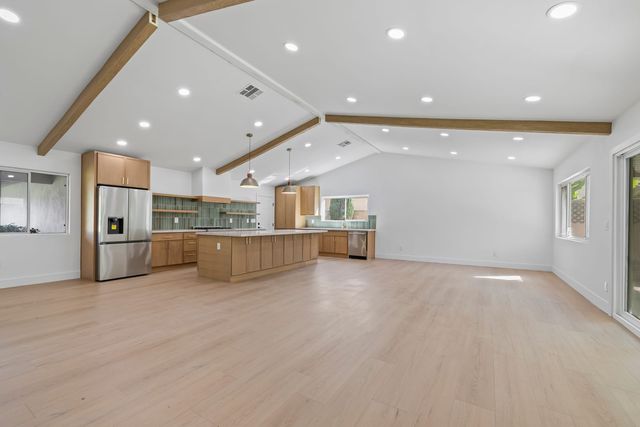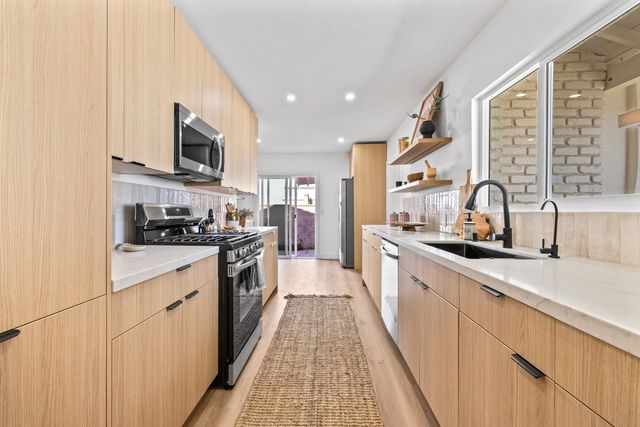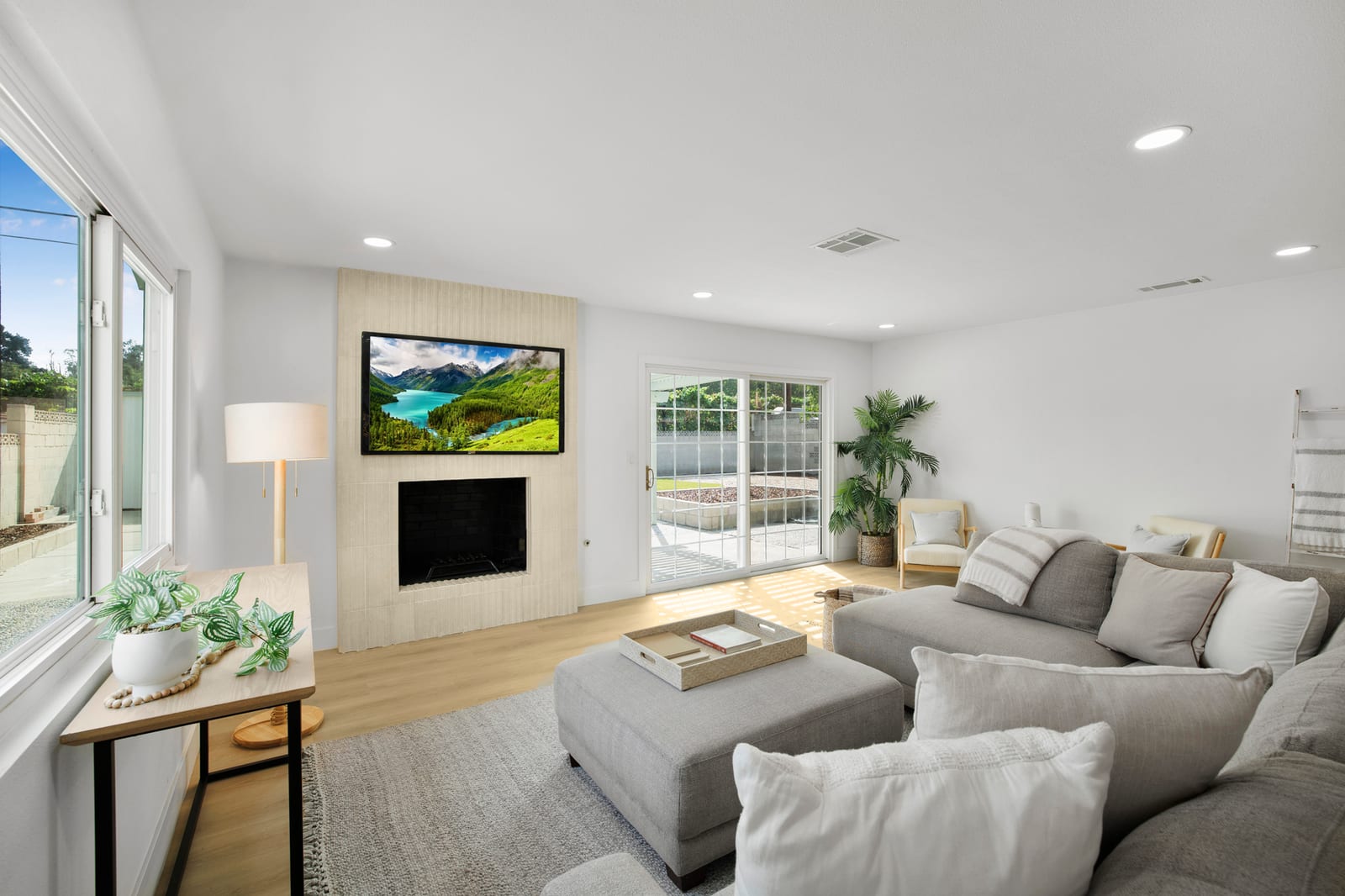
A pre-1940 Craftsman bungalow or Spanish Colonial Revival house near the Claremont Colleges is appraised against sales of houses from the same era and style first, because buyers on these blocks weigh period, original detail and the walk to the Village, not bedroom count. The appraiser measures the house on site, separates the original construction from later additions and enclosed porches, records what was permitted, and explains every comparable and adjustment so that someone who never saw the house can follow the reasoning.
It is written for the people who most often need these houses appraised: heirs and trustees settling a long-held family home, spouses and attorneys in a family law matter, and owners deciding whether to sell.
What sets the blocks near the Colleges apart?
The oldest parts of Claremont surround the Village and the Colleges along Indian Hill Boulevard and College Avenue. Claremont Heritage describes Spanish Colonial Revival as the city's most prominent style, built mainly in the 1920s and 1930s, alongside early-twentieth-century bungalows, Victorian and Colonial Revival houses, and a scattering of modernist homes from the 1930s and 1940s.
Few of these houses are as they were built. Decades of ownership add an enclosed porch, a rear bedroom, a converted garage, a second bath or a unit behind the house. The appraisal has to describe the house as it stands today, or as of the date the report is about, and it has to say which parts are original and which came later. The Claremont area page describes how this pocket differs from the rest of ZIP code 91711.
How are comparables chosen for an older house?
A comparable sale, a closed sale of a property similar enough that a buyer of this house would have weighed it, is chosen here for era and style before size. The search runs outward in steps:
- Same era and style near the Village and the Colleges. A Spanish Colonial Revival house compared with others of its kind, a bungalow with other bungalows, within the older blocks.
- Older houses elsewhere in Claremont when the closest blocks have too few sales, with the difference in location weighed.
- Pre-1940 houses in nearby cities only when they are the better evidence, such as the historic blocks of Pomona or Old Town La Verne near the university, with a location adjustment explained.
What a reviewer throws out is just as specific. A Village Craftsman compared with postwar ranch houses north of Foothill on bedroom count alone. Gross living area copied from public records on a house whose porch and back rooms were enclosed long ago. Both are common, and both are avoided by measuring the house and searching by era. Fannie Mae's Selling Guide, which governs many lender assignments, calls sales from within the neighborhood the best indicator of value and requires adjustments to reflect the market's reaction to a difference, with comment on how each was supported.
What does the inspection record?
The visit takes 30 to 60 minutes for a standard single-family home, longer for hillside, custom, multi-family or homes with additions, and an older house with additions usually runs longer. The appraiser records:
- Gross living area, the finished, heated space above grade, measured from the outside with a sketch. Enclosed porches and rear rooms are measured and noted separately so a reader can see what was added.
- Original detail that buyers of these houses notice: windows, built-ins, wood floors, tile, fireplaces, and how intact they are.
- Foundation type and what can be seen of it, including raised foundations, along with the visible condition of the roof, electrical panel, plumbing and heating. These are observed, not tested.
- Every later addition, conversion and rear unit, with the questions an appraiser asks about each: when it was built and whether it was permitted.
The companion article on measuring a Village bungalow with later additions goes deeper into the measuring itself.
How are additions and original detail weighed?
Additions are where older houses differ most. A permitted addition built to match the house and a room enclosed without a permit are treated differently, and the report says which is which. For loans sold to Fannie Mae, when an addition lacks a required permit the appraiser must comment on the quality and appearance of the work and its effect, if any, on market value. Where permit status cannot be confirmed, the report may rest on an extraordinary assumption, an assumption about uncertain facts that, if false, could change the result, and it states that assumption openly.
The same caution applies to original detail and to updating. Whether buyers on these blocks pay more for an intact original kitchen or a recent remodel is a question the sales answer. The relevant idea is contributory value, what an improvement adds to the whole property in the market, which may differ from what it cost. The condition and quality ratings in the report describe what was seen, on the same scales used for every other house.
What about historic designation or a Mills Act contract?
If the house has a historic designation letter, preservation approvals or a Mills Act contract, an agreement between an owner and a city or county under Government Code sections 50280 to 50290 to restore and maintain a qualified historic property in exchange for property tax relief, bring the paperwork to the inspection. The appraiser notes it and considers whether sales show buyers react to it. How a contract affects the property tax assessment is set by the Revenue and Taxation Code and handled by the county. Nothing here is tax advice; your CPA or attorney decides how a value is used.
What does the report state, and what is it not?
The first pages state the intended use, what the report will be used for, the intended users, the people entitled to rely on it, and the effective date, the date the opinion of value applies to. For an estate that date is often the date of death, which makes the appraisal retrospective, meaning its effective date is in the past. Home Appraisal in Claremont: What the Report Measures, Pocket by Pocket covers each section, and what a Claremont home appraisal includes, page by page shows the order they appear in. The Home Appraisal in Claremont hub lists the other pockets.
An automated estimate such as a Zestimate or other AVM is not an appraisal, and these are the houses such estimates handle worst. An agent's CMA, the county's assessed value and a cash offer are not appraisals either. The fee is set by the scope of the assignment and quoted before work begins, and it does not depend on the value. The report is typically delivered three to five business days from the inspection. The historic and pre-1940 home appraisal page and the full services list describe the assignment types.
Next step
If you need a pre-1940 house near the Colleges appraised for an estate, a trust, a divorce or a sale, request an appraisal or call (909) 324-6122. The scope and the fee are settled before the visit is scheduled.
Sources
- The Appraisal Foundation, Uniform Standards of Professional Appraisal Practice (USPAP) (accessed October 30, 2026)
- Fannie Mae Selling Guide B4-1.3-08, Comparable Sales (accessed October 30, 2026)
- Fannie Mae Selling Guide B4-1.3-09, Adjustments to Comparable Sales (accessed October 30, 2026)
- Fannie Mae Selling Guide B4-1.3-05, Improvements Section of the Appraisal Report (ANSI Z765-2021 measurement, additions, ADUs) (accessed October 30, 2026)
- California Office of Historic Preservation, Mills Act Program (Government Code 50280-50290; Revenue and Taxation Code 439-439.4) (accessed October 30, 2026)
- Claremont Heritage, Architecture (styles and eras, postwar ranch houses, Arbol Verde) (accessed October 30, 2026)
- Wikipedia, Claremont, California (the Village and its expansion west of Indian Hill Boulevard, Claraboya, Padua Hills, Wilderness Park, ZIP 91711) (accessed October 30, 2026)
- California Bureau of Real Estate Appraisers, license lookup for Gordon Hall (accessed October 30, 2026)
Gordon Hall, California Certified Residential Real Estate Appraiser, BREA No. AR003877 (lookup: https://www2.brea.ca.gov/breasearch/faces/party/view.xhtml?id=23601). Reports are prepared in conformity with the Uniform Standards of Professional Appraisal Practice (USPAP). Nothing here is legal or tax advice; admissibility is always the court's decision.
Frequently asked questions
Why not compare a Claremont Craftsman with newer houses that have the same bedroom count?
Because buyers of a pre-1940 house near the Colleges weigh era, original detail and the walk to the Village, not bedroom count. A newer ranch house with the same rooms differs in age, construction, lot and living area, so a reviewer would question that comparison unless every difference were explained.
How does the appraisal treat an enclosed porch or an unpermitted back room?
It is measured and described separately from the original house, and its permit status is asked about and recorded. A permitted addition and an unpermitted one are treated differently, and if permit status cannot be confirmed the report states the assumption it relies on.
Does a Mills Act contract change the appraisal?
The appraiser notes the contract and considers whether sales show that buyers react to it. Its effect on the property tax assessment is a county matter under the Revenue and Taxation Code. Nothing here is tax advice; a CPA or attorney decides how a value is used.
Can an older Claremont house be appraised as of a past date for an estate?
Yes. A retrospective appraisal, one whose effective date is in the past, describes the house as it stood on that date and uses sales from around it. The report states what evidence was used and where an assumption fills a gap.