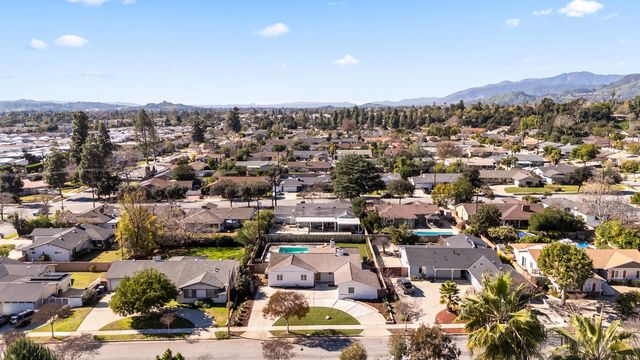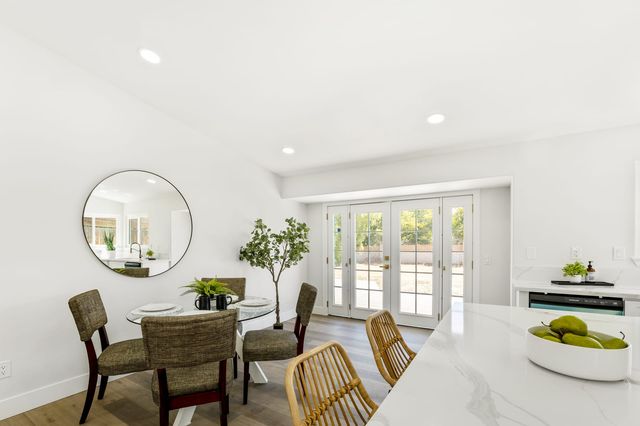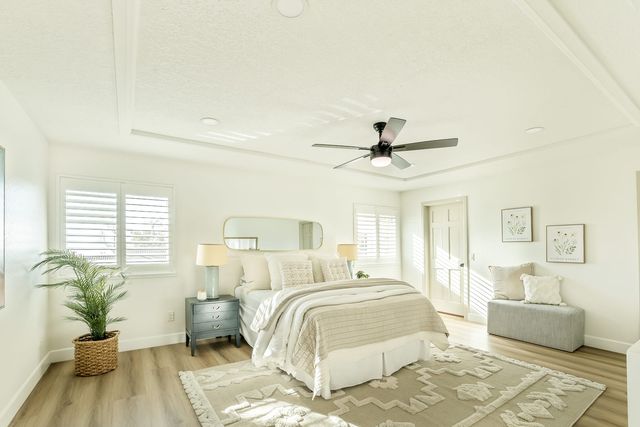
Being near the Claremont Colleges is a location characteristic, and whether it changes a house's value is a question only sales can answer: buyers may pay more for it, less, or nothing different, and the answer can vary from one campus edge to the next. In Claremont the evidence is hard to read, because the houses closest to the Colleges are also among the oldest and most distinctive in the city. Era, style, lot pattern and walking distance to the Village are tangled together with proximity, and an appraiser has to separate them before saying anything about the Colleges themselves.
This article is part of Claremont home values, measured. What is my Claremont house worth, and how an appraiser answers it covers the method; this piece applies it to one landmark.
What "near the Colleges" means on the ground
The Claremont Colleges are seven independent institutions, five undergraduate liberal arts colleges and two graduate institutions, located, in the consortium's words, "on contiguous campuses" in the city of Claremont. The town and the colleges grew up together. The City of Claremont's history says Claremont "would have become one of a long list of local railroad 'ghost towns'" if the local land company had not transferred its Hotel Claremont and its vacant lots to the recently founded Pomona College in 1888.
The oldest residential blocks surround the Village and the Colleges along Indian Hill Boulevard and College Avenue: Victorian, Colonial Revival, Spanish Colonial Revival and Craftsman bungalow houses, with some 1930s and 1940s modernist homes. Claremont Heritage names the Spanish Colonial Revival of the 1920s and 1930s as the city's most prominent revival style and points to the entire Scripps College campus as an example. To the east, the county line runs just past the Colleges: cross Claremont Boulevard or Mills Avenue and you are in Montclair or Upland, in San Bernardino County, and Claremont McKenna's Roberts Campus sports bowl straddles Claremont and Upland.
What sales can show
Proximity is measured the same way as any other location difference: by comparing sales that differ mainly in that one respect.
- Paired sales. Two houses of similar era, size and condition, one facing or backing onto a campus edge and one a few blocks into the neighborhood, both sold near the same time. One pair proves little; several pointing the same way begin to say something.
- Consistency across the edge. Whether sales along one side of the campuses behave like sales along another. A campus edge can be a quiet green boundary, playing fields, a parking area or a busy arterial, and those are different locations even at the same distance.
- Sales against their own blocks. Whether houses near a campus sell in line with the surrounding older blocks once era, size and condition are adjusted for, or apart from them.
Lender rules frame it the same way. Fannie Mae's Selling Guide, for the loans it buys, says the sales prices of comparable properties from the same location "should reflect" the same positive and negative location characteristics as the subject, and it tells the appraiser to "make location adjustments if warranted." Warranted is the operative word: an adjustment needs evidence behind it.
Why Claremont makes this hard
Four things move together near the Colleges, and each has to be held still before proximity can be read.
- Era and style. A pre-1940 Craftsman or Spanish Colonial Revival house is compared with its own era first, as what a pre-1940 Craftsman near the Colleges is worth and which sales compare for a Spanish Colonial Revival house explain. If the near-campus sales are all older houses and the farther sales are all postwar, any difference is mostly era, not distance.
- The Village. Many houses near the Colleges are also within walking distance of the Village, and buyers may be paying for that instead. Reading sales within walking distance of the Village covers that separate question.
- The lot and the house. Older lots, rear structures, enclosed porches and decades of additions vary house by house. Measured living area and permit history come before any location reasoning.
- The county line. Near the eastern campuses, the nearest sale may be in another county. A sale from across the line needs its own location reasoning and is never used as if it were a Claremont sale.
What sales cannot show
- A citywide college premium. There is no single figure to apply to every house within some distance of a campus. If an effect shows up in one set of sales, it belongs to those blocks and that edge.
- Why buyers paid what they paid. Sales show prices, not motives. An appraiser reports what the market did, not a story about who wanted to live where.
- Anything about the neighbors. Location analysis rests on physical and economic characteristics: what a house faces, traffic and activity on the street, walking distance, views. It never rests on who lives nearby or on any protected characteristic of residents. The fair housing page sets out the federal and California protections as they apply to appraisal, and where to report valuation bias.
What the appraiser records at a house near a campus
The inspection and the drive around the block feed the location analysis directly.
- What the house faces and backs onto, and what sits across the street.
- Street traffic and on-street parking at the time of the visit, noted as observed, not assumed.
- The walk to the Village and to the nearest campus entrance.
- Whether the house sits in Los Angeles County or close to the San Bernardino County side.
- Era, style, original detail and later changes, with permits where they exist.
The report then states what the sales showed. If they support a location adjustment, it appears with the evidence behind it. If they show no measurable difference, the report says so and relies on sales from the same blocks. The historic pre-1940 home appraisal page describes how older houses near the Colleges are handled more broadly.
Next step
A seller of a house near the Colleges who wants the location reasoning written out before choosing a price can start with a pre-listing appraisal; the seller and their agent still choose the price, and the appraiser is independent of every party. To order, request an appraisal or call (909) 324-6122. The fee is set by the scope of the assignment and quoted before work begins, and it does not depend on the value. The Claremont area page describes the pockets around the Colleges.
Sources
- The Claremont Colleges, home page (seven institutions; contiguous campuses), accessed November 6, 2026
- City of Claremont, History of Claremont, accessed November 6, 2026
- Claremont Heritage, Architecture, accessed November 6, 2026
- The Student Life, "City Limits: On the Los Angeles County line" (April 24, 2026), accessed November 6, 2026
- Fannie Mae Selling Guide B4-1.3-08, Comparable Sales, accessed November 6, 2026
- California Bureau of Real Estate Appraisers, license lookup, accessed November 6, 2026
Gordon Hall, California Certified Residential Real Estate Appraiser, BREA No. AR003877 (lookup: https://www2.brea.ca.gov/breasearch/faces/party/view.xhtml?id=23601). Reports are prepared in conformity with the Uniform Standards of Professional Appraisal Practice (USPAP). Nothing here is legal or tax advice; admissibility is always the court's decision.
Frequently asked questions
Do houses near the Claremont Colleges sell for more?
There is no general answer an appraiser can give in advance. Nearness to the Colleges is a location characteristic, and the only evidence is sales of similar houses at different distances and along different campus edges. Any effect found belongs to those blocks, not to every house near a campus.
Why is it hard to measure the effect of the Colleges on a Claremont house?
Because the houses closest to the campuses are also among the oldest in the city, many are within walking distance of the Village, and their lots and additions vary widely. Era, style, the Village and the lot all have to be accounted for before any difference can be attributed to proximity itself.
Does an appraiser consider who lives near the Colleges?
No. Location analysis rests on physical and economic characteristics such as what a house faces, street traffic, walking distance and views. It never rests on who lives nearby or on any protected characteristic of residents.
What does a report say if sales show no difference near a campus?
It says so. If the sales do not support a location adjustment for proximity, the report makes none and relies on comparable sales from the same blocks, with the reasoning written out so a reviewer can follow it.