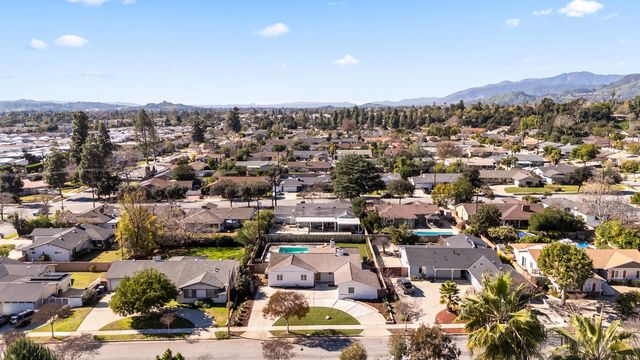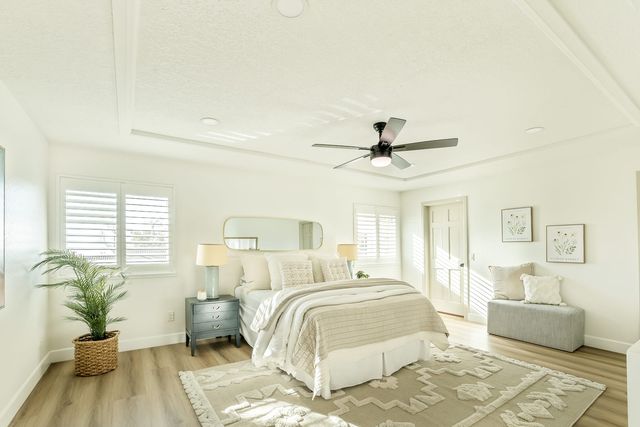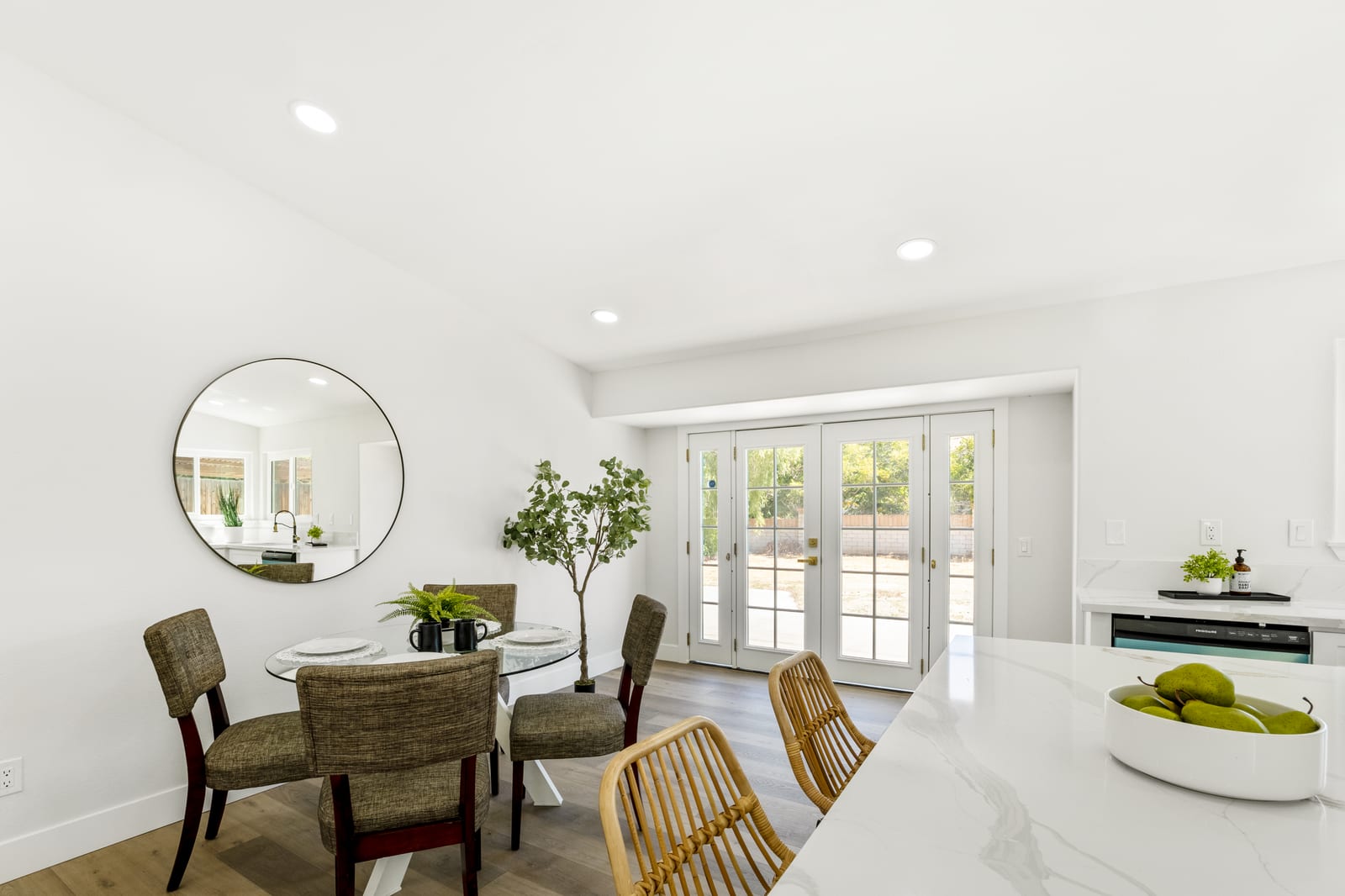
For a Claremont single-family home, an appraisal values the property: the land, the house and everything built on the lot, as one thing that sells together. People say "house value" and mean the same thing, and that is fine, because no buyer purchases the house without the lot under it. Comparable sales measure that whole bundle. The house and the land get separate figures only in particular places, mainly the county's assessment roll and the cost approach, and neither of those is what a buyer pays.
This article is part of Claremont home values, measured. What is my Claremont house worth, and how an appraiser answers it sets out the full method; this piece answers one narrower question: what exactly is being valued, and how the lot fits in.
What "property" means on an appraisal
The report identifies what is being appraised before anything is measured. On a typical Claremont house that is:
- The site. The lot itself, at its actual size and shape. Fannie Mae's Selling Guide, for the loans it buys, puts it bluntly: "The appraisal must include the actual size of the site and not a hypothetical portion of the site for the subject property."
- The improvements. Improvements, in appraisal language, are everything built on the land: the house, a detached garage, a permitted ADU, a pool, walls, hardscape and landscaping.
- The ownership interest. Usually fee simple, full ownership of the property, subject only to the usual public limits such as zoning and taxes.
Market value, the most probable price the property would bring in an open, competitive sale as of the effective date, is an opinion about all three together.
What comparable sales actually measure
A comparable sale, a recent closed sale of a similar property that a buyer would have weighed against this one, has one price. That price paid for a lot, a house and its site improvements in a single transaction. The sale does not say how much of the price was the lot and how much was the house, and the appraiser does not pretend it does.
Instead, differences are handled one at a time. An adjustment, an amount added to or subtracted from a comparable's price to account for a difference buyers pay for, can address lot size, view, gross living area, condition, a garage, or an extra unit. Each adjustment is supported by market evidence and explained. Living area gets its own measuring standard, covered in how gross living area is measured on a Claremont house.
Site improvements are judged by contributory value, what an improvement adds to the whole property in the market. That is not the same as what it cost. A pool, a new block wall or mature landscaping may add something, little or nothing, depending on what buyers in that pocket pay for, as which Claremont features show up in sales evidence explains.
Where the house and the land do get separate numbers
The county assessment. A county assessment is not an appraisal. In California it is taxable value, built from a base year value and the rules that govern it, and the county tracks land and structures as separate pieces. Los Angeles County's property tax portal explains that new construction "establishes a new base year value for the property's newly-constructed structures, called 'improvements', only," and that "the base year value for land is unchanged by new construction." That split serves the tax roll. On a house held for a long time it can be far from what the market would pay for either piece, so a land figure from a tax bill is not evidence of what a Claremont lot would sell for. Assessed value vs. appraised value in California covers the gap.
The cost approach. This approach estimates value as site value plus the cost of the improvements less depreciation. Fannie Mae describes it as measuring "value as a cost of production," says it may be used for new or proposed construction, property under renovation and unique property, and says its reliability depends on "valid reproduction cost estimates, proper depreciation estimates, and accurate site values." It also says appraisals that rely solely on the cost approach "are not acceptable" for its loans. On an established Claremont house, the cost approach is a cross-check at most; the sales do the work.
Vacant land. When there is no house, land sales are the evidence, and the questions change entirely. Land appraisal in Claremont covers that case, and appraising a house with acreage covers a lot large enough that part of it could be used separately.
When the lot starts to outweigh the house
One question links the two halves: does the house still add value over the land alone? Fannie Mae's guidance is that if the improvements make the property's value "greater than the estimated vacant site value," the existing use is reasonable and is reported as the highest and best use, the use that is legally permitted, physically possible, financially feasible and most productive. Most Claremont houses pass that test without discussion. The question gets real attention on an older, small house on a lot that is unusually large for its street, or on a house in poor condition, where the appraiser has to show the reasoning rather than assume it.
How the lot shows up across Claremont's pockets
The lot is never valued on square feet alone, and what matters about it changes by pocket. These are the kinds of houses that come in:
- A pre-1940 house near the Village and the Colleges. Older lots and a rear structure, sometimes an old garage or a back unit. Permit status decides whether that structure counts as living area, accessory space or neither.
- A postwar ranch house north of Foothill. Wider lots in repeating tracts. Lot differences between similar plans are measured from sales of those plans, not from a price per square foot of land.
- A Claraboya or Padua Hills hillside home. Here the site is view, grade and access. Usable flat area can matter more than total lot size, which is why Claraboya home values widens the comparable search.
- An ADU behind an older house. The unit is an improvement on the same site, and its contribution depends on its permit status and what buyers pay for a second unit in that pocket.
When the split matters to you
Most owners never need the house and the land separated. It comes up when a CPA asks how a value divides for a tax purpose, when an owner compares a tax-bill land figure with a lot sale, or when an insurance figure is mistaken for market value; a rebuild cost answers a different question entirely. If a report needs to address an allocation, that is settled at the scope call as part of the intended use, what the report will be used for, and your CPA decides how a value is used.
Next step
If you are preparing to sell and want the whole property, lot and house, measured against its own pocket, a pre-listing appraisal gives you the evidence; you and your agent still choose the price. To order any appraisal, request an appraisal or call (909) 324-6122. The fee is set by the scope of the assignment and quoted before work begins, and it does not depend on the value. The Claremont area page describes the pockets in more detail.
Sources
- Fannie Mae Selling Guide B4-1.3-04, Site Section of the Appraisal Report, accessed November 6, 2026
- Fannie Mae Selling Guide B4-1.3-10, Cost and Income Approach to Value, accessed November 6, 2026
- Los Angeles County Property Tax Portal, Frequently Asked Questions, accessed November 6, 2026
- The Appraisal Foundation, Uniform Standards of Professional Appraisal Practice (USPAP), accessed November 6, 2026
- California Bureau of Real Estate Appraisers, license lookup, accessed November 6, 2026
Gordon Hall, California Certified Residential Real Estate Appraiser, BREA No. AR003877 (lookup: https://www2.brea.ca.gov/breasearch/faces/party/view.xhtml?id=23601). Reports are prepared in conformity with the Uniform Standards of Professional Appraisal Practice (USPAP). Nothing here is legal or tax advice; admissibility is always the court's decision.
Frequently asked questions
Is house value the same as property value?
In everyday use, yes. On an appraisal of a single-family home, the value is for the property: the lot, the house and the other improvements on it, sold together. Comparable sales measure that whole bundle, because buyers do not purchase the house separately from the land.
Does an appraisal say how much my lot is worth separately?
Not usually. Sales comparison values the whole property and adjusts for lot differences one at a time. A separate site value appears in the cost approach, which estimates site value plus depreciated building cost, and in land appraisals of vacant lots. If a separate figure is needed for a specific use, it is part of the scope agreed before the work starts.
Can I use the land value on my Los Angeles County tax bill as my lot's market value?
No. A county assessment is not an appraisal. The county tracks land and improvements as separate parts of a base year value for the tax roll, and on a long-held house those figures can be far from what the market would pay. A lot's market value comes from sales evidence.
Does a pool or an ADU count as part of property value?
Both are improvements on the site, so both are part of the property being appraised. What each adds is its contributory value, what an improvement adds to the whole property in the market, which is measured from sales and can differ from its cost. For an ADU, permit status decides how the unit is treated.