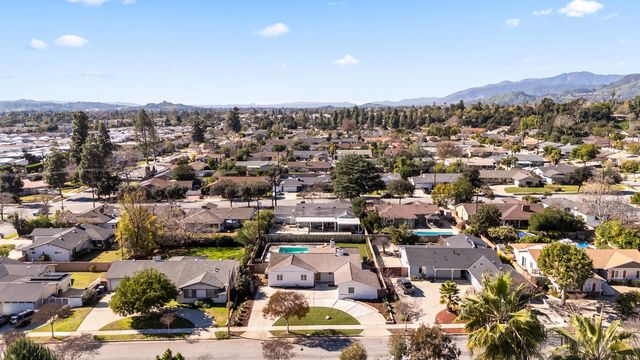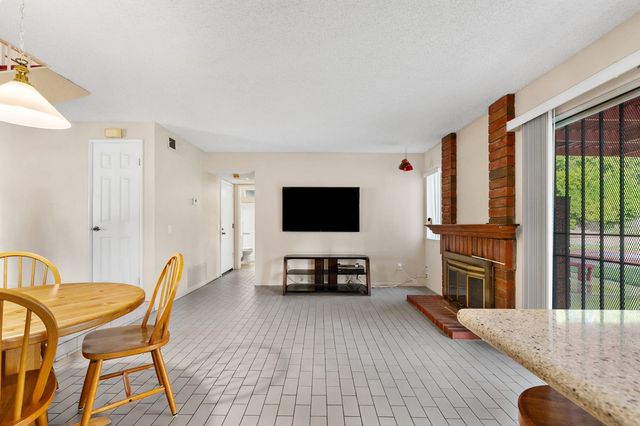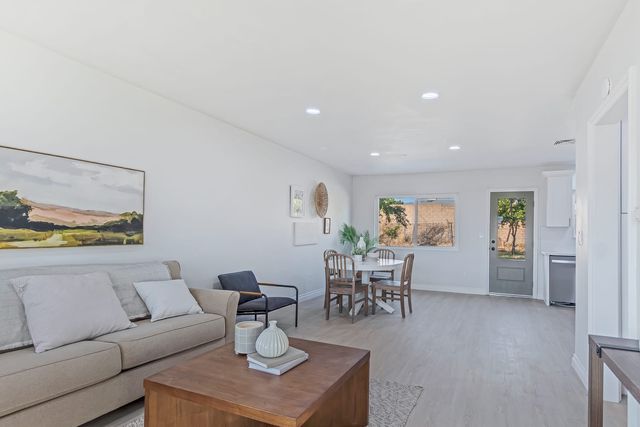
A house near Base Line Road is valued from its own pocket first: the postwar single-story tracts north of Foothill Boulevard that reach up toward Base Line. Sales from west Upland, just across the county line in San Bernardino County, are used only when they are genuinely better evidence, and then the report says so and explains the location adjustment. This article explains the reasoning; it gives no value for the street, because no honest article can.
It is part of Claremont home values, measured. The general method is in what is my Claremont house worth, and how an appraiser answers it; this piece covers one edge of the city.
Why Base Line Road is an edge for an appraiser
Base Line is roughly where Claremont's flatland tracts top out. Claremont Heritage describes the postwar change as the conversion of the city's citrus groves "below the railroad tracks and above Foothill Blvd." into housing developments, and the City of Claremont's own history says that after the Second World War the pressure for residential development led many growers to sell their land for housing tracts. North of Foothill, the old Route 66, they are largely single-story ranch houses on wider lots.
Above the tracts the housing changes character. The foothills hold Claraboya and Padua Hills, where custom and hillside homes sell on view, grade and access, and Northeast Claremont, beside the Wilderness Park. A house near Base Line sits between two kinds of evidence: repeating tract sales below it and one-off foothill sales above it. Usually the tract sales are the right comparison.
What does the road itself change?
Base Line is a working road. The City of Claremont's truck-route map shows Base Line Road as a designated truck route, along with Foothill Boulevard, Indian Hill Boulevard, Towne Avenue and Arrow Highway, and the same map shows the 210 freeway crossing the north of the city. That raises a location question: does a lot that fronts or backs onto Base Line sell differently from one on a quiet street in the same tract?
The appraiser does not assume the answer. The evidence is sales: a recent sale with similar exposure to the same road, set beside interior-street sales of a similar plan. If the market shows a difference, the report carries an adjustment, an amount added to or subtracted from a comparable sale's price for a difference buyers pay for, and says where it came from. If the sales show no measurable difference, the report says that too.
The Upland sales next door
Claremont sits at the eastern edge of Los Angeles County. West Upland meets it at the county line, in San Bernardino County, and a west Upland tract house can look much like a Claremont one a short drive away. That makes Upland sales tempting. But the line changes things buyers weigh even where the houses are alike: the city, the school district, city services, the assessor and the appeals board. Claremont property is assessed by the Los Angeles County Office of the Assessor; Upland property by the San Bernardino County Assessor-Recorder-County Clerk. The Student Life, the Claremont Colleges' student newspaper, put the general effect in one line: "Today, the county line is difficult to see but easy to feel."
So the order is fixed. A Claremont house is appraised from Claremont sales first. An Upland sale comes in when it is genuinely better evidence, for example when few similar Claremont houses have sold recently and a near-identical house sold just across the line. The report then labels it as a sale from a different market area and explains the location adjustment. What the county line does to comparable sales covers the rule in full.
Lender rules point the same way. Fannie Mae's Selling Guide, for the loans it buys, calls sale activity from within the neighborhood "the best indicator of value," allows sales from competing market areas when they are identified as such, and says the appraiser "must not expand the neighborhood boundaries just to encompass the comparables selected." A private assignment is not governed by a lender's guide, but a reviewer asks the same questions.
How the comparable search runs near Base Line
- Same tract, same plan, same exposure. A comparable sale, a recent closed sale of a similar property that a buyer for this house would also have weighed, is strongest when it shares the floor plan, the lot pattern and the relationship to the road.
- Other tracts north of Foothill. Similar era and layout, adjusted for gross living area, the finished, above-grade living space measured at the house, and for lot size and condition. How a postwar tract house north of Foothill is compared covers this step.
- West Upland, when it is the better evidence. Labeled as a different market area, with the location adjustment explained in words.
- Foothill sales only for a house that shares their traits. A house near Base Line with a real view or a sloped lot may need foothill sales, with the view and grade reasoning written out; a flat tract lot does not borrow hillside evidence. Claraboya home values explains why that band widens the search.
What the blank grid looks like
A grid for a house near Base Line might set three sales beside the subject. It is blank on purpose: the structure is the point.
LineSubjectSale 1: Claremont tract, interior streetSale 2: Claremont tract, Base Line exposureSale 3: west Upland
Sale price
-
-
-
-
Date of sale
-
-
-
-
Location and street exposure
-
-
-
-
Gross living area
-
-
-
-
Lot size
-
-
-
-
Condition
-
-
-
-
Net adjustment
-
-
-
-
Adjusted price
-
-
-
-
The location row decides a Base Line file: whether road exposure needed an adjustment, and whether the Upland sale needed one for the line. The commentary says which sale was weighted most and why.
What a reviewer throws out near Base Line
- A west Upland sale used for a Claremont house with no location adjustment and no reason given.
- A foothill view home compared with a flat tract lot, or the reverse, with no view or grade reasoning.
- Living area copied from public records on a ranch house with a converted garage, never measured or checked against permits.
- Interior-street and Base Line frontage sales treated as interchangeable without checking how buyers treat them.
Who reads a Base Line report
That depends on the intended use, what the report will be used for: a seller choosing a list price, heirs settling an estate, or two spouses dividing property. The intended users, the people entitled to rely on it, are named on the report, and each reads the same thing: which sales, from which side of the line, and why. The appraiser is independent of every party, including the one who pays. Before a sale, a pre-listing appraisal gives the seller the evidence; the seller and their agent still choose the price. For a house in west Upland itself, the Upland area page explains the mirror-image rule: Upland sales first.
Next step
To have a house near Base Line appraised, request an appraisal or call (909) 324-6122. The fee is set by the scope of the assignment and quoted before work begins, it does not depend on the value, and the report is typically three to five business days from the inspection. The Claremont area page describes each pocket.
Sources
- City of Claremont, Truck Routes map, accessed November 6, 2026
- City of Claremont, History of Claremont, accessed November 6, 2026
- Claremont Heritage, Architecture, accessed November 6, 2026
- The Student Life, "City Limits: On the Los Angeles County line" (April 24, 2026), accessed November 6, 2026
- San Bernardino County Assessor-Recorder-County Clerk, Assessment Appeals, accessed November 6, 2026
- Fannie Mae Selling Guide B4-1.3-08, Comparable Sales, accessed November 6, 2026
- The Appraisal Foundation, Uniform Standards of Professional Appraisal Practice (USPAP), accessed November 6, 2026
- California Bureau of Real Estate Appraisers, license lookup, accessed November 6, 2026
Gordon Hall, California Certified Residential Real Estate Appraiser, BREA No. AR003877 (lookup: https://www2.brea.ca.gov/breasearch/faces/party/view.xhtml?id=23601). Reports are prepared in conformity with the Uniform Standards of Professional Appraisal Practice (USPAP). Nothing here is legal or tax advice; admissibility is always the court's decision.
Frequently asked questions
Which sales are used to value a house near Base Line Road in Claremont?
Claremont sales first, usually from the postwar single-story tracts north of Foothill Boulevard that reach toward Base Line, ideally the same plan with the same exposure to the road. Sales from west Upland or from the foothill pockets come in only when they are genuinely better evidence, with the reason written in the report.
Can an appraiser use Upland sales for my Claremont house near Base Line?
Yes, when an Upland sale is the better evidence, for example a near-identical house just across the county line when few similar Claremont houses have sold. The report labels it as a sale from a different market area and explains the location adjustment, because the city, the school district, the assessor and the appeals board all change at the line.
Does living on Base Line Road itself change how a house is appraised?
It raises a location question that sales have to answer. The City of Claremont's truck-route map shows Base Line Road as a designated truck route, so the appraiser looks for sales with similar road exposure and compares them with interior-street sales. An adjustment appears only if the market shows a difference, and the report explains it.
Why not just use the city or ZIP code median for a house near Base Line?
Because a median mixes pre-1940 houses near the Village, postwar ranch tracts and hillside customs into one figure and describes none of them. An appraisal compares the house with specific closed sales of similar houses, adjusts for measured differences, and states an effective date and an intended use.