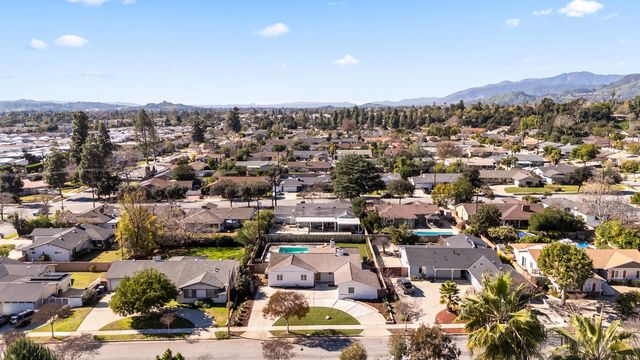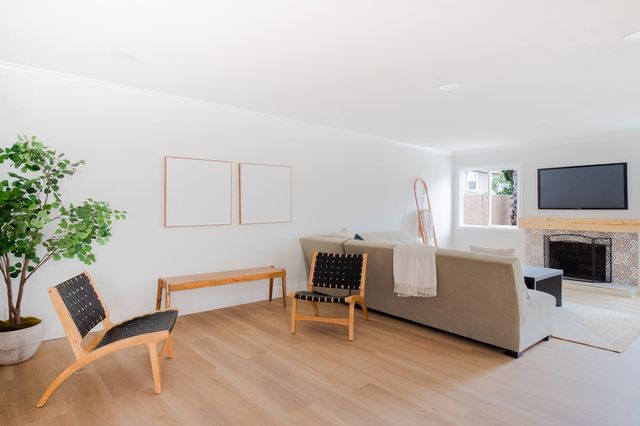
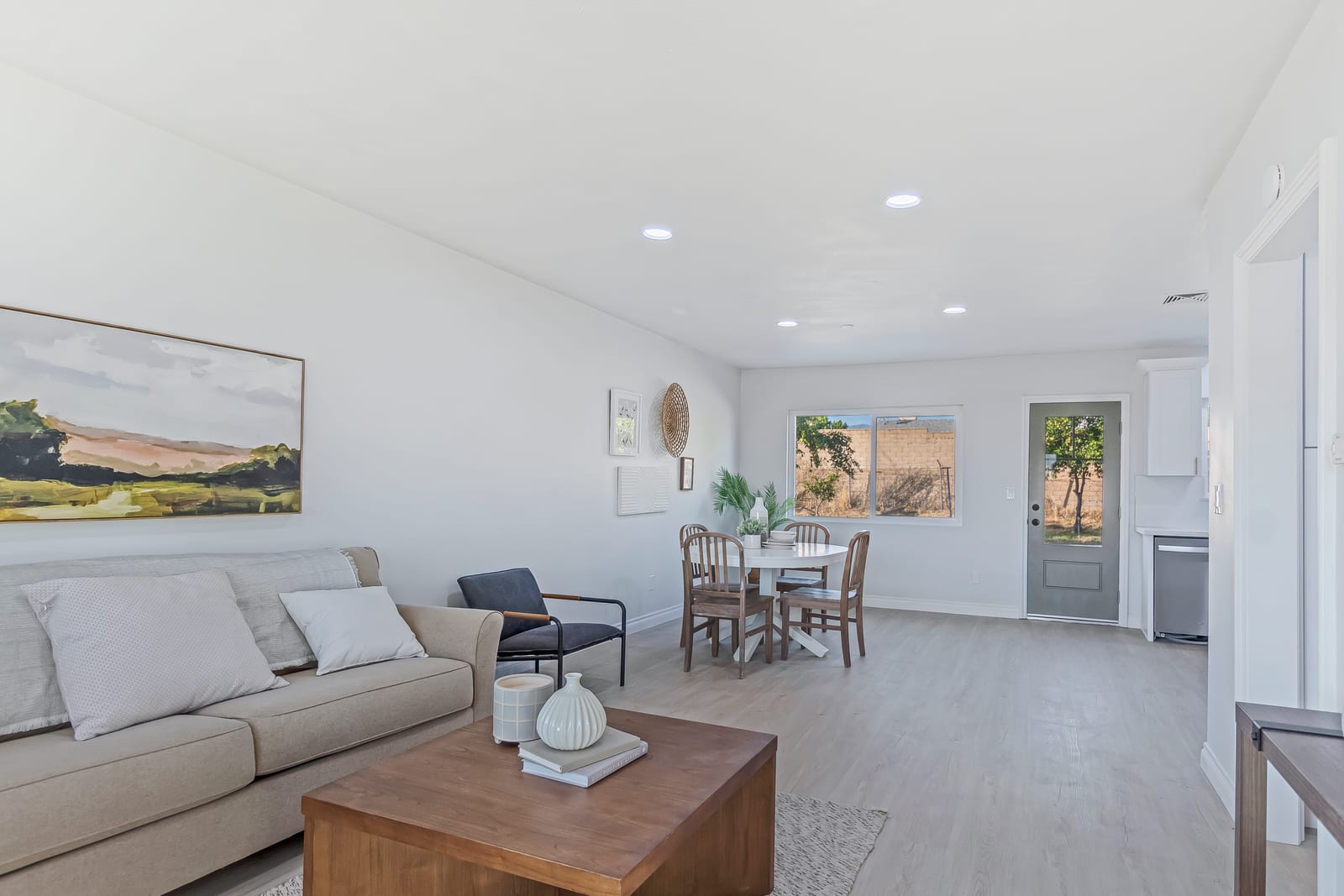
A house in Arbol Verde is valued against sales of houses like it: small early-1950s homes, judged on measured size, condition, how much of the original modernist design survives and how later additions were built. It is not measured against the pre-1940 blocks near the Colleges or the larger ranch tracts north of Foothill on bedroom count alone. When the tract's own sales are too few, the search moves to similar small houses elsewhere in Claremont, and every difference is adjusted and explained in the report.
This article is part of Claremont home values, measured, and applies the method in what is my Claremont house worth, and how an appraiser answers it to one of the city's smallest and most distinct pockets.
What is Arbol Verde?
Claremont Heritage describes it as "the experiment in intercultural housing built in the Arbol Verde neighborhood in the early 1950's," composed of "several small houses of the International Style." It is a small chapter of Claremont's modernist history, and it sits apart from both of the city's larger housing stories: the Victorian, Craftsman and Spanish Colonial Revival houses around the Village and the Colleges, and the postwar single-story ranch tracts built on former citrus groves north of Foothill.
For an appraiser, that means a pocket of few houses, similar in era and scale, that rarely match the comparables an automated search reaches for first.
What does "on its own terms" mean in practice?
It means the house is compared on the features buyers of this kind of house weigh. Four carry most of the analysis.
Size, measured at the house
Gross living area, the finished, heated living space above grade, is measured from the outside of the house rather than copied from the assessor record or a listing. On a small house, a few feet of error or a back room counted twice moves the comparison a long way. A per-square-foot figure taken from larger houses is not simply applied to a smaller one; how the market reacts to a difference in size is measured from sales, not assumed.
Design, and how much of it remains
Whether buyers pay for original modernist character is a question for the sales. The appraiser records which original features survive and which were replaced, then looks first at other Arbol Verde sales and next at Claremont's other modernist houses, such as the scattering of 1930s and 1940s modernist homes near the Village, to see whether the market rewards design apart from size and condition.
Additions and changes over the decades
Many small houses have grown. A rear room, an enclosed patio or a converted garage is measured, its permit status checked, and its quality and fit with the original house described. Contributory value, what an improvement adds to the whole property in the market, is read from sales, not from what the work cost. Permitted space and unpermitted space are treated differently, as measuring a Village bungalow with later additions explains for the older blocks.
Condition and updating
An early-1950s house may carry original systems, decades of piecemeal updating, or a full renovation. Condition is observed and rated at the inspection, and comparables are chosen or adjusted so that a renovated house is not weighed against original ones without saying so.
In what order are comparables chosen?
These are the kinds of assignments that come in, and the order holds on each:
- Arbol Verde itself, sold close to the effective date, the date the opinion of value applies to.
- Other small modernist or mid-century houses in Claremont, with differences in setting and design adjusted as far as the sales support.
- Small postwar houses north of Foothill, similar in size and age, with design and location differences stated. The ranch-house comparables north of Foothill describes that pool.
- Older sales from any of these, each with a market conditions adjustment, a change to its price for market movement between its sale date and the effective date, supported by data.
A comparable sale, a recent closed sale of a similar property that a buyer of this house would have weighed, earns its place by resemblance. Fannie Mae's Selling Guide allows less similar sales where truly comparable ones are scarce, so long as the appraiser explains the choice.
What does a reviewer throw out?
- An Arbol Verde house compared with a pre-1940 Craftsman near the Colleges because both have the same bedroom count. Pre-1940 Craftsman values are a different question.
- A larger north-of-Foothill ranch house used with a per-square-foot rate and no size analysis.
- Living area copied from public records on a house whose rooms were added over the decades.
What does the comparable grid look like?
The shape of the analysis, left blank: examples never carry a real address, sale or value.
Line itemSubjectComparable 1Comparable 2Comparable 3
Pocket and distance
-
-
-
-
Era and design
-
-
-
-
Gross living area, measured
-
-
-
-
Additions and permit status
-
-
-
-
Condition and updating
-
-
-
-
Lot and garage
-
-
-
-
Net adjustment and weight
-
-
-
-
Does the tract's history affect the value?
The history is part of what makes Arbol Verde worth writing about; it is not an input to value. The federal Fair Housing Act, at 42 U.S.C. 3605, names the appraising of residential real property among the transactions in which discrimination because of race, color, religion, sex, handicap, familial status or national origin is unlawful. The appraiser reads the house, the lot and the sales; who lives in a neighborhood, or who it was built for, is never a factor. The practice's fair housing statement says the same.
Why can an online estimate not do this?
An automated estimate, such as a Redfin Estimate, is not an appraisal, and Redfin's own page calls it a starting point. It works from recorded size and nearby sales, so it cannot tell an original International Style house from a remodeled one, or a permitted addition from a converted garage. An agent's comparative market analysis, or CMA, is not an appraisal either; it is an opinion of a likely list or sale price. Appraisal vs. estimate sets the differences side by side.
Who is the report for?
Every report names its intended use, what it will be used for, and its intended users, the people entitled to rely on it. Sellers order a pre-listing appraisal before choosing a list price, which they and their agent still decide; heirs and trustees order an estate or date-of-death appraisal. The Claremont area page places Arbol Verde among the other pockets in 91711, and the appraiser is independent of every party, including the one who pays.
Next step
If you own a house in Arbol Verde, request an appraisal or call (909) 324-6122. The fee is set by the scope of the assignment and quoted before work begins, it does not depend on the value, and the report is typically three to five business days from the inspection.
Sources
- Claremont Heritage, Architecture (Arbol Verde; postwar tracts), accessed November 6, 2026
- 42 U.S.C. 3605, Discrimination in residential real estate-related transactions, accessed November 6, 2026
- Fannie Mae Selling Guide B4-1.3-08, Comparable Sales, accessed November 6, 2026
- Fannie Mae Selling Guide B4-1.3-09, Adjustments to Comparable Sales, accessed November 6, 2026
- Redfin, the Redfin Estimate, accessed November 6, 2026
- The Appraisal Foundation, Uniform Standards of Professional Appraisal Practice (USPAP), accessed November 6, 2026
- California Bureau of Real Estate Appraisers, license lookup, accessed November 6, 2026
Gordon Hall, California Certified Residential Real Estate Appraiser, BREA No. AR003877 (lookup: https://www2.brea.ca.gov/breasearch/faces/party/view.xhtml?id=23601). Reports are prepared in conformity with the Uniform Standards of Professional Appraisal Practice (USPAP). Nothing here is legal or tax advice; admissibility is always the court's decision.
Frequently asked questions
Which sales are used to value an Arbol Verde house?
Arbol Verde sales close to the effective date come first, then other small modernist or mid-century houses in Claremont, then small postwar houses north of Foothill of similar size and age, and then older sales with a market conditions adjustment. Each choice and each adjustment is explained in the report.
Does original International Style design add value to an Arbol Verde house?
Only the sales can say. The appraiser records which original features survive, then looks at Arbol Verde sales and Claremont's other modernist houses to see whether buyers pay for design apart from size and condition. Any adjustment must come from that evidence, not from assumption.
How is an addition on an early-1950s Claremont house treated?
It is measured at the house, its permit status is checked, and its quality and fit with the original house are described. Its contributory value, what it adds to the whole property in the market, is read from sales rather than from what the work cost, and permitted and unpermitted space are treated differently.
Does Arbol Verde's history as an intercultural tract affect the appraisal?
No. The history is context, not an input to value. The federal Fair Housing Act, 42 U.S.C. 3605, includes appraising among the transactions where discrimination on protected characteristics is unlawful, and the appraiser reads only the house, the lot and the sales.