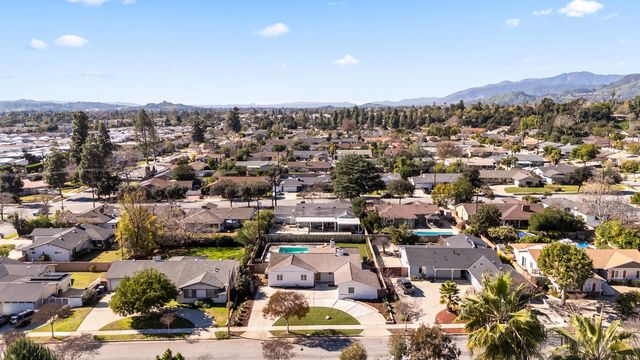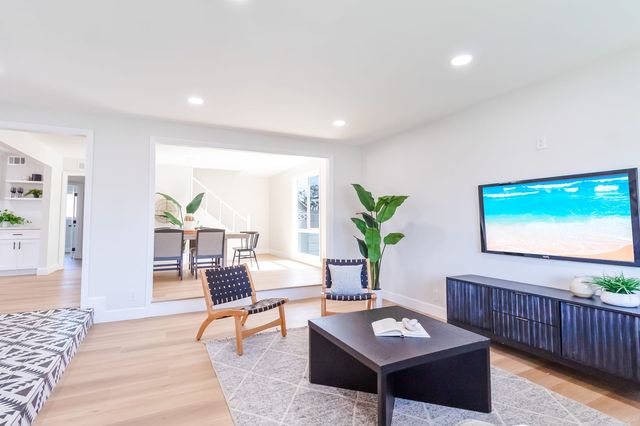
A Padua Hills house is valued from very few truly similar sales, because the hillside enclave is small and many of its homes were built one at a time. So the appraiser starts with Padua Hills itself, widens the search in stated steps across Claremont's foothills and, only if needed, further in time or distance, and writes out why each sale was chosen, why closer ones were set aside and how every difference was adjusted. A wide radius is acceptable evidence when the reasoning is on the page; an unexplained one is not.
This article belongs to Claremont home values, measured, and applies the method in what is my Claremont house worth, and how an appraiser answers it to the most thinly traded part of the hillside.
What makes Padua Hills its own market?
Its history and its houses. Claremont Heritage holds the Padua Hills Land Development Collection, and its published finding aid records that a group led by H.H. Garner incorporated as Padua Hills, Incorporated in 1927 and bought over 2,000 acres of land in north Claremont. In 1930 the group built the Little Theater in Padua Hills, a 300-seat theater with an adjoining dining room, and the land was subdivided into residences for artists, studios and a center, with artists and craftspeople invited to build along Via Padova.
That origin still shapes the evidence. Homes near the Padua Hills Theatre were not built from a few repeated floor plans, and like Claremont's other custom and hillside homes, they sell on view, grade and access as much as on size. A Padua Hills view home compared with flat-lot tract sales north of Foothill, with no view or grade adjustment, is the first thing a reviewer rejects.
Why are there so few comparable sales?
A comparable sale is a recent closed sale of a similar property that a buyer of this house would have weighed. In a small enclave of one-off houses, three things thin the pool at once:
- Few houses in the pocket, so few sales in any period.
- Few houses alike: different builders, eras and decades of remodeling.
- Features that rarely repeat: outlook, slope, the driveway, a separate studio.
Thin data is not a reason to guess. It is a reason to show the work more fully.
How does the search widen, and in what order?
These are the kinds of assignments that come in, and the order holds on each:
- Padua Hills itself, sold close to the effective date, the date the opinion of value applies to.
- The rest of the Claremont hillside: Claraboya and Northeast Claremont, where the Stone Canyon Preserve homes sit beside the Wilderness Park, chosen for similar view, grade, size and quality. Claraboya home values and Northeast Claremont home values explain how those pockets differ.
- Older hillside sales, each with a market conditions adjustment, a change to its price for market movement between its sale date and the effective date, supported by data rather than assumed.
- Foothill homes in neighboring cities: La Verne's foothill neighborhoods toward Marshall Canyon in Los Angeles County, or north Upland across the county line in San Bernardino County, where assessor records and buyer pools change. Each carries a location adjustment and a written reason; the La Verne and Upland area pages describe those markets.
Fannie Mae's Selling Guide anticipates exactly this: where truly comparable recent sales near the subject are scarce, the appraiser may go further, but when sales come from outside the subject's market area, the area most of its buyers and competing homes come from, the appraiser must explain why and make location adjustments where warranted.
What does "reasoning written out" look like in the report?
Sentences a stranger could check. A reviewer who never saw the house should find each of these in the report:
- Why these sales. What each comparable shares with the subject.
- Why not others. Which nearby sales were set aside, and why: a flat lot, a different outlook, a much larger house.
- Each adjustment, the amount added to or subtracted from a comparable's price for a difference, and the market evidence behind it rather than a rule of thumb.
- The weighting. Reconciliation is the step where the adjusted sales are weighed against each other; a sale that needed heavy adjustment or came from far away gets less weight, and the report says which sales carried the conclusion.
- What could not be verified. If a fact is uncertain, such as the permit history of an old studio, the report may rest on an extraordinary assumption, an assumption about uncertain facts that, if false, could change the result, and it says so plainly.
What does the comparable grid look like?
Here is the shape of the analysis, left blank: examples never carry a real address, sale or value.
Line itemSubjectComparable 1Comparable 2Comparable 3
Pocket and distance
-
-
-
-
Sale date and market conditions
-
-
-
-
View: type and orientation
-
-
-
-
Lot grade and usable area
-
-
-
-
Design and construction quality
-
-
-
-
Gross living area
-
-
-
-
Studio or detached structure
-
-
-
-
Condition
-
-
-
-
Net adjustment and weight
-
-
-
-
How are studios and detached rooms handled?
By measurement and permit status, then by what the market shows. Gross living area, the finished, heated living space above grade, is measured at the house, and a detached studio, workroom or guest room is measured and described separately. Its contributory value, what it adds to the whole property in the market, is read from sales where buyers paid for similar space, not from its building cost. Permitted space and unpermitted space are treated differently, so plans and permits for any studio or addition are worth gathering before the visit.
Why can an online estimate not reason this way?
An automated estimate, such as a Zestimate or a Redfin Estimate, is not an appraisal; Redfin's own page says its estimate is not a formal appraisal and calls it a starting point. A model needs many similar sales, and Padua Hills offers few, so it fills the gap with houses that may share a ZIP code and little else. Why a home value calculator misreads Claraboya and Padua Hills walks through what it cannot see. An agent's comparative market analysis, or CMA, is not an appraisal either; it is an opinion of a likely list or sale price.
Who is the report for?
Every report names its intended use, what it will be used for, and its intended users, the people entitled to rely on it. The opinion is of market value, the most probable price a property should bring in a competitive and open market under the conditions of a fair sale, as of the effective date. A seller may order a pre-listing appraisal before choosing a list price, which the seller and their agent still decide. The hillside and custom home appraisal page explains how these assignments are scoped, and the Claremont area page places Padua Hills among the other pockets in 91711. The appraiser is independent of every party, including the one who pays.
Next step
If you own a home in Padua Hills, request an appraisal or call (909) 324-6122. The fee is set by the scope of the assignment and quoted before work begins, and it does not depend on the value. The report is typically three to five business days from the inspection.
Sources
- Online Archive of California, Padua Hills Land Development Collection, 1924-1993 (Claremont Heritage), accessed November 6, 2026
- Fannie Mae Selling Guide B4-1.3-08, Comparable Sales, accessed November 6, 2026
- Fannie Mae Selling Guide B4-1.3-09, Adjustments to Comparable Sales, accessed November 6, 2026
- Redfin, the Redfin Estimate, accessed November 6, 2026
- The Appraisal Foundation, Uniform Standards of Professional Appraisal Practice (USPAP), accessed November 6, 2026
- California Bureau of Real Estate Appraisers, license lookup, accessed November 6, 2026
Gordon Hall, California Certified Residential Real Estate Appraiser, BREA No. AR003877 (lookup: https://www2.brea.ca.gov/breasearch/faces/party/view.xhtml?id=23601). Reports are prepared in conformity with the Uniform Standards of Professional Appraisal Practice (USPAP). Nothing here is legal or tax advice; admissibility is always the court's decision.
Frequently asked questions
Why does a Padua Hills appraisal use sales from outside Padua Hills?
Because the enclave is small and many of its houses are one of a kind, so few sales inside it resemble any given home. The appraiser starts with Padua Hills sales, then widens to Claraboya and Northeast Claremont, then to older or more distant foothill sales, and the report explains each step and each location adjustment.
Is a wide comparable radius a sign of a weak appraisal?
Not by itself. Fannie Mae's Selling Guide allows sales from outside the subject's market area when truly comparable nearby sales are scarce, provided the appraiser explains why they were chosen and adjusts for location where warranted. An unexplained radius is the problem, not a wide one.
How is a detached studio valued on a Padua Hills property?
It is measured and described separately from the main house's gross living area, its permit status is checked, and its contributory value, what it adds to the whole property in the market, is read from sales where buyers paid for similar space rather than from its building cost.
Can an online estimate value a Padua Hills house well?
An automated estimate is not an appraisal. It depends on many similar recorded sales, and Padua Hills has few, so it cannot see view, slope, access or a studio. Redfin's own page says its estimate is not a formal appraisal and calls it a starting point.