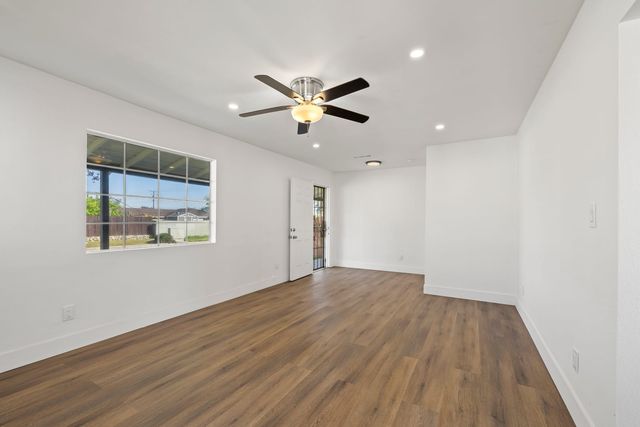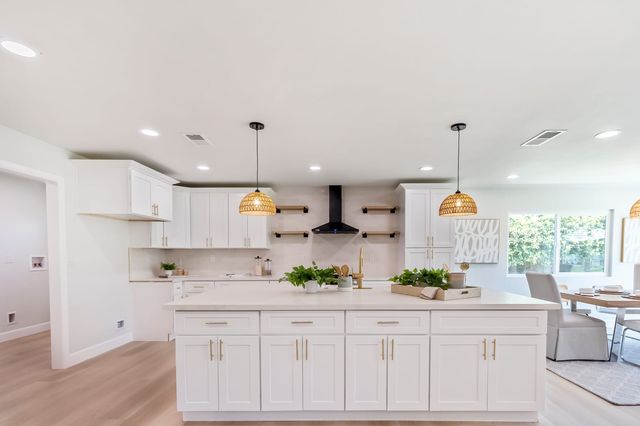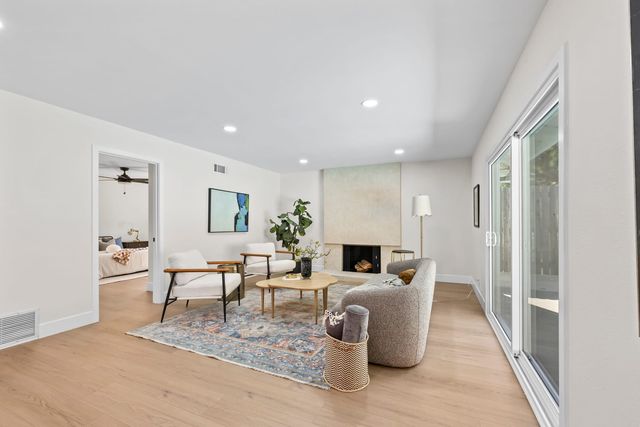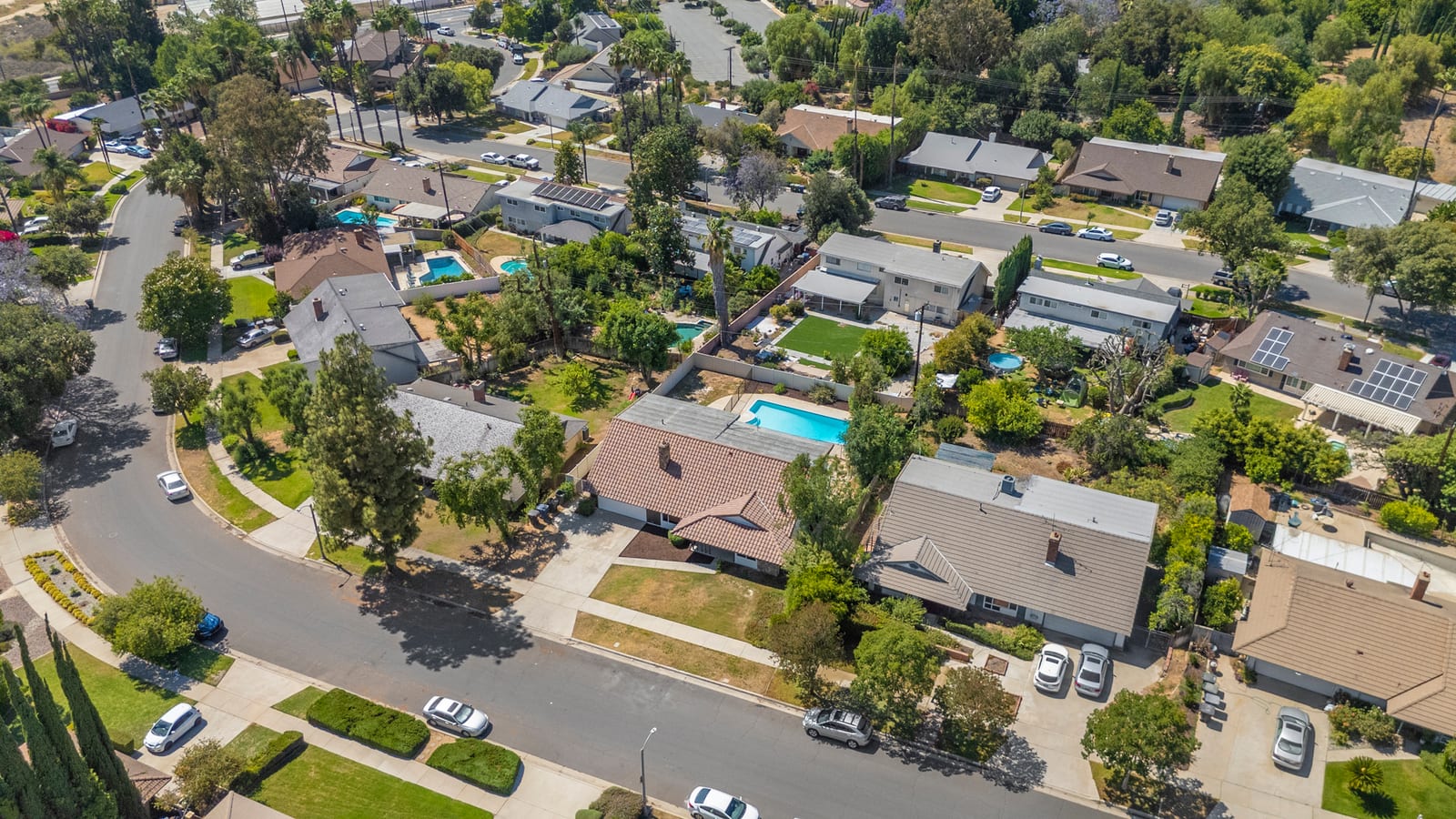
An exterior-only appraisal is one in which the appraiser observes the outside of the house but does not go inside. A desktop appraisal goes further: the appraiser does not visit the property at all, and develops the opinion from records and data gathered by others. Both are still appraisals, but with a narrower scope of work, the type and extent of research and analysis, and the report has to say what was not seen and what was assumed in its place. Whether a limited scope is acceptable is decided by who will read the report: the lender's program rules for a loan, or the needs of the court, CPA or attorney for a direct assignment.
This article belongs to the How a Home Appraisal Works series. The standard visit, with the interior measured and photographed, is described in what happens on appraisal inspection day in Claremont.
Three kinds of assignment, by what the appraiser sees
- Interior and exterior. The appraiser walks every room, measures the outside and photographs the house. This is the traditional assignment and the one most readers expect.
- Exterior only. The appraiser observes the outside, usually from the street, and relies on other sources for the interior: public records, prior listings, permits, the owner's information.
- Desktop. No visit by the appraiser. The property data comes from records, third parties or virtual methods, and the appraiser analyzes it and the comparable sales.
A fourth arrangement sits between them. In what Fannie Mae calls a hybrid appraisal, a trained third party collects interior and exterior data at the house and the appraiser develops the opinion from it.
What Fannie Mae's Selling Guide says today
For loans sold to Fannie Mae, the lender's options are set by the Selling Guide, and the pages opened for this article describe them this way.
Desktop appraisals
Topic B4-1.2-02, dated December 10, 2025, limits desktop appraisals to a purchase transaction on a principal residence, a one-unit property (including one with an ADU, or a unit in a PUD), within a stated loan-to-value limit and with a Desktop Underwriter recommendation of Approve/Eligible. Refinances are ineligible, as are two- to four-unit properties, condo and co-op units and manufactured homes. The minimum scope "does not include a current inspection of the subject property or comparable sales by the appraiser." Information from the homeowner, the borrower or a third party may be used, and the appraiser "must determine if the information is accurate and reliable to produce a credible report." The topic also says extraordinary assumptions about the property's condition, quality or physical characteristics are not permitted on a desktop appraisal.
Hybrid appraisals
Topic B4-1.2-03, dated the same day, describes the hybrid as "an appraisal option requiring a property data collection," performed inside and out by a "trained and vetted third party," such as a real estate agent, an insurance inspector or an appraiser.
Exterior-only
None of the Selling Guide topics opened for this article, the report forms topic B4-1.2-01, the desktop topic or the hybrid topic, lists an exterior-only appraisal among the options. The one exterior inspection they describe is the appraisal update in topic B4-1.2-04, where an earlier appraisal is brought forward and the appraiser performs an update "that includes inspecting the exterior of the property." A lender is the one to ask whether its program accepts an exterior-only report.
Value acceptance is not an appraisal
Some loans close with no appraisal at all. Fannie Mae's value acceptance, topic B4-1.4-10, is an offer in which it "accepts the value estimate submitted by the lender as the value for the subject property." No appraiser forms an opinion, so it is not an appraisal, and neither is an automated estimate such as a Zestimate, as AVM vs. appraisal explains.
The redesigned URAR changes how these are reported
The Selling Guide topics still name the legacy forms. Freddie Mac's UAD 3.6 FAQ states that UAD 3.6, with the redesigned Uniform Residential Appraisal Report, is mandatory for new appraisal reports submitted to UCDP, the Uniform Collateral Data Portal, on or after November 2, 2026, counted from each report's initial submission date, and that the older forms, including the exterior-only and desktop versions, are retired and replaced with a single data-driven report. The FAQ says UAD 3.6 "supports traditional, hybrid, desktop, and exterior appraisal assignments," that "the data that describes the subject property drives the appraisal report, not a form type or number," and that the specific policies stay in the GSE selling guides. What else the new format changes is covered in the new appraisal format in 2026.
Outside a loan: when the interior cannot be seen
Direct assignments for an estate, a trust, a divorce or a tax appeal are not governed by a lender's program, but the same honesty applies. The scope of work is settled before the engagement, and the report states it, including any limits on access. These are the kinds of situations that come up.
- The house has already sold. A date-of-death value may still be needed after the heirs have sold. The appraisal can be made as of the earlier date from records and photos, with the assumptions stated clearly; see appraisal inspection for an estate.
- An occupant will not allow entry. The report describes what could be observed and from where.
- The property cannot be reached safely. On a hillside parcel or a damaged structure, the report states the limits of the inspection.
When the interior is not seen, the analysis may rest on an extraordinary assumption, an assumption about uncertain facts that, if false, could change the result, such as that the interior is in a condition consistent with the exterior and the records. The assumption is stated in the report, so the reader can judge its weight. Whether a court, a CPA or an opposing party accepts a limited-scope report is their decision, and admissibility is always the court's decision.
Location matters here too. In Claremont's hillside pockets, Claraboya and Padua Hills, where value turns on view, grade and access, a house behind a gate or a long driveway may show little from the street. Additions, converted garages and rear units elsewhere in the city may not be visible from the public way at all. The Claremont area page describes those pockets.
What an owner, heir or attorney can do
- Ask who will read the report and whether that reader requires an interior inspection, before ordering.
- Offer what exists: recent listing photos, permits, plans, a list of improvements with dates, and any inspection reports.
- Expect the report to say what it did not see. A limited scope stated plainly is more useful than an unstated one.
The steps of a standard assignment, from scope call to delivered report, are in how a home appraisal works in Claremont.
Next step
The how it works page shows where the scope call fits. If access to a house is limited, say so when you use the order form or call (909) 324-6122, so the scope is settled before anything is scheduled. The fee is set by the scope of the assignment and quoted before work begins, and it does not depend on the value.
Sources
- Fannie Mae Selling Guide, B4-1.2-01, Appraisal Report Forms and Exhibits: https://selling-guide.fanniemae.com/sel/b4-1.2-01/appraisal-report-forms-and-exhibits (accessed November 6, 2026)
- Fannie Mae Selling Guide, B4-1.2-02, Desktop Appraisals: https://selling-guide.fanniemae.com/sel/b4-1.2-02/desktop-appraisals (accessed November 6, 2026)
- Fannie Mae Selling Guide, B4-1.2-03, Hybrid Appraisals: https://selling-guide.fanniemae.com/sel/b4-1.2-03/hybrid-appraisals (accessed November 6, 2026)
- Fannie Mae Selling Guide, B4-1.2-04, Appraisal Age and Use Requirements: https://selling-guide.fanniemae.com/sel/b4-1.2-04/appraisal-age-and-use-requirements (accessed November 6, 2026)
- Fannie Mae Selling Guide, B4-1.4-10, Value Acceptance: https://selling-guide.fanniemae.com/sel/b4-1.4-10/value-acceptance-appraisal-waiver (accessed November 6, 2026)
- Freddie Mac, Uniform Appraisal Dataset (UAD) 3.6 and Forms Redesign FAQ: https://sf.freddiemac.com/faqs/uad-and-forms-redesign (accessed November 6, 2026)
- California Bureau of Real Estate Appraisers, license lookup for Gordon Hall, BREA No. AR003877: https://www2.brea.ca.gov/breasearch/faces/party/view.xhtml?id=23601 (accessed November 6, 2026)
Gordon Hall, California Certified Residential Real Estate Appraiser, BREA No. AR003877 (lookup: https://www2.brea.ca.gov/breasearch/faces/party/view.xhtml?id=23601). Reports are prepared in conformity with the Uniform Standards of Professional Appraisal Practice (USPAP). Nothing here is legal or tax advice; admissibility is always the court's decision.
Frequently asked questions
What is the difference between an exterior-only and a desktop appraisal?
In an exterior-only appraisal the appraiser observes the outside of the house, usually from the street, and relies on records and other sources for the interior. In a desktop appraisal the appraiser does not visit the property at all and develops the opinion from data gathered by others. Both are appraisals with a narrower scope of work, and the report states what was not seen.
Does Fannie Mae accept desktop appraisals for a refinance?
No. Fannie Mae Selling Guide topic B4-1.2-02, dated December 10, 2025, limits desktop appraisals to purchase transactions on a principal residence for eligible one-unit properties with a Desktop Underwriter Approve/Eligible recommendation, and lists all refinances as ineligible. The lender confirms what its program allows.
Are the old exterior-only and desktop forms still used?
Not for new reports to Fannie Mae or Freddie Mac. Freddie Mac's UAD 3.6 FAQ says the redesigned URAR is mandatory for new appraisal reports submitted to UCDP on or after November 2, 2026, and that the older forms, including the exterior-only and desktop versions, are retired. The assignment type is reported as data within the redesigned report.
Can an estate or divorce appraisal be done without going inside?
It can, when access is not possible, but the scope of work is narrower and the report states the limits on access and any extraordinary assumption, an assumption about uncertain facts that, if false, could change the result. Whether a court, CPA or other reader accepts it is their decision; admissibility is always the court's decision.
Is value acceptance a kind of desktop appraisal?
No. Under Fannie Mae's value acceptance, the lender's own value estimate is accepted for the property and no appraiser forms an opinion, so it is not an appraisal.